

Urbanisation is one of the biggest forces shaping Southeast Asia’s future. Across ASEAN, cities are growing in number, size, and complexity, driving economic opportunity, innovation, and cultural exchange. At the same time, they are also concentrating risk, inequality, and exposure to climate impacts. The question facing the region is not whether urbanisation will continue, but whether it can be steered in a way that delivers prosperity, resilience, and dignity for all.
Today, ASEAN is home to more than 350 million urban residents, just over half of the region’s population. According to the World Urbanization Prospects 2025, this is projected to rise to around 70 per cent by 2050, adding nearly 150 million people to ASEAN’s cities. This rapid shift is one of the fastest taking place anywhere in the world, and it’s unfolding across a region with an incredibly varied mix of cities and urban environments.
Importantly, ASEAN’s urban future won’t be shaped by megacities alone. Middleweight cities with between 200,000 and 2 million residents are estimated to drive 40 per cent of the region’s growth, highlighting the central role that these cities are likely to play in accommodating future urban expansion (ASEAN Smart Cities Framework, 2018).
These cities sit at the centre of national development systems, connecting rural economies to regional and global markets. When they are carefully planned, they can drive steady, balanced growth. But if they are overlooked, they can quickly turn into areas marked by informal settlements, unchecked urban sprawl, and environmental degradation.
Urban opportunity and urban risk
Urbanisation has been a major driver of ASEAN’s economic transformation. Cities generate the majority of national GDP, attract investment, and provide jobs. Yet rapid expansion is putting increasing strain on urban systems. Across the region, cities are facing persistent challenges, with housing shortages, infrastructure gaps, congestion, air pollution, and unequal access to basic services. For example, in 2022, most ASEAN countries had more than 20 per cent of their urban population living in slums or informal settlements, highlighting the widespread scale of urban housing vulnerability across the region (The Habibie Centre, 2025). Housing is not merely shelter; it underpins health, education, dignity, safety and social inclusion, and is therefore a cornerstone of human security and well-being.
The climate crisis is making these challenges even harder to manage. As highlighted in the World Cities Report 2024, cities are on the front line of climate impacts. This is especially true in Southeast Asia, one of the world’s most vulnerable climate regions. Floods, extreme heat, droughts and sea-level rise are already disrupting livelihoods, infrastructure, and local economies. Over the past five decades, these events have affected more than 580 million people and caused approximately 235 billion US dollars in damage in the Southeast Asian region (UN ESCAP, 2024).
ASEAN’s strategic response: Urbanisation as a regional priority
ASEAN has increasingly treated urbanisation not just as a standalone sector, but as a strategic regional priority. A key step in this direction is the decision to place smart and sustainable urban development as its own strategic area under the ASEAN Connectivity Strategic Plan. It reflects a clear understanding that urbanisation is a global megatrend with implications for connectivity, competitiveness, and social cohesion in Southeast Asia.
To ensure the plan remains flexible and forward-looking, ASEAN has identified seven key trends that will shape ASEAN Connectivity in the years ahead. These include digital transformation, the climate crisis, the net-zero transition, supply chain reconfiguration, urban expansion, the rise of middle-weight cities, innovation in financing, regionalism, and population ageing. They highlight the need for stronger regional integration and collaboration to seize emerging opportunities.
This strategic shift builds on a strong foundation. The ASEAN Sustainable Urbanisation Strategy (ASUS) provides a shared framework to guide cities toward inclusive, safe, resilient and sustainable development, in line with the global vision provided by the Sustainable Development Goals and the New Urban Agenda.
Through the project “Accelerating the Implementation of the ASEAN Sustainable Urbanisation Strategy-Phases I and II” (ASUS Project), ASEAN and UN-Habitat, with the support of the Government of Australia, are working together with the ASEAN Member States to strengthen policy coherence, build local capacity, and promote peer learning among cities. UN-Habitat greatly values this partnership, which shows how regional cooperation can translate global commitments into practical, city-level action while respecting the diversity of local contexts across ASEAN.
Cities leading the way: Lessons from the region
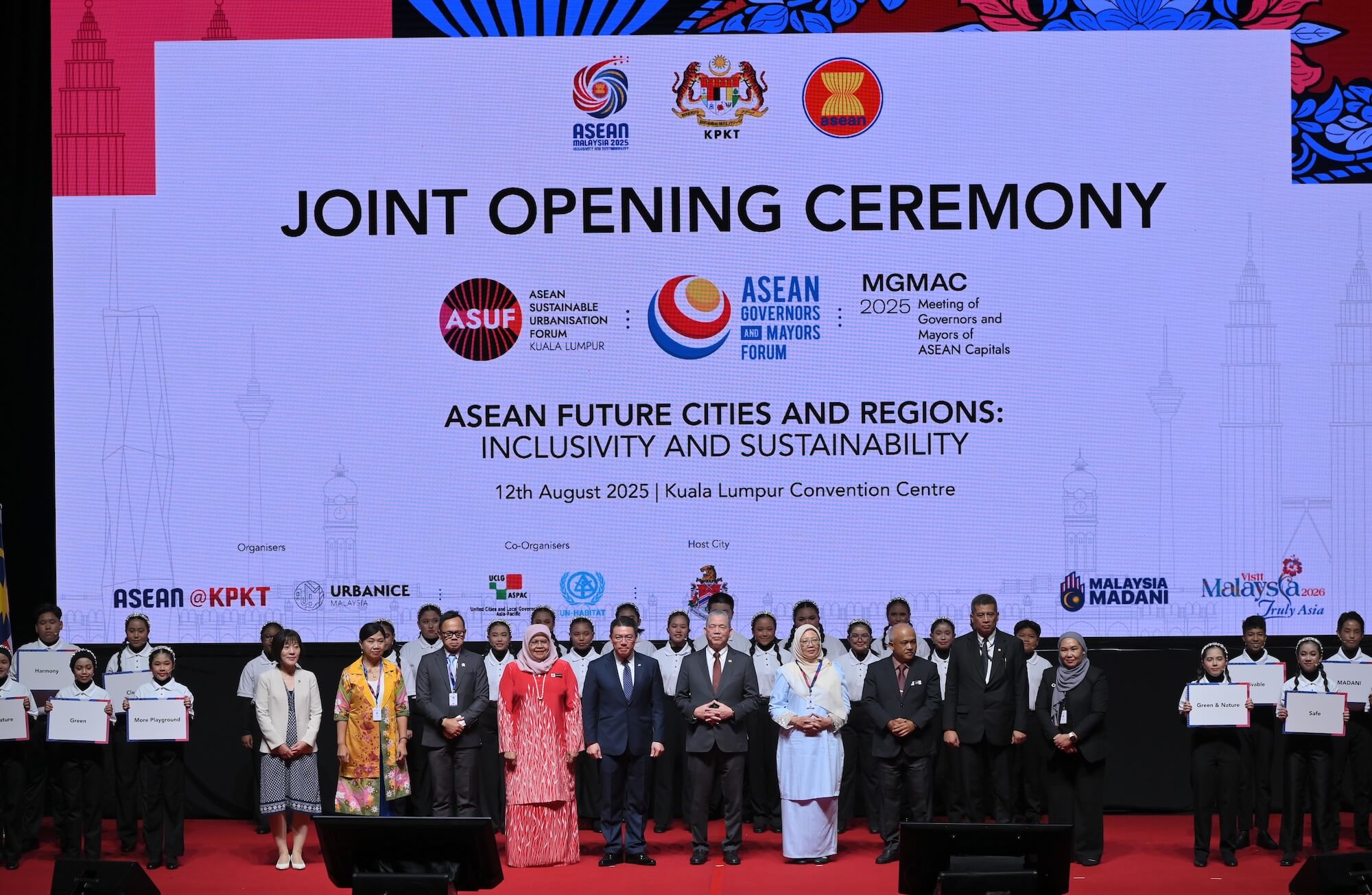
ASEAN cities are not waiting for solutions; they are actively shaping them. This was clearly demonstrated at the ASEAN Sustainable Urbanisation Forum (ASUF) 2025 held in August 2025, led by the Government of Malaysia, and specifically the Ministry of Housing and Local Government (KPKT), together with the host city of Kuala Lumpur, the ASEAN Secretariat, UN-Habitat, and the United Cities and Local Governments Asia Pacific (UCLG ASPAC). The forum brought together over 9,000 participants from 66 countries, including representatives from more than 300 cities and local governments, national institutions, civil society, and the private sector.
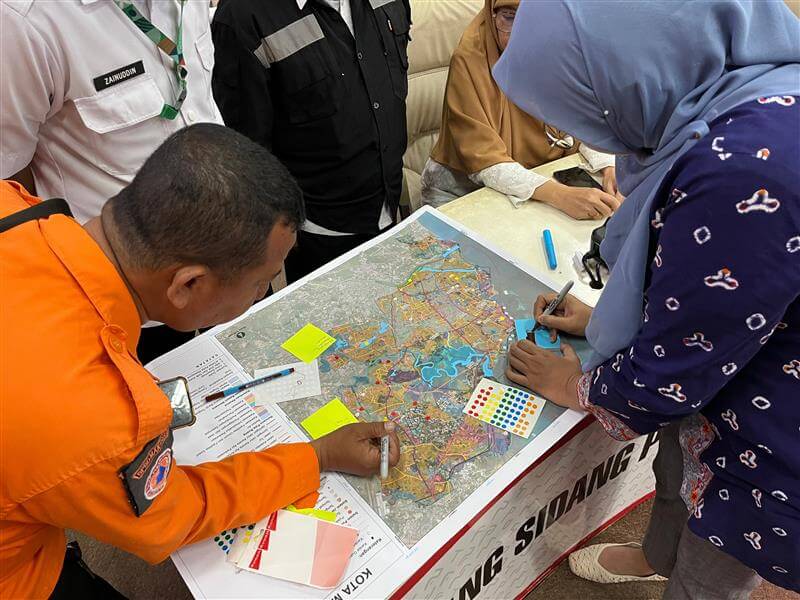
Cities exchanged hands-on experiences on how they are managing growth, improving mobility, expanding access to housing and services, and strengthening climate resilience. Something common across these experiences was the importance of inclusive and participatory governance. Cities participating in the ASUS Project-Phase II highlighted approaches that actively engage women, youth, older persons and communities in planning and decision-making processes. These experiences show that gender-responsive and inclusive planning, combined with meaningful representation, can lead to more responsive, equitable, and durable results. This includes improved access to housing, education, services, and public spaces.
These local innovations are reinforced by regional platforms such as the ASEAN Smart Cities Network (ASCN), which focuses on people-centred digital solutions to improve service delivery, strengthen resilience, and help close digital divides. UN-Habitat is working across the region to connect these initiatives to global action through the UN-Habitat’s SDG Cities initiative, which links SDG Localisation and SDG Voluntary Local Reviews to concrete local action. This enables cities in ASEAN and beyond to share experiences, track progress and accelerate the implementation of the Sustainable Development Goals at the local level.
A shared urban future
The challenge ahead is one of scale and speed. Over the next decades, ASEAN cities will need to accommodate millions of new residents, while upgrading existing infrastructure and adapting to intensifying climate risks. This will require integrated urban and territorial planning, stronger multilevel governance, and sustained investment, especially in secondary and intermediate cities, where early action can prevent costly future impacts.
UN-Habitat’s Strategic Plan 2026-2029 aims to respond to this crisis, as well as to the wider challenges of poverty, inequality and climate change, by placing housing, land and basic services at the centre of its action. In Southeast Asia, UN-Habitat stands ready to continue supporting ASEAN and its Member States in implementing the ASEAN Sustainable Urbanisation Strategy, the work of the ASEAN Smart Cities Network and the ASEAN Connectivity Strategic Plan, building on the achievements of the past decade.
Urbanisation will define ASEAN’s trajectory to 2045 and beyond. By aligning global and regional agendas with local action and solutions, the region can turn urbanisation into a powerful driver of shared prosperity, regional integration, and human development. As an important step to assess together the progress, I take here the opportunity to encourage all ASEAN Member States to submit the New Urban Agenda Report this year. The upcoming 13th World Urban Forum, to be held in Baku, Azerbaijan, in May 2026, will provide a global platform to advance this agenda, share lessons from ASEAN cities, and strengthen international partnerships to accelerate implementation. We look forward to ASEAN Member States’ participation in the forthcoming High-Level Meeting of the UN General Assembly on the midterm review of the New Urban Agenda, which is scheduled for 16–17 July 2026, following the 2026 High-Level Political Forum.
In line with its mandate to promote socially and environmentally sustainable towns, cities, and human settlements, aiming to provide adequate shelter for all, UN-Habitat is proud to be a trusted partner in this journey.
The views and opinions in this article are solely those of the author and do not represent the policy or official position of ASEAN.