

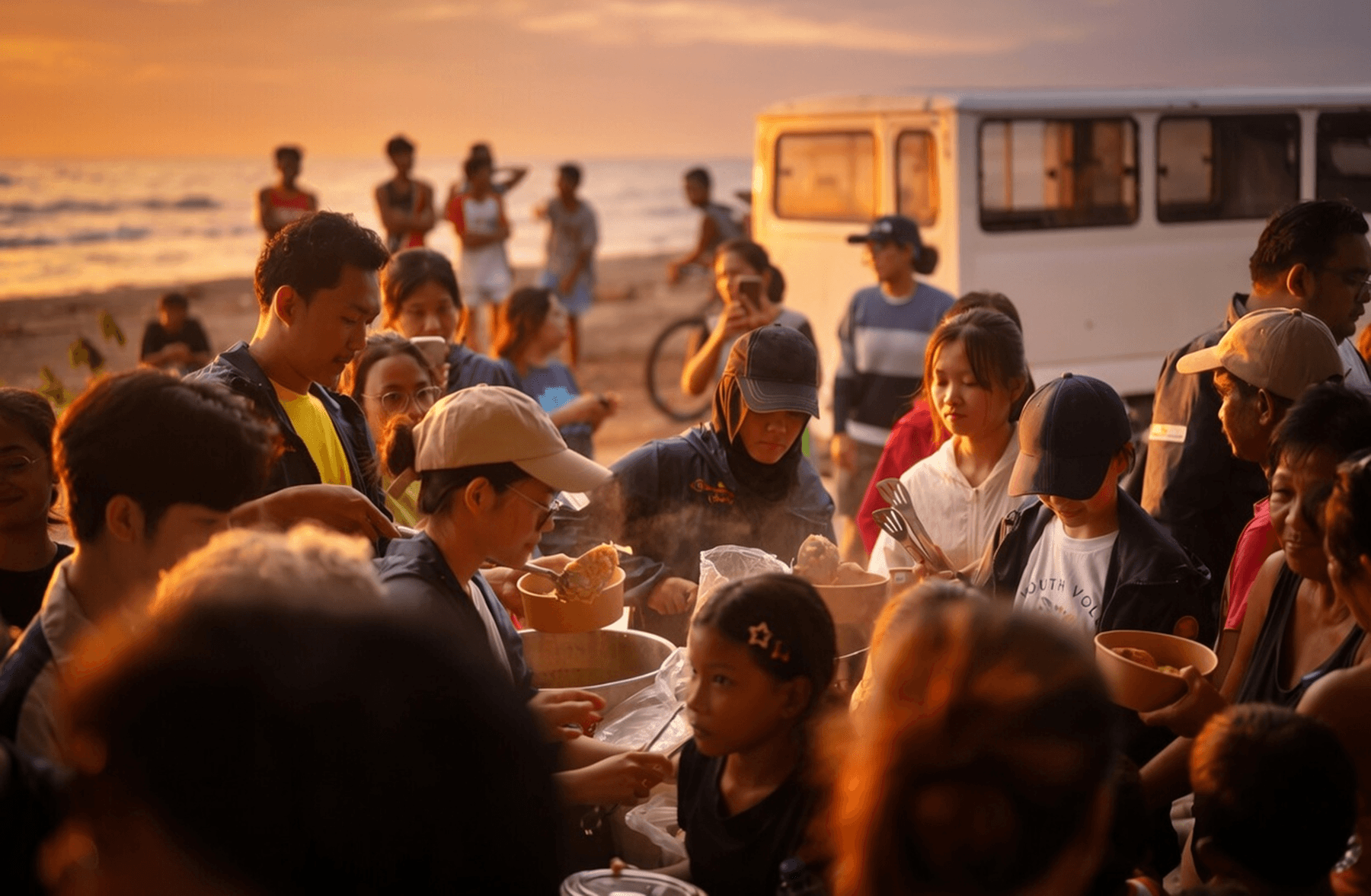
On his first night in La Union, the Philippines, Indonesian youth volunteer Andi Reza Zulkarnain arrived with a clear plan. Together with his team, he was scheduled to begin community sessions on marine conservation and environmental education as part of a local initiative to protect coastal ecosystems. Within hours, however, those plans were overtaken by events beyond anyone’s control. A powerful typhoon struck the area, disrupting daily life, damaging infrastructure, and leaving parts of the community without electricity, water, or access to food.
Faced with these conditions, Andi and his fellow youth volunteers quickly shifted roles. Working alongside local partners and residents, they supported the emergency response, prepared relief items, and distributed assistance to affected families. What began as an environmental education deployment became an immediate exercise in solidarity, adaptability, and collective action under crisis conditions.
Reflecting on the experience, Andi recalled, “One of my most significant learning moments was shifting from an education-focused agenda to disaster relief overnight, preparing and distributing over 6,300 relief packs alongside local volunteers. It reminded me that meaningful impact often happens when we step beyond our comfort zones and respond to real community needs.”
Moments like these capture the deeper value of youth volunteerism in ASEAN. Beyond delivering planned activities, youth volunteers often find themselves navigating complex, real-world situations that develop their empathy and resilience, and engender a stronger commitment to community well-being.
At the same time, youth volunteers enrich communities with their involvement. These contributions reflect ASEAN’s people-centred approach to development, where progress is measured not only through plans and policies, but also through direct engagement with communities and citizens, especially in times of need.
Youth volunteerism is closely aligned with the ASEAN Socio-Cultural Community (ASCC), one of the three pillars of the ASEAN Community. The ASCC Blueprint 2025, which serves as a roadmap for social and cultural development in the region, places strong emphasis on promoting a high quality of life, protecting human rights, and ensuring the inclusion of women, children, youths, older persons, persons with disabilities, migrant workers, and vulnerable and marginalised groups. It also underscores the importance of fostering a harmonious ASEAN community that values shared identity, culture, and heritage.
Momentum for volunteerism is growing globally. With the United Nations General Assembly proclaiming 2026 as the International Year of Volunteers for Sustainable Development, volunteerism is receiving renewed attention as a vital force for inclusive and sustainable development. Across ASEAN, this presents a timely opportunity to recognise and strengthen youth volunteer ecosystems that empower young people to respond to local challenges while contributing to a more resilient region.
Youth volunteerism and regional identity
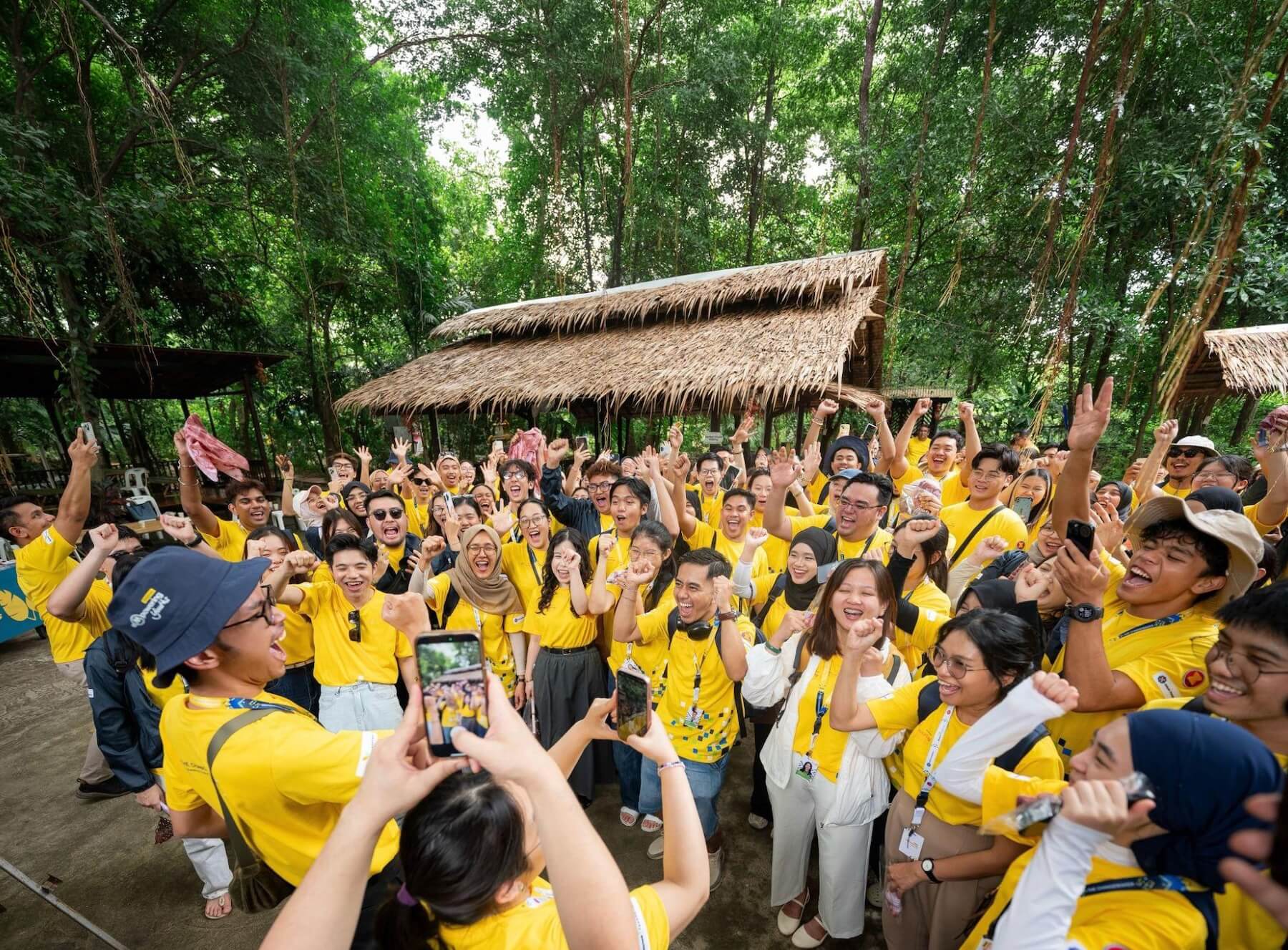
Across ASEAN Member States, youth volunteerism has demonstrated its relevance in addressing diverse development priorities. They support education in underserved areas, promote environmental responsibility, strengthen community participation, or revitalise cultural practices. They bring with them vitality, creativity, and an openness to engage with others across social and cultural boundaries. These experiences cultivate mutual understanding and help young people recognise shared aspirations that transcend nationality.
“Youth volunteerism allows youths to engage with ASEAN not as an abstract concept, but as a shared experience shaped through cooperation and mutual responsibility,” said Dr. Piti Srisangnam, Executive Director of the ASEAN Foundation. This perspective underscores the role of youth engagement in strengthening ASEAN identity through lived experience and collective action.
Youth volunteerism is further reinforced within the ASEAN Work Plan on Youth 2021–2025, particularly under Priority 4 on Participation and Engagement. Aligned with Priority Areas 4.1 and 4.2, youth-led initiatives promote cross-cultural understanding, cultivate a sense of regional identity, and empower youths to contribute to ASEAN’s social, economic, and environmental development. Equally important, they support youth leadership as a central element of the youth development process, reinforcing the role of youths as partners in shaping a more inclusive and dynamic ASEAN.
From regional vision to community action
Against this broader regional landscape, platforms that connect youth volunteers with community-based organisations have proven particularly effective in enabling meaningful engagement. One such example is the eMpowering Youths Across ASEAN (eYAA) programme, which demonstrates how cross-border youth volunteerism can be organised in ways that remain locally grounded.
A collaboration between the ASEAN Foundation and Maybank Foundation, the eYAA programme places youth volunteers with civil society organisations and social enterprises that work closely with communities. This approach enables the youth to contribute to initiatives shaped by local priorities, while gaining insight into the social, cultural, and environmental contexts of different ASEAN Member States. Rather than operating as a standalone intervention, the eYAA programme serves to support ASEAN’s broader aspirations for inclusion, resilience, and people-to-people connectivity.
For the ASEAN Foundation, this model reflects a commitment to development rooted in participation and local ownership. By engaging directly with community partners, youth volunteers contribute to initiatives that encourage cooperation, strengthen mutual understanding, and reinforce a shared sense of responsibility across borders. For the Maybank Foundation, involvement represents a long-term investment in communities and in the values and capabilities of future leaders, in line with its mission to humanise financial services and promote inclusive growth across the region.
Sustaining impact beyond service
Over five cohorts, initiatives supported through eYAA have reached more than 100,000 beneficiaries across ASEAN. Across successive cohorts, youth-led initiatives have consistently generated outcomes that extend beyond the duration of the volunteer placement, demonstrating how locally grounded action can translate into sustained community engagement.
In Cambodia, youth volunteers supported a Women’s Economic Empowerment project delivered with Inclusive Organisation in Phnom Penh and Koh Dach. They acted as young ambassadors, translating financial literacy and women’s economic empowerment concepts into locally relevant messages through peer-led community presentations. Youth volunteers also amplified women’s voices through digital storytelling, contributing to podcast-based advocacy that transformed complex issues of debt, gender, and poverty into accessible public narratives. By combining economic education with empathetic engagement and mental health awareness, the initiative introduced a more holistic and people-centred approach to community empowerment.
In the Philippines, Andi and fellow youth volunteers were deployed under the Eco At Ako project, implemented with Curma Group Inc., in La Union, to support environmental education and sea turtle conservation. When two major typhoons caused prolonged school closures and disrupted planned activities, youth volunteers demonstrated adaptability by rapidly adjusting programme delivery. Instead of pausing engagement, they supported local partners in redesigning sessions, aligning activities with existing school and parent-teacher association schedules, and integrating conservation education into alternative formats to sustain participation. This response ensured continuity of youth-led environmental action despite climate-related shocks, reflecting resilience under real-world conditions.
Together, these examples illustrate how youth volunteerism in ASEAN delivers planned outputs while responding thoughtfully to the realities communities face.
From youth service to civic leadership
Alongside community-level outcomes, youth volunteerism also contributes to the development of young leaders. Youth volunteers build practical competencies in areas such as project planning, financial management, basic monitoring and reporting, as well as communication and teamwork. Exposure to diverse community settings strengthens their ability to collaborate amid differences, adapt to new environments, and contribute constructively within and beyond their immediate environs.
“Volunteerism is a long-term investment. Its impact goes beyond today’s communities and helps shape the values of the leaders who will guide ASEAN towards 2045,” said Izlyn Ramli, Chief Executive Officer of Maybank Foundation. This conviction underpins continued efforts to nurture socially conscious and purpose-driven youth leaders who carry forward the lessons of service into their future roles.
The longer-term influence of youth volunteerism is also evident in the ongoing journeys of programme alumni. In one such example, an eYAA alumnus, inspired by an earlier volunteer experience, went on to establish EcoLiving Community Indonesia, a grassroots organisation focused on sustainable waste management and environmental education. What began as a volunteer placement later developed into a community-led initiative engaging schools, households, youth groups, and local stakeholders in adopting more sustainable practices. Building on this foundation, the alumnus later returned to eYAA as a civil society organisation representative during Cohort 5, leading a project that combined education, community mobilisation, and policy dialogue, ultimately benefiting more than 4,300 beneficiaries. This trajectory illustrates how youth-led service can nurture not only project-based outcomes but also long-term civic leadership and locally rooted institutions that continue to contribute to community wellbeing.
Looking ahead to the International Year of Volunteers for Sustainable Development 2026
As ASEAN implements ASEAN 2045 and the ASCC Strategic Plan, youth volunteerism assumes an increasingly important role in translating regional goals into community-level action. The forthcoming ASEAN Work Plan on Youth is expected to further strengthen youth volunteer ecosystems, which will support locally grounded solutions while reinforcing a shared sense of regional purpose.
ASEAN embraces the celebration of the International Year of Volunteers for Sustainable Development in 2026, with initiatives such as eYAA demonstrating tangible proof that youth volunteerism can contribute to a more cohesive, resilient, and people-centred ASEAN.