
When the Leaders of ten ASEAN Member States convened in Kuala Lumpur, in 2015, for the 27th ASEAN Summit, they arrived carrying the weight of nearly five decades of regional cooperation—and the knowledge that much remained unfinished.
T
he numbers told a story of genuine progress: a combined economy of 2.55 trillion US dollars by 2014, poverty rates that had tumbled from 47 per cent to 14 per cent since 1990, and life expectancy that had risen by 15 years since ASEAN’s founding in 1967. Yet the Leaders knew the gains were uneven. Non-tariff barriers were hampering intra-regional trade. Inequality—between nations and within them— remained stubbornly wide. Ecological degradation was accelerating. And Member States were being pulled, with growing intensity, into the gravitational field of great-power rivalry.
It was a genuine inflection point. And ASEAN responded to it decisively.
Ten years of cooperation
At the Kuala Lumpur Summit, Leaders formally established the ASEAN Community and launched the ASEAN Community Vision 2025—an compact built around three pillars: a region that is stable and secure, economically integrated, and genuinely focused on the well-being of its people. Three complementary blueprints covering the political-security, economic, and socio-cultural domains, alongside a connectivity master plan and the Initiative for ASEAN Integration (IAI) Workplan V (2026-2030), were forged to give the vision concrete shape.
Ten years on, ASEAN is a thriving Community. The achievements of this decade—hard-won and wide-ranging—are a source of genuine pride and confidence among ASEAN Leaders, policymakers, and the public alike. More than a scorecard, they are a testament to what sustained collective efforts, channelled through shared institutions and a common vision, can actually deliver.
The decade that followed was not kind to regional architectures. Escalating great-power competition, a devastating global pandemic, territorial frictions, and a succession of economic shocks would have fractured less cohesive groupings. ASEAN not only endured these pressures and challenges; it emerged from them with its solidarity intact and its institutions meaningfully strengthened.
Nowhere was this resilience more vividly demonstrated than during COVID-19. Drawing on frameworks built in calmer times, the region activated a coordinated public health response from the outset—accelerating knowledge-sharing and emergency coordination—including with partners. The pandemic, paradoxically, also galvanised Member States into action on digital transformation and economic resilience, turning crisis into catalyst.
Where stability has taken root
Sustaining regional peace has been among ASEAN’s most consequential, if often underappreciated, achievements. The region’s most volatile disputes were contained through a sustained commitment to dialogue, diplomacy, and a web of confidence-building mechanisms that held under considerable geopolitical pressures.
The Myanmar situation and the border conflict between Cambodia and Thailand have been the most severe tests to ASEAN’s cohesion and unity in recent memory. ASEAN has navigated both crises through mechanisms such as the Five Point Consensus and mediation by the ASEAN Chair, maintaining crucial channels of dialogue that might otherwise have deteriorated into complete breakdown. In the South China Sea, ASEAN has pursued a constructive approach in managing territorial and maritime disputes through the implementation of the Declaration on the Conduct of Parties (DOC) and the ongoing work toward an effective and substantive Code of Conduct (COC). This diplomatic persistence has proven instrumental in mitigating the risk of maritime confrontations that could have devastating consequences for the region’s extensive trade networks.
The adoption of the ASEAN Outlook on the Indo-Pacific (AOIP) in 2019 represented a pivotal assertion of regional agency in an increasingly strategic environment. Rather than succumbing to external pressures to choose side, ASEAN articulated its own regional vision that prioritises inclusive engagement with all major powers while emphasising practical cooperation across maritime, connectivity, economic and sustainable development sectors. By doing so, ASEAN has reinforced its Centrality and transcended the zero-sum logic of geopolitical competition. External powers are engaged through ASEAN Plus One and ASEAN-led mechanisms rather than carving the region into competing spheres of influence. In doing so, the AOIP serves as both a shield against external pressures and a bridge for constructive cooperation, preserving ASEAN’s strategic autonomy while fostering an inclusive regional order.
This standing is increasingly recognised globally. The Treaty of Amity and Cooperation in Southeast Asia (TAC), signed by just five countries in 1976, now counts 58 signatories to date—a quiet but significant testament to ASEAN’s diplomacy, legitimacy, and reach. The region’s 11 Dialogue Partners, nine Sectoral Dialogue Partners, and six Development Partners reflect a network of relationships that translate into deeper cooperation and tangible impact.
And then there is Timor-Leste. After 14 years of its application, the last remaining Southeast Asian neighbour has finally joined the family as ASEAN’s 11th Member State—a moment that speaks not only to ASEAN’s commitment to inclusive regionalism, but also to its confidence in welcoming a new voice into the community-building project.
An increasingly integrated and interconnected region
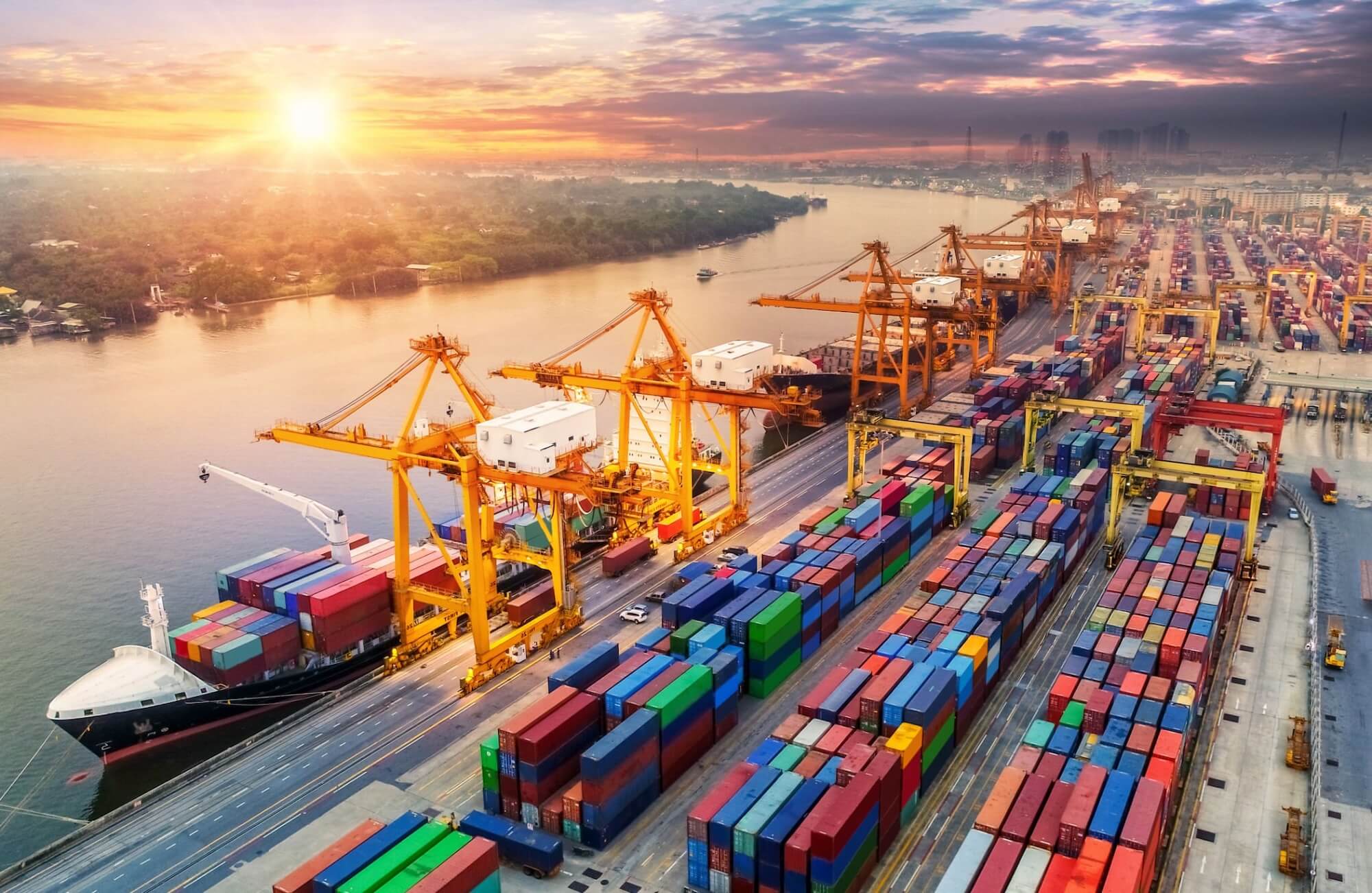
Economic integration—the painstaking, often unglamorous work of dismantling barriers—has quietly transformed the region’s commercial landscape. Through years of gruelling negotiations, tariffs have been eliminated on 98.6 per cent of traded goods. Mechanisms such as the ASEAN Single Window and the ASEAN Customs Transit System have slashed clearance times and costs. Other barriers to the movement of goods, services, and investment across Southeast Asian borders are being methodically addressed.
But ASEAN did not stop at removing barriers. It actively built new connections. The landmark Lao PDR–Thailand–Malaysia–Singapore Power Integration Project has made cross-border electricity sharing a reality, advancing both sustainable energy transition and energy security. This milestone achievement signals that the broader ASEAN Power Grid vision, long aspirational, is now delivering tangible results: cleaner energy reaching more homes and industries, and a region better insulated against supply disruptions. Multilateral agreements on freight in transit, inter-state transport, multimodal logistics, and cross-border passenger movement have entered into force. The progressive liberalisation of regional air transport has opened the region’s skies to new carriers and routes, benefiting millions of travellers.
In the digital realm, integration is most tangible in everyday life. National digital payment systems, built independently by most Member States, are now being systematically linked across borders. More consequentially, the Digital Economy Framework Agreement (DEFA)—the first of its kind—is nearing conclusion. Covering cross-border data flows, digital transactions, cybersecurity, and talent mobility, DEFA is designed to transform a fragmented collection of digital markets into a coherent, interconnected digital economy, positioning the region as a genuine digital powerhouse.
Alongside this, ASEAN has worked to ensure that deeper integration lifts all boats. The Initiative for ASEAN Integration (IAI) built the institutional capacity of Cambodia, the Lao PDR, Myanmar, and Viet Nam to participate fully in—and benefit from—a more connected and integrated region. For the millions of people whose livelihoods depend on micro, small, and medium enterprises (MSMEs)—which account for 85 per cent of domestic employment across the region—dedicated programmes including ASEAN Access, the ASEAN SME Academy, and Go Digital ASEAN have opened doors to regional and international markets, financing, technology, and advisory services that were previously out of reach.
The aggregate economic impact is striking: an estimated 1.1 trillion US dollars in economic value added, representing a 5 per cent uplift to the region’s collective GDP. Trade rose by 11 per cent. Foreign direct investment grew at 10 per cent annually. Around four million jobs were created, and average monthly wages climbed by 5 per cent. Numbers tell a compelling story. Behind each of these figures are real people— working more, earning more, and living better.

People’s well-being at the centre
Economic integration is always intended as a means to an end. The end is people’s well-being—and here too, the decade has produced meaningful advancements.
ASEAN delivered on its commitment to expand opportunity and extend social protection to those most often left behind. Under the ASEAN Enabling Masterplan, persons with disabilities gained expanded access to social assistance and vocational training. Millions of migrant workers—among the region’s most vulnerable—gained access to pensions, health insurance, and work-related risk coverage through national initiatives aligned with ASEAN-led labour frameworks. Women gained better access to economic opportunities through targeted training and financing programmes, while institutional frameworks for protecting women and children from violence were put in place.
The pandemic underscored the value of ASEAN’s prior investment in regional health mechanisms. Those frameworks accelerated knowledge-sharing and emergency responses, including vaccine distribution at precisely the moment they were needed most. Since then, the region has gone further—expanding access to healthcare, scaling digital health services, establishing a dedicated regional centre for public health emergencies, and adopting a One Health approach that integrates human, animal, and environmental health into a single framework.
On climate and the environment, ASEAN has responded to the mounting costs of ecological degradation with transboundary initiatives targeting pollution, coastal protection, fishery resources, biodiversity preservation, and sustainable practices. With climate change compounding the vulnerabilities of an already disaster-prone region, early warning systems and disaster response coordination have been strengthened through the ASEAN Agreement on Disaster Management and Emergency Response (AADMER) and the ASEAN Coordinating Centre for Humanitarian Assistance on disaster management.
The region has also invested in its next generation. Declarations on early childhood education, the digital transformation of education systems, higher education, and human resource development have laid the groundwork for preparing young Southeast Asians for a rapidly changing world of work. Youth exchanges, volunteer programmes, and fellowship schemes have given students and young professionals both skills and a stake in the ASEAN project. Cultural and heritage collaborations, meanwhile, have deepened mutual understanding and cultivated a shared regional identity—one that holds the community together precisely because it is enriched, rather than threatened, by diversity.
The cumulative effect is visible in the data. Poverty rates have declined further. Life expectancy and key health outcomes have continued to improve. More children—particularly girls—are in school. Communities are better protected and better connected to opportunity than they were ten years ago.
The next horizon
ASEAN’s record over the past decade is one of steady, adaptive progress—achieved, it must be said, under genuinely difficult conditions and within a consensus-based structure that must reconcile the diverse interests of sovereign nations. That is no small feat. It speaks to a deeper cohesion and to an institutional maturity capable of translating collective will into meaningful actions.
The challenges of the next chapter are, if anything, more demanding. Great-power competition is intensifying. Climate risk is no longer a future concern but a present threat. Artificial intelligence is reshaping economies and societies faster than policy can comfortably follow. And the structural shifts reordering global trade will require responses that are faster, better-resourced, and more coordinated than anything the region has previously attempted.
The roadmap for this next chapter is the ASEAN Community Vision 2045: Our Shared Future—a forward-looking, strategic document that places the region’s citizens at the centre of ASEAN’s ambitions. It acknowledges the shifts in geopolitics, digitalisation, demographic change, and climate risk, and charts a course toward a more resilient, innovative, dynamic, and people-centred Community. It also calls, explicitly, for ASEAN institutions—its organs, bodies, and mechanisms—to become more decisive, responsive, and future-ready, with stronger cross-sectoral and cross-pillar coordination and sufficient funding to match the Vision’s ambitions.
Equally important is the human dimension of that vision: communicating it, engaging people in community building, and forging a stronger sense of ASEAN identity that makes the project meaningful not just to leaders and policymakers, but to the nearly 700 million people it is ultimately for.
The work of the next twenty years begins now and it will be understandably more interesting to see the growth and transformation of ASEAN in this new era.