


Biodiversity is essential for sustaining the lives of people, animals, plants, and microorganisms, and for creating healthy ecosystems that provide clean air and food. However, biodiversity is under threat from human activities, including overfishing, overhunting, pollution, overdevelopment, and climate change. These disturbances can alter the abundance of organisms, population dynamics, and ecological interactions, thereby affecting infectious diseases. Increased contact among wildlife, livestock, and people increases the risk of disease transmission, or zoonosis (WHO, 2025).
There are global frameworks and approaches to help address these various challenges. One Health is a transdisciplinary, collaborative, and multi-tiered approach that aims to achieve optimal health outcomes by recognising the association among people, animals, plants, microorganisms, and their shared environment. Using this lens in looking at biodiversity shows how biodiversity conservation reinforces health security, strengthens climate resilience, and supports sustainable development. There is strong advocacy for integrating biodiversity into One Health to address biodiversity hotspots that overlap with dense populations, production landscapes, and zoonotic spillover risks (IUCN, 2025).
Underlying this is the recognition of the interdependence of human, domestic, and wild animal health, plant health, and the environment, which requires integrated surveillance.
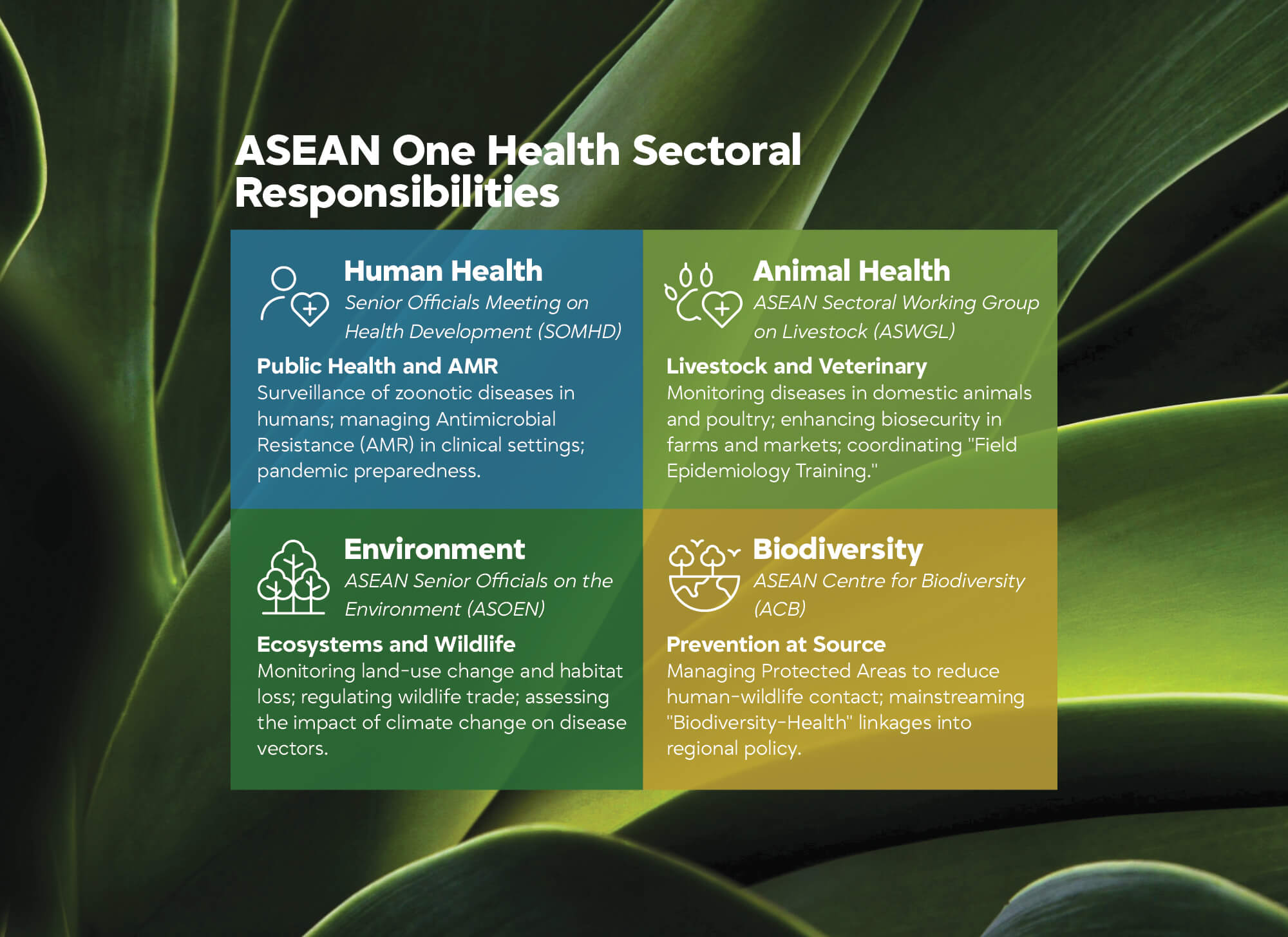
ASEAN’s One Health approach is a strategic, multi-sectoral framework designed to sustainably balance the health of people, animals, and ecosystems in the region. Formally adopted at the 42nd ASEAN Summit (2023), the ASEAN Leaders’ Declaration on the One Health Initiative serves as the primary regional mandate. This declaration underscores the necessity of a holistic response to “health threats at the human-animal-plant-environment interface,” specifically targeting zoonotic diseases, antimicrobial resistance (AMR), and food safety (ASEAN, 2023).
The operational core of this initiative is the ASEAN One Health Network, which coordinates cross-sectoral efforts between health, agriculture, forestry, and environmental sectors. This is guided by the ASEAN One Health Joint Plan of Action, a document that aligns regional targets with global standards to enhance “prevention, preparedness, and response (PPR)” (ASEAN Secretariat, 2024).
Key cross-sectoral initiatives focus on preventing zoonotic spillovers. ASEAN recognises that more than 75 per cent of emerging infectious diseases originate in wildlife, driven largely by biodiversity loss and habitat fragmentation (ASEAN Centre for Biodiversity, 2023). The ASEAN Strategy for Preventing Zoonotic Disease Transmission from Wildlife Trade (2022) specifically addresses these links, noting that anthropogenic land-use changes and unregulated wildlife markets create “high-risk super-interfaces” for pathogen spillover (ASEAN, 2022). By integrating the ASEAN Centre for Biodiversity (ACB) into One Health discussions, the region aims to mainstream ecosystem restoration and wildlife conservation as essential public health interventions.