
In September 2023, the ASEAN Centre for Biodiversity (ACB) and the ASEAN Business Advisory Council established the ASEAN Business and Biodiversity Initiative (ABBI), a dynamic platform to accelerate progress in achieving biodiversity and climate goals across the region. This involves building partnerships with the business sector and expanding this network to integrate biodiversity considerations in business operations and promote nature-based solutions to mitigate climate change impacts.
Metro Pacific Investment Corporation (MPIC), a leading Philippine-based investment management and infrastructure holding company, has been a key figure in advancing ABBI in Southeast Asia. MPIC’s vision is to make a difference in the lives of Filipinos and to meet societal challenges by maximising economic opportunities, combined with inclusive growth, environmental stewardship, and good governance. MPIC is a pioneer in enhancing private-sector contributions to ASEAN’s global biodiversity goals and targets by supporting biodiversity-friendly and climate-smart operations. Its unwavering commitment to environmental protection is unparalleled and has been delivering a strong, powerful voice on business and biodiversity at international conventions, such as UN meetings and world expositions.
Mainstreaming biodiversity and sustainability in business operations
MPIC advances a business strategy that is deeply rooted in ecosystem restoration, biodiversity protection, and responsible stewardship—imperatives firmly embedded in its sustainability framework. Managing environmental and social impacts is both an ecological duty and an economic necessity for the group. Beyond meeting regulatory obligations, MPIC continuously elevates its operational standards to safeguard the natural environment and the communities it serves.
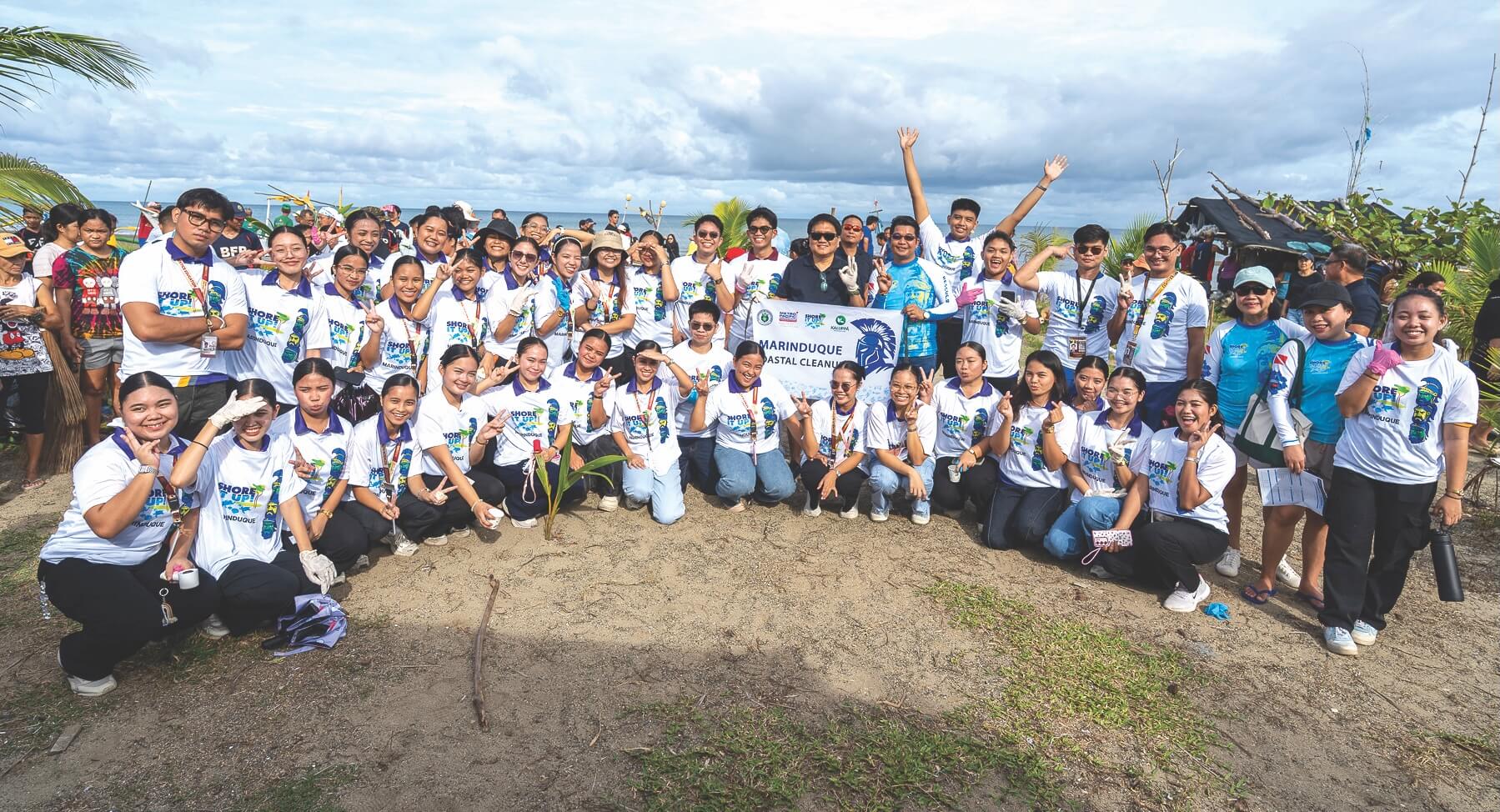
For nearly two decades, MPIC has invested in large-scale biodiversity conservation programmes across the Philippines. Since 2006, the Metro Pacific Investments Foundation, MPIC’s corporate social responsibility arm, has been implementingthe Shore It Up! (SIU!) initiative, one of the country’s longest-running and award-winning marine protection programmes. Now in its 16th year, SIU! has provided critical support to the UNESCO-inscribed Tubbataha Reefs Natural Park and multiple coastal sites in Batangas, Surigao, Marinduque, and other marine biodiversity hotspots. Through these efforts, MPIC and MPIF continue to champion multi-sectoral partnerships that preserve the nation’s natural heritage for future generations.
MPIC is also part of a historic private-sector coalition committed to protecting the Verde Island Passage (VIP)—recognised as the “centre of the world’s marine biodiversity.” In May 2024, MPIC, together with two other conglomerates in the country, formalised a joint stewardship commitment through an MOU with the Department of Environment and Natural Resources (DENR) and the Department of Energy (DOE). This collaboration reinforces the critical role of business in conserving the VIP, a vital marine area not only for its ecological richness but also for its importance to local fisheries, livelihoods, and ecotourism.
Complementing its marine initiatives, MPIC is equally focused on enhancing urban biodiversity. In 2022, the company entered into a landmark public-private partnership with the DENR and Quezon City local government to promote urban biodiversity and reconnect communities with nature. In 2023, the Gabay Kalikasan Park was developed, setting a new model for urban green park development.
Subsidiaries across the MPIC Group further reinforce these commitments through extensive reforestation programmes.
- Meralco’s One for Trees has planted over 2.7 million trees and provided sustainable livelihood to local communities.
- Maynilad’s Plant for Life has planted about 1.5 million trees across nearly 2,000 hectares and provided alternative livelihood opportunities to the indigenous community, Dumagat, living inside the Ipo Watershed.
- Metro Pacific Tollways Corporation’s Greening the Expressways programme plants 10,000 trees annually along its expressways to enhance air quality and mitigate vehicle-related emissions
To embed sustainability into organisational culture, MPIC has also introduced an EESG-linked compensation scheme, tying a portion of employee incentives to Environmental, Economic, Social, and Governance targets—including biodiversity conservation and partnerships.
Together, these efforts demonstrate how MPIC integrates biodiversity protection directly into its business strategy—strengthening ecosystem resilience, supporting community livelihoods, and ensuring long-term value creation for stakeholders, not just in the Philippines but across the ASEAN region.
Partnership with the ASEAN Centre for Biodiversity
MPIC’s motivation to invest in biodiversity conservation and sustainability initiatives stems from a clear and urgent reality: our businesses are deeply interconnected with nature and highly vulnerable to the impacts of climate change. As a provider of essential services—from water and energy to transportation, healthcare, and agriculture—any disruption in natural systems directly affects our ability to serve millions of Filipinos. We are already seeing these impacts, and they reinforce the need for long-term, science-based action.
This is why MPIC integrates finance, risk, and sustainability under a single overarching function—an uncommon yet deliberate approach that ensures environmental and social considerations are embedded in core business decisions. It reflects our vision for sustainable development: mitigating financial, social, and ecological risks while identifying opportunities that create both business value and positive environmental impact.
Our partnership with the ACB is a cornerstone of this commitment. The ACB is the region’s leading institution for biodiversity conservation, and aligning with them allows MPIC to ground its initiatives in globally recognised science, regional expertise, and credible frameworks. The renewal of our three-year partnership in 2023 underscores the importance we place on working with an institution that shares our commitment and has a strong mandate across ASEAN.
The collaboration strengthens nature-positive action and supports broader goals of climate resilience and sustainable development.
MPIC’s investment in biodiversity conservation, especially our partnership with ACB, is driven by both responsibility and necessity: to protect the natural systems our operations rely on, to safeguard the communities we serve, and to contribute meaningfully to the resilience and sustainability of the ASEAN region.

Sustainable and biodiversity-friendly initiatives
MPIC, its foundation, and its operating companies have delivered tangible environmental and social impacts across marine protection, mangrove restoration, urban greening, regional biodiversity partnerships, energy transition, and agriculture. These projects showcase how an infrastructure company can be a force for sustainable development, benefitting both nature and communities.
MPIC, through its power arm, Meralco, is leading the energy transition in the Philippines. Meralco, through MGreen Renewable Energy Inc., is building Terra Solar, the world’s largest integrated solar and battery storage facility, with 3,500 megawatts peak (MWp) of solar capacity and 4,000 megawatt-hour (MWh) battery storage. Consequently, Meralco has accelerated its energy transition through MGEN’s renewable energy (RE) portfolio, which provides power to over 400,000 households.
The landmark Cebu-Cordova Link Expressway (CCLEX) of Metro Pacific Tollways Corporation was carefully designed and intentionally made longer to save and protect the dominant 278-kilometre mangrove forests, which serve as spawning grounds for fish and natural barriers to protect the communities from destructive waves and storm surges. Recognised as the “Fishermen’s Bridge,” CCLEX was built with additional clearance and channels to give local fisherfolk and their boats access to their traditional fishing grounds, preserving their long-established way of life.
In 2022, MPIC’s water arm, Maynilad, launched its NEW WATER project, which recycles used water for potable application, an innovative way of augmenting Metro Manila’s water supply. More NEW WATER treatment plants will be built to increase their current capacity of five million litres per day (MLD) of NEW WATER. Once operational, all five NEW WATER treatment plants will have a total combined capacity of 97 MLD, enough to supply approximately 400,000 customers.
MPIC’s wholly owned agriculture unit, Metro Pacific Agro Ventures, launched the 22-hectare vegetable greenhouse complex, the largest in the Philippines. This plays a significant role in strengthening the country’s food security through strategic investments in value-added agriculture and cutting-edge, technology-driven vegetable production. These efforts help stabilise food supply, reduce import dependence, support farmers, and build a more resilient, modern agricultural sector.
Engagement with stakeholders and communities
MPIC engages employees, stakeholders, and local communities in its biodiversity and sustainability programmes. Through Metro Pacific Investments Foundation, the corporation mobilises its staff and volunteers from its operating companies to take part in coastal and underwater cleanups, ecological education campaigns, and mangrove propagation projects, thereby building a culture of environmental stewardship from within.
For local communities, MPIF trains Marine Protection, Inspection, and Conservation (MPIC) Guardians, composed of fisherfolk volunteers and members of Bantay-Dagat [sea patrol] groups. MPIF equips them with patrol equipment and helps institutionalise their role through local government partnerships. It also supports alternative livelihoods, such as eco-guides, and builds local centres, such as Mangrove Propagation and Information Centres, to provide education and community-based restoration.
At the stakeholder level, MPIC partners with government agencies, academic institutions, and regional bodies to drive more systemic, science-based biodiversity work.
These engagements bring both opportunities and challenges. On the opportunity side, MPIC is building strong local ownership by empowering communities as stewards, creating green livelihood pathways, and raising conservation awareness via multi-sector fora. However, sustaining stakeholder engagement over the long term is difficult, as it requires ongoing funding.
Why the business sector must champion biodiversity
Protecting biodiversity is no longer optional. It is a business imperative and a shared responsibility. The natural ecosystems that sustain our companies, our people, and our economies are under threat, and every organisation has a role to play in restoring them. Championing biodiversity conservation is an investment in long-term resilience, climate security, and economic growth. The companies that thrive in the future will be those that recognise nature as a critical asset, embed sustainability into their strategies, and act decisively to protect the ecosystems that sustain their operations and communities.
The views and opinions in this article are solely those of the author and do not represent the policy or official position of ASEAN