


Regional integration is only as strong as the people who carry it forward. Hence, ASEAN has made institutional strengthening a priority for achieving a cohesive ASEAN Community.
The Attachment Officer (AO) Programme was designed to specifically address the varying levels of institutional readiness between ASEAN’s newer and longer-established members. The programme is being implemented under the Initiative for ASEAN Integration (IAI) with support from the Japan-ASEAN Integration Fund (JAIF).
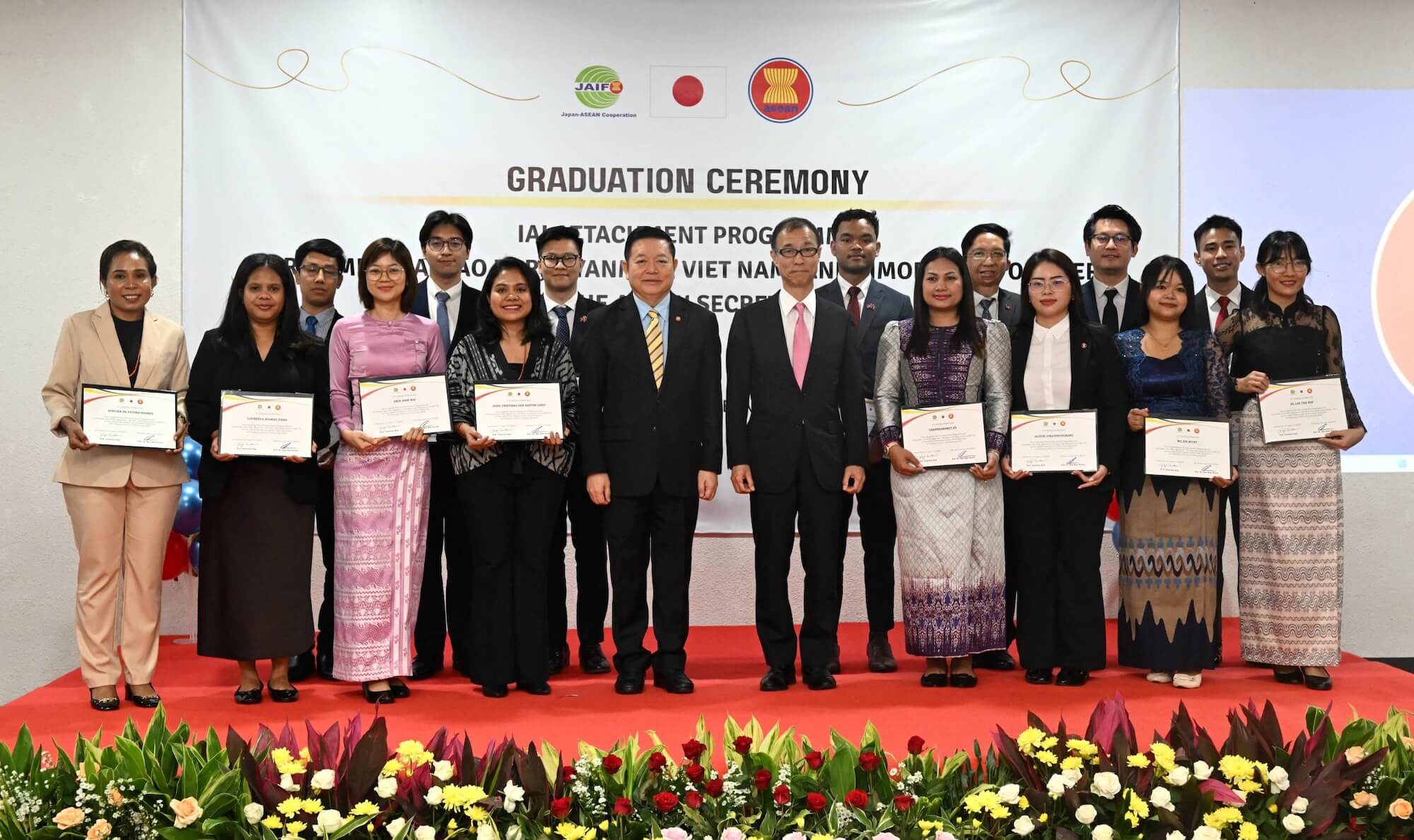
For 12 months, officials from Cambodia, Lao PDR, Myanmar, Viet Nam, and, more recently, Timor-Leste (CLMV-TL) are assigned at the ASEAN Secretariat to gain immersive, firsthand exposure to ASEAN’s regional processes. In addition to acquiring technical skills, participants leave with institutional confidence, a genuine sense of shared purpose, and a stake in building an inclusive, resilient, and dynamic ASEAN Community. While individual careers advance, the region also gains.
Tracing the evolution of the Attachment Officer Programme
The AO Programme traces its origins to ASEAN’s early efforts to narrow development gaps and foster a cohesive ASEAN Community through targeted institutional capacity-building. Launched in 2001, just one year after the IAI was established, and initially funded by the Government of Japan through the Japan-ASEAN General Exchange Fund (JAGEF), the programme seconded four junior diplomats from CLMV to the ASEAN Secretariat, offering them a front-row seat to the region’s unfolding integration agenda. Over time, the initiative scaled up with support from the Japan-ASEAN Integration Fund (JAIF) since its establishment in 2006.
While early batches were assigned to the ASEAN Political-Security Community (APSC) Department, the programme expanded in 2013 to include placements of AOs across the ASEAN Economic Community (AEC) and ASEAN Socio-Cultural Community (ASCC) pillars, reflecting ASEAN’s increasingly comprehensive approach to integration. As of February 2026, 135 officials from CLMV-TL have completed the programme, many of whom now hold senior positions in their home ministries or serve within the ASEAN Secretariat. The inclusion of Timor-Leste officials in the most recent batch marks a historic milestone, underscoring ASEAN and Japan’s shared commitment to inclusive and forward-looking capacity development.
Since its inception phase, the AO Programme has been guided by a clear objective: strengthen the institutional capacity of government officials from CLMV by immersing them in the day-to-day work of the ASEAN Secretariat. Rather than relying solely on classroom-based learning, the programme subscribes to a “learning by doing” approach where participants experience and gain insights into the breadth and depth of ASEAN’s work by performing diverse Secretariat tasks
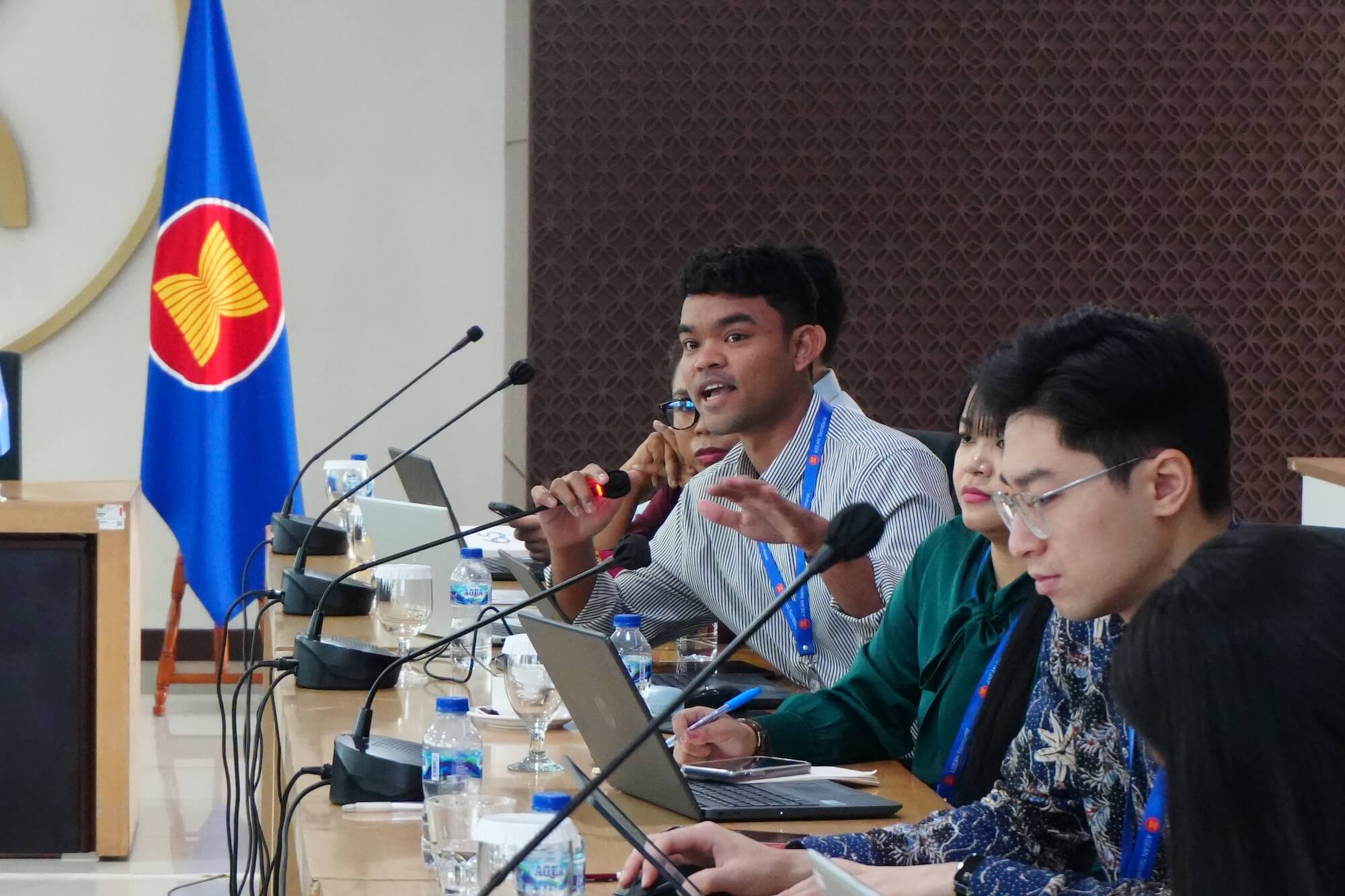
The Attachment Officers actively contribute to substantive work, attend internal meetings, and observe how ASEAN coordination and decision-making processes operate. This practical exposure is complemented by structured briefings, participation in ASEAN meetings and activities within the region and beyond, a two-week diplomatic training course, and a one-week study visit to Japan, where participants learn about development practices and regional cooperation perspectives.
By combining on-the-job experience with structured learning, the programme deepens participants’ understanding of ASEAN mechanisms and institutional dynamics, while enhancing core professional competencies, including technical and policy analysis, coordination skills, and cross-cultural communication. This integrated design ensures that AOs return to their home institutions equipped not only with knowledge of ASEAN processes but also with practical, transferable skills that can be applied immediately in their respective institutions.
From learning to action: Impacts on individuals and institutions
The impact of the AO Programme extends well beyond the one-year attachment period. For many participants, the experience becomes a pivotal stage in their professional development. The alumni of the programme frequently report improvements in English proficiency, negotiation skills, and technical understanding of ASEAN instruments, including the ASEAN Charter and sectoral cooperation frameworks.
Upon returning to their home ministries, AOs often serve as valuable “ASEAN focal points,” supporting colleagues in navigating ASEAN processes more effectively and streamlining communication with the ASEAN Secretariat. This enhances institutional coordination and ensures smoother engagement in ASEAN meetings and initiatives.
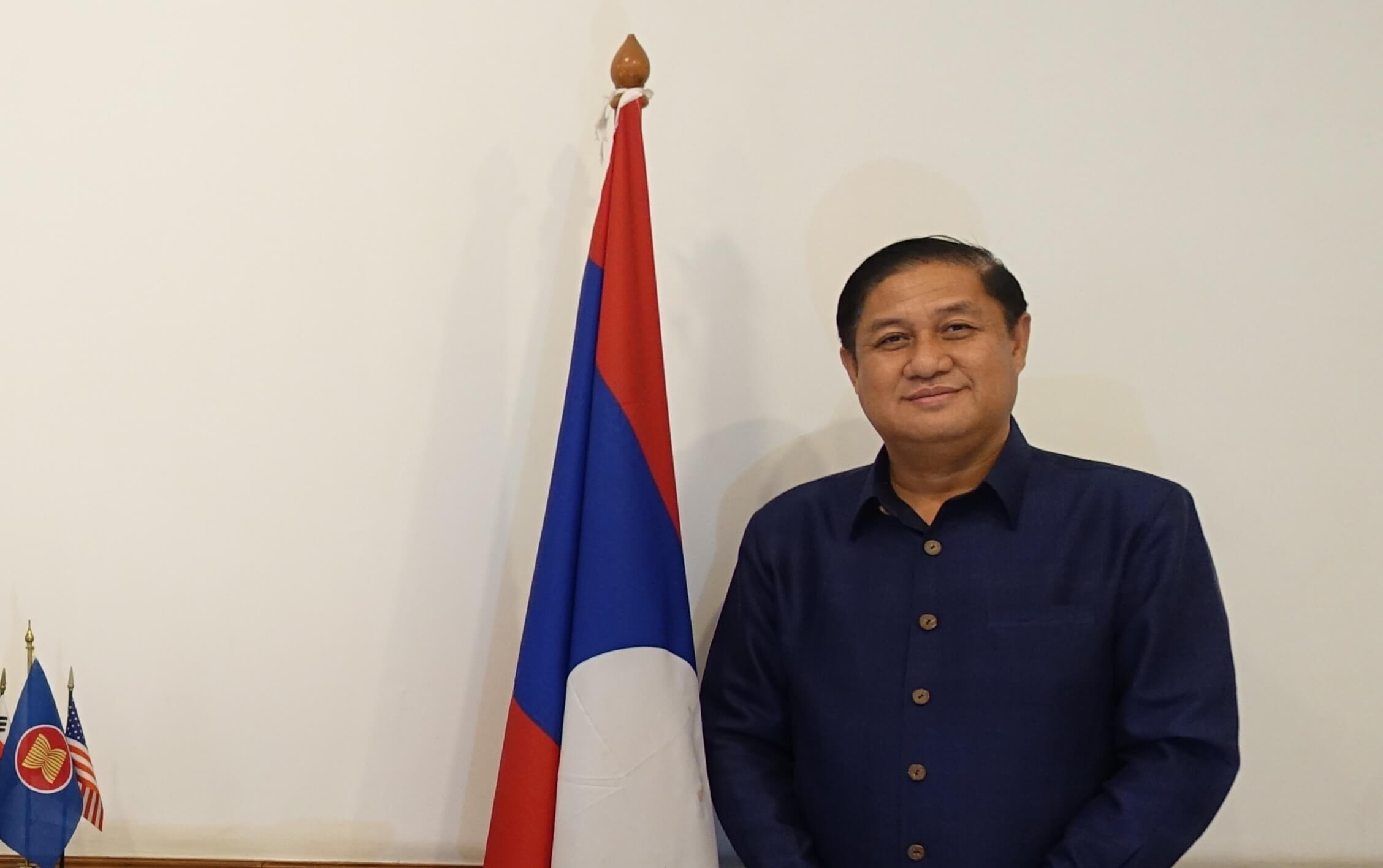
One notable example is former Deputy Secretary-General of ASEAN for ASCC, Ekkaphab Phanthavong. After participating in the AO Programme in 2007, he served as Ambassador and Permanent Representative of the Lao PDR to ASEAN from 2018 to 2021 and was subsequently appointed Deputy Secretary-General of ASEAN for ASCC from 2021 to 2024. His career progression demonstrates how the AO Programme contributes not only to individual professional growth but also to strengthening ASEAN-oriented leadership within the ASEAN Secretariat itself.
Ambassador Phanthavong is now the Director General of the Department of European and American Affairs at the Ministry of Foreign Affairs of the Lao PDR. Reflecting on the programme, he noted: “For CLMV, especially for Lao PDR, we feel that the Programme meets what we need and remains highly relevant for the new generation of officials.” This observation underscores the programme’s continued relevance in equipping officials from CLMV-TL with the confidence, institutional understanding, and leadership orientation needed to contribute meaningfully to ASEAN integration in the long term.
Beyond technical skills, the programme fosters strong people-to-people connections. Living and working together in Jakarta for a year allows participants to form lasting professional networks and reinforces a shared sense of ASEAN identity. This intangible yet powerful outcome enables participants to put a face to ASEAN’s work through direct engagement with technical officers across sectors, building trust, practical understanding, and meaningful professional relationships through day-to-day collaboration in their respective fields.
Beyond attachment: Building long-term institutional capacity and strength
The AO Programme is one component of a long-term ASEAN-Japan partnership aimed at strengthening institutional capacity and human resource development across the region. Through JAIF, this commitment extends beyond short-term attachments to sustained investments that reinforce the ASEAN Secretariat’s effectiveness and resilience.
One such initiative is the Master’s Degree Programme for IAI Attachment Programme graduates at the National Graduate Institute for Policy Studies (GRIPS) of Japan, launched in 2024. Designed as a follow-up pathway for AO alumni, the programme equips participants with advanced public policy knowledge, practical problem-solving skills, and a deeper understanding of Japan’s political and economic landscape, enabling them to contribute more effectively to regional priorities such as the ASEAN Outlook on the Indo-Pacific (AOIP), democracy, and the rule of law.
Complementing this, JAIF also supports the ASEAN Human Educational Development Scholarship Partners Programme (AHEAD50), a scholarship programme commemorating the 50th anniversary of ASEAN-Japan Friendship and Cooperation, which strengthens institutional linkages through human capital development. In addition, JAIF’s support for enhancing the ASEAN Secretariat’s e-learning platform expands access to continuous learning, ensuring that capacity development remains inclusive, scalable, and sustainable over the long term.
Sustaining ASEAN integration through human capital development
As ASEAN advances towards deeper integration amid evolving regional and global challenges, the continued relevance of the AO Programme lies in its ability to adapt to the changing landscape, while remaining firmly anchored in human capacity development. The inclusion of Timor-Leste officials in recent batches—even prior to Timor-Leste’s official accession as an ASEAN Member State—reflects Japan’s foresight and proactive support in facilitating their integration process at an early stage. This demonstrates ASEAN and Japan’s enduring commitment to inclusive, forward-looking institution-building, ensuring that no Member State is left behind in the integration process.
Looking ahead, the programme is expected to play an increasingly important role in cultivating a new generation of officials equipped with the skills, networks, and regional perspectives needed to navigate complex policy environments. More than an administrative attachment, the AO Programme serves as a catalyst for regional unity, solidarity, and co-creation by narrowing development and capacity gaps, strengthening institutional linkages, and fostering people-to-people connectivity across ASEAN. Supported by Japan’s long-standing commitment to ASEAN integration, as enshrined in the Joint Vision Statement on ASEAN-Japan Friendship and Cooperation Trusted Partners and its Implementation Plan, the programme demonstrates how sustained investment in human capital development can translate shared aspirations into enduring regional cooperation.
The information contained in this article represents the views and opinions of the authors and does not necessarily reflect the views or opinions of the Government of Japan.
Learning ASEAN from Within
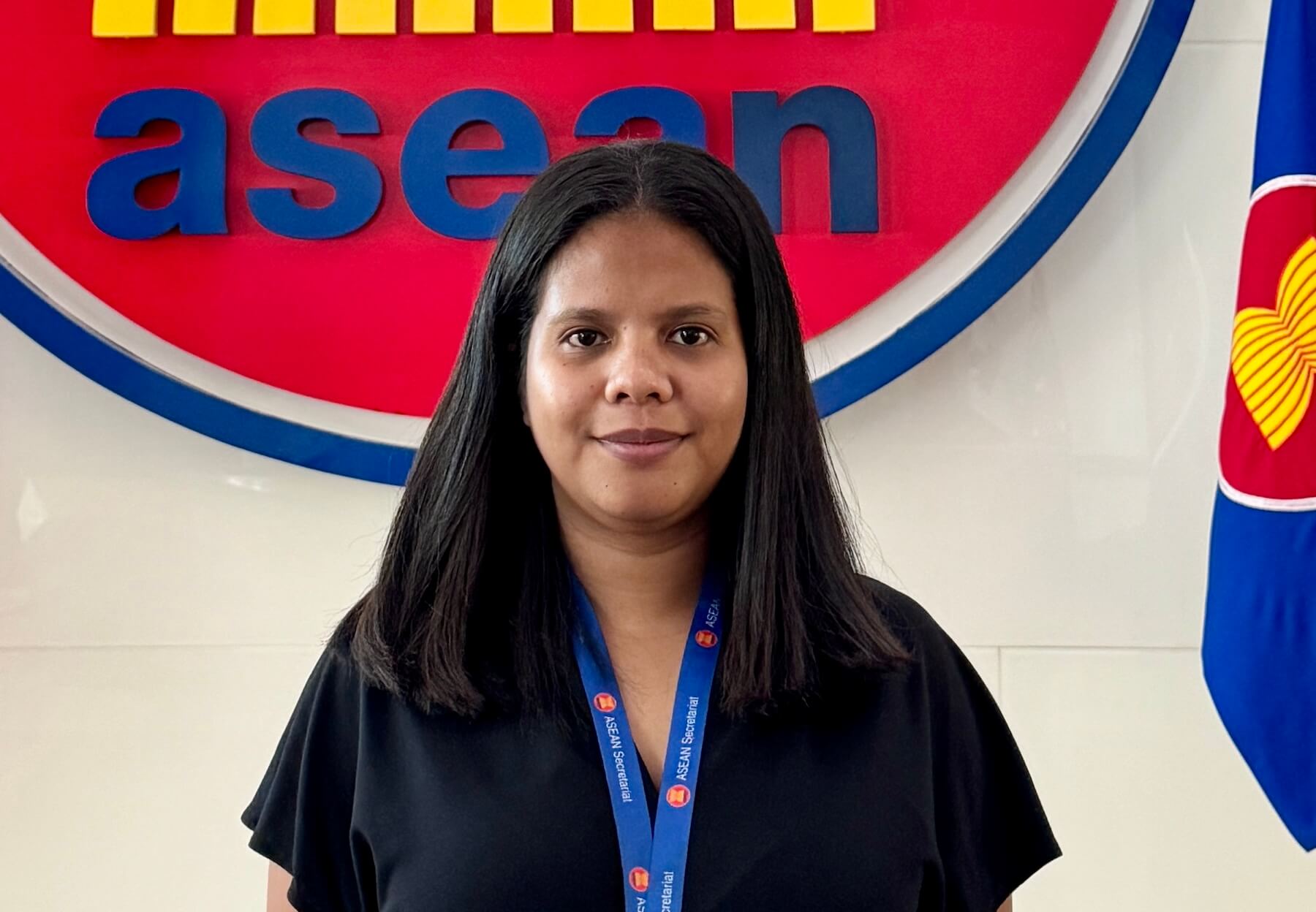
Lourenca Viana, 30
Officer at the Ministry of Foreign Affairs and Cooperation of Timor-Leste
Attached to the External Relations Division 3, ASEAN Political Community Department
I gained first-hand exposure to the Secretariat’s operational work and a deeper understanding of ASEAN’s political-security, economic, and socio-cultural cooperation with Dialogue Partners and Development Partners. I participated in and served major ASEAN meetings, such as the 46th and 47th ASEAN Summits and Related Summits, the ASEAN Foreign Minister Meeting, and the Post-Ministerial Conference as part of the ASEAN Secretariat delegation, both in overseas missions and in Jakarta, which offered practical insights into engagement processes under ERD3’s purview.
The hands-on involvement and direct observation of policy coordination strengthened my understanding of ASEAN’s external relations architecture and partnership dynamics. Overall, the experience significantly contributed to my professional growth and enhanced my ability to support Timor-Leste’s ASEAN integration efforts, surpassing my expectations.
The most valuable things I learned about ASEAN’s regional cooperation and processes centre on how collaboration, structure, and external partnerships drive effective outcomes. First, I gained a deeper understanding of ASEAN’s collaborative model, where consensus-building is paired with practical coordination across a diverse set of Member States and partners, emphasising inclusivity, consultative processes, and incremental decision-making to balance competing interests while advancing regional priorities.
I also appreciated the importance of structured policy processes, observing how policy development follows clear stages: conceptualisation, drafting, stakeholder consultation, revision, and final endorsement, supported by robust documentation, transparent inputs, and well-defined roles to ensure legitimacy and timeliness. Engagement with Dialogue Partners and development partners highlighted how external relationships amplify impact and how joint statements are negotiated and aligned with regional development plans. Finally, mentorship and hands-on exposure proved invaluable for translating experiences into practical skills in policy coordination and stakeholder management, with ongoing reflections and objective-setting guiding professional growth.
The knowledge and experience I gained over the year directly strengthened my performance as the ASEAN focal point in my line ministry. I plan to apply a more structured approach to policy coordination by leveraging the clear stages I observed in the ASEAN Secretariat. The emphasis on inclusive, consultative decision-making will guide me in coordinating with internal departments, line ministries, and external partners to build consensus and align national priorities with ASEAN strategies.
Overall, the knowledge and networks gained made it easier to navigate cross-institutional collaborations, anticipate potential issues, and deliver tangible contributions to ASEAN integration efforts at home.
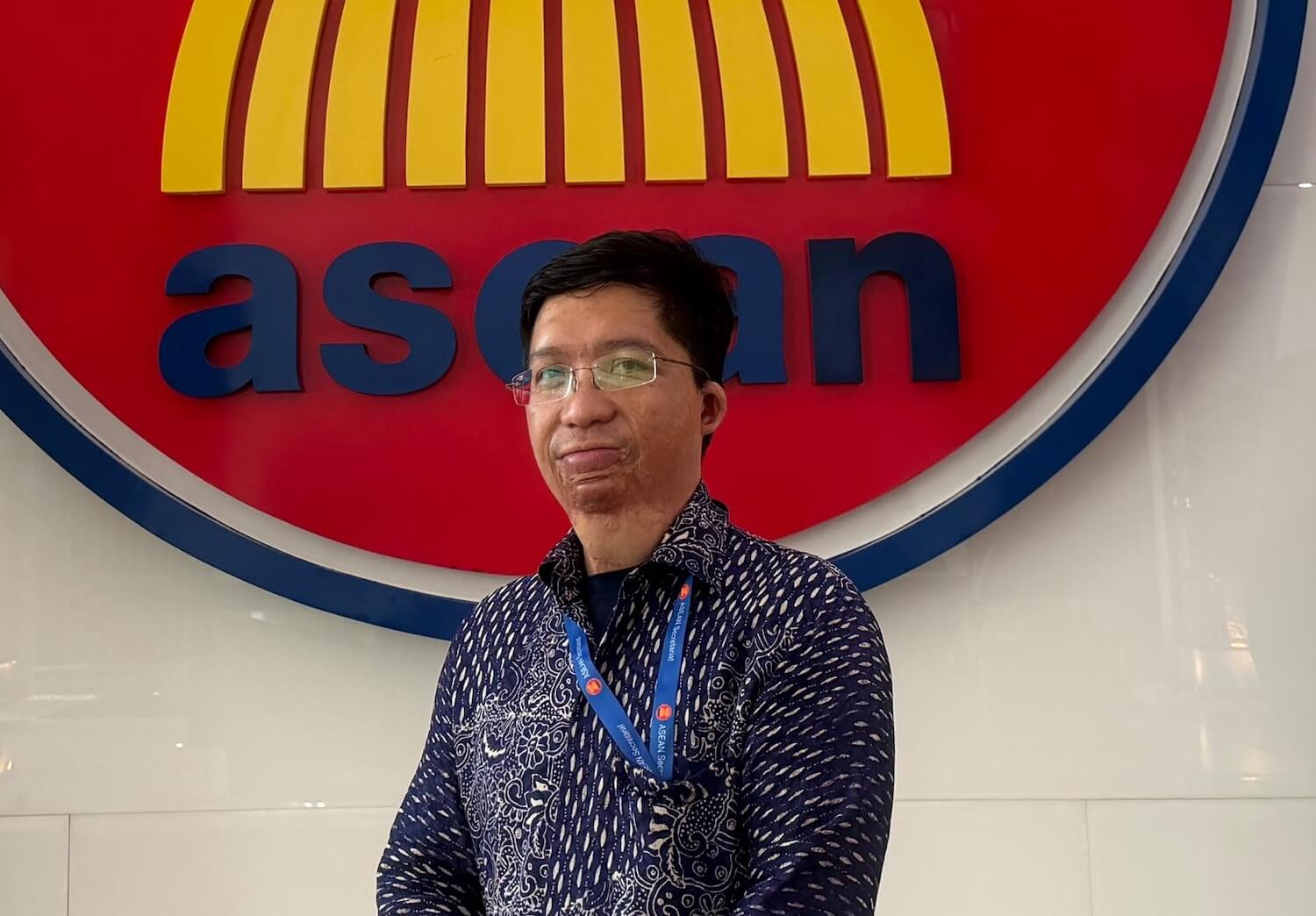
Vathana Sim, 37
Deputy Director of the Administration Division from the Provincial Government of Ratanakiri, Cambodia
Attached to the Disaster Management and Humanitarian Assistance Division, ASEAN Socio-cultural Community Department
What I’ve enjoyed most is how much I’ve grown—both professionally and personally. Working in Disaster Management and Humanitarian Assistance division gave me a clear view of how regional initiatives move from ideas to real support for ASEAN Member States, which became especially meaningful during Cambodia’s ASEAN Ministerial Meeting on Disaster Management (AMMDM) and ASEAN Committee on Disaster Management (ACDM) Chairmanship. I was proud to contribute by preparing updates, supporting ASEAN Committee for Disaster Management working group meetings, assisting with high level materials, and servicing the senior-level and ministerial-level meetings.,
The programme far exceeded my expectations. Instead of just administrative tasks, I was able to support regional processes, join technical study visits, and learn from dedicated colleagues committed to strengthening ASEAN’s disaster resilience. It made my year at the ASEAN Secretariat both impactful and deeply rewarding.
Each challenge became a valuable learning experience that strengthened my skills, confidence, and understanding of ASEAN’s collaborative way of working.
One memory that would stay with me happened during a preparation meeting for senior and ministerial level meetings. Before joining ASEC, I used to wonder how it was done and why the process was time-consuming. But sitting inside the ASEAN Secretariat and watching the coordination unfold, I finally understood. That moment changed the way I view regional coordination.
I genuinely hope many more officers will have this opportunity in the future. This programme doesn’t just build capacity—it builds friendships, understanding, and the true spirit of “One ASEAN, One Community.”