
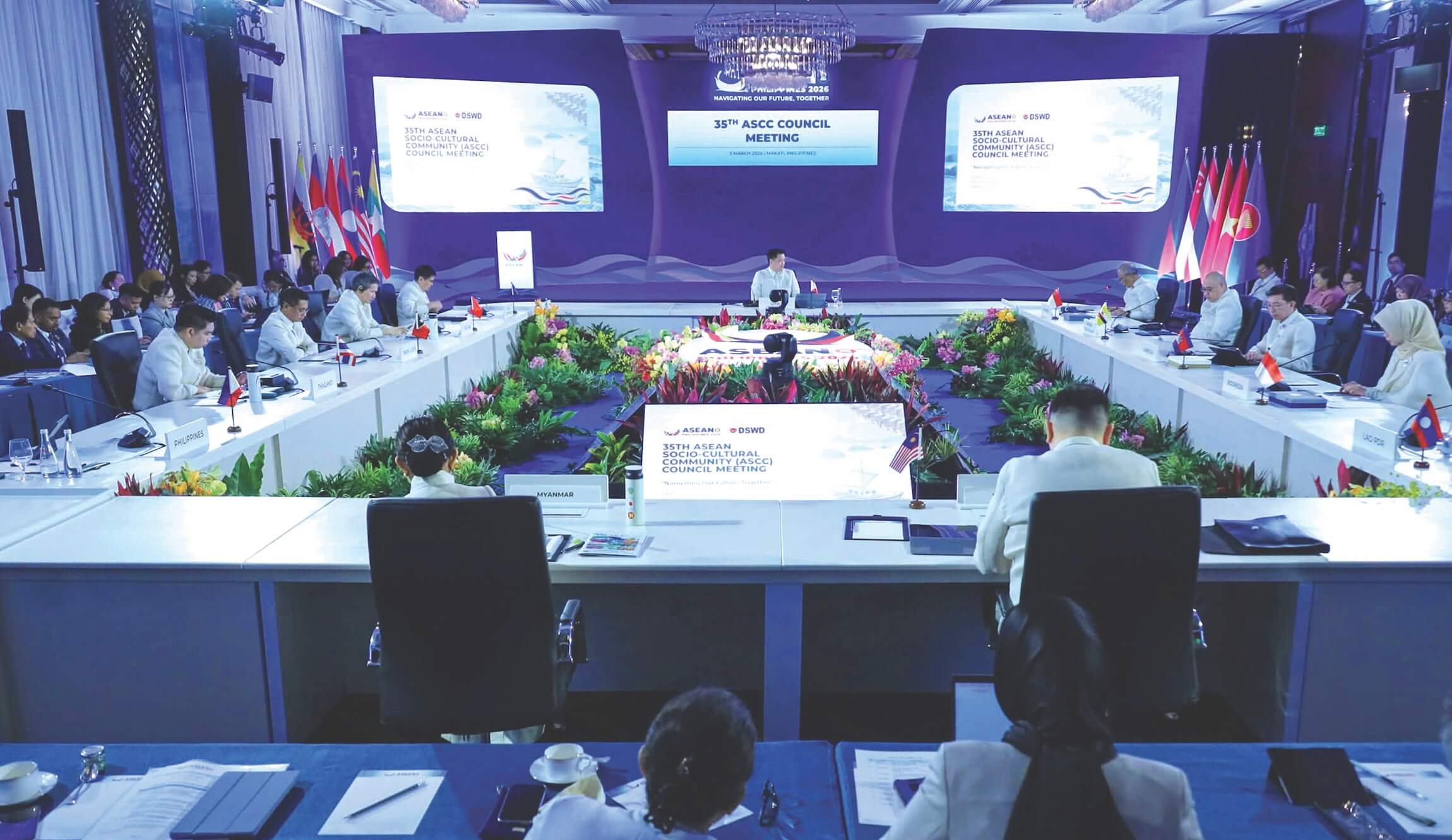
The Philippines’ Chairship of the ASEAN Socio-Cultural Community (ASCC) Pillar unfolds at a decisive inflection point for the region. As the ASCC Blueprint 2025 concludes and the ASCC Strategic Plan enters its implementation phase, the People Pillar faces both a reckoning and an opportunity. Past gains must be defended, institutionalised, and scaled—while unresolved and emerging socio-cultural risks demand bolder, faster, and more coordinated responses. The stakes are clear: the well-being, dignity, and future prospects of more than 700 million ASEAN citizens.
This Chairship rests on a simple but uncompromising premise: ASEAN Community Vision 2045 will succeed only if development is built where life is lived—at the level of individuals, families, and communities—and sustained for generations to come. The ASCC’s contribution to ASEAN Community Vision 2045 positions people at the core of development, not at its margins.
Anchored on the ASEAN 2026 theme, “Navigating Our Future, Together,” and giving concrete expression to People Empowerment, the Philippines advances the ASCC thematic priorities under the mnemonic RISE: Resilient and Empowered Families; Inclusive Development; Smart Youth and Innovation; and an Environmentally Sustainable and Food-Secure Future. RISE signals action and accountability—a test of ASEAN’s collective resolve to turn commitments into measurable impact.
Resilient and empowered families: Strengthening the social foundations of the ASEAN Community
Families form the bedrock of ASEAN societies, yet they face unprecedented pressures. Demographic transitions, rapid urbanisation, labour mobility, technological disruption, and climate-related shocks reshape family life across the region. These challenges demand coordinated, holistic, and rights-based regional responses, not fragmented solutions.
The Philippines’ Chairship will launch the ASEAN Network for Family Development (AFMD) as a dedicated regional mechanism for knowledge exchange, policy alignment, and capacity building. AFMD will drive cross-sectoral collaborative social protection across health, education, gender equality, and care systems to strengthen families as engines of resilience and inclusive development.
The agenda is deliberately forward-looking. Priority actions include developing a regional action framework on family development with clear strategic pillars and monitoring indicators, establishing a shared knowledge repository on family-centered policies and programmes, and systematically tracking ASEAN Member States’ commitments to advance family-supportive legislation, services, and social protection.
Strengthening families reinforces ASEAN Community Vision 2045’s aspiration for a people-centered community. Families shape human capital, transmit values, and provide care across generations. When supported through accessible services, gender-responsive policies, and reliable safety nets, families stabilise societies and accelerate inclusive growth.
Inclusive development: From equity to opportunity
ASEAN Community Vision 2045 and the ASCC Strategic Plan reaffirm that community-building demands constant adaptation. The region must respond to shifting risks, widening inequalities, and populations structurally excluded from development gains.
Inclusive development under the Philippines’ Chairship represents a strategy in action. It guarantees access to social services, protection, and opportunity for all, especially those historically left at the margins.
A key priority is advancing age-friendly ecosystems that reflect ASEAN’s preference for community- and family-based living. Rather than relying on institutional care, household-level solutions take centre stage: scaling home-care services, retrofitting living environments, and deploying assistive technologies. Interventions support both older persons and family caregivers, who carry the invisible burden of care.
The High-Level Meeting on Unlocking the Silver Economy in ASEAN will convene policymakers, private sector leaders, civil society, and academia to reframe ageing as a strategic opportunity. The meeting will advance regional cooperation frameworks that leverage intergenerational bonds, promote investment in health and care systems, expand lifelong learning, and enable entrepreneurship among older persons. It will also lay the groundwork for a regional action framework on strengthening families and unlocking the silver economy, with clear priorities and partnerships.
Complementing this is the 2026 ASEAN High-Level Policy Dialogue on Social Protection, designed as a platform for frank, forward-looking exchanges on emerging risks, coverage gaps, and system sustainability. Social protection constitutes critical infrastructure—essential to inclusive growth, economic participation, and social cohesion.
Inclusive development reinforces Vision 2045’s commitment to equity, dignity, and leaving no one behind. Informal workers, rural communities, women, persons with disabilities, older persons, and family-based and women-led micro-, small and medium-sized enterprises (MSMEs) drive ASEAN’s stability and competitiveness. Their inclusion strengthens the region, rather than treating them as peripheral beneficiaries.
Smart youth and innovation: Empowering the next generation of changemakers
The conventional wisdom that youth embody national hope carries new urgency in the digital era. Connectivity has created opportunities but also exposed young people to online exploitation, disinformation, and mental health risks. ASEAN must safeguard their potential through deliberate investment in digital resilience, equipping youth with critical literacy, ethical grounding, and the capacity to navigate online spaces with discernment and responsibility.
The ASEAN Youth Summit on Digital Resilience will provide a platform for dialogue, co-creation, and regional collaboration. Core themes will include digital literacy, online well-being, youth participation in digital governance, and technology-driven advocacy and innovation.
Beyond skill-building, youth engagement strengthens ASEAN’s capacity to adapt, experiment, and lead. Young people are present-day co-creators of the ASEAN trajectory, shaping policy, innovation ecosystems, and regional governance. This approach reinforces ASEAN Community Vision 2045’s ambition for an agile, inclusive, and people-driven community.
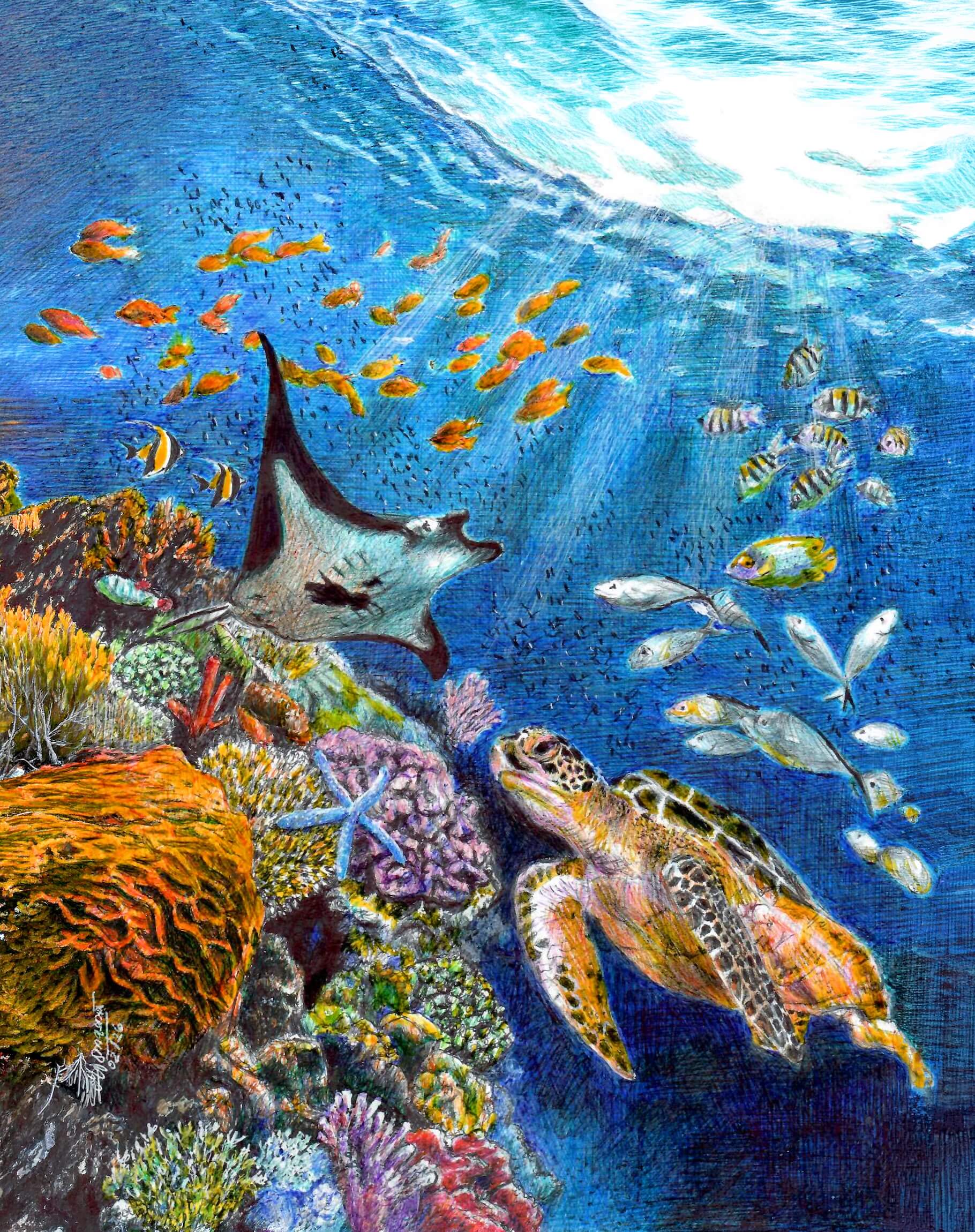
Environmentally sustainable and food-secure future: Planet and people in balance
Environmental sustainability and food security define the region’s survival and prosperity. The Philippines’ Chairship elevates this priority in recognition of ASEAN’s vulnerability to climate change, biodiversity loss, and environmental degradation.
From rising sea levels to disrupted food systems, environmental risks threaten development gains and disproportionately harm vulnerable populations. Integrated approaches will link climate action, sustainable agriculture, biodiversity conservation, and resilient food systems to safeguard communities.
Food security represents a social, economic, and human development imperative. It underpins nutrition, health, livelihoods, and societal stability. Growth anchored in ecological stewardship ensures that progress today safeguards the well-being of future generations—a principle central to ASEAN Community Vision 2045.
The Philippines’ ASCC Chairship asserts that the realisation of the ASEAN Community Vision 2045 depends on deliberate action today. Alignment between long-term ambition and present-day choices defines success.
RISE priorities cement this approach: resilience at the family level, inclusion transformed into opportunity, innovation guided by ethics, and sustainability rooted in responsibility. These priorities reinforce one another and strengthen the region’s capacity to face uncertainty with purpose and confidence. Collectively, they empower ASEAN to shape its future intentionally, not merely survive it.
These initiatives bring the ASEAN Community Vision 2045 to life, transforming the roadmap into a shared and active commitment as the region rises together to build a resilient, inclusive, innovative, and sustainable ASEAN, together, and for generations to come.