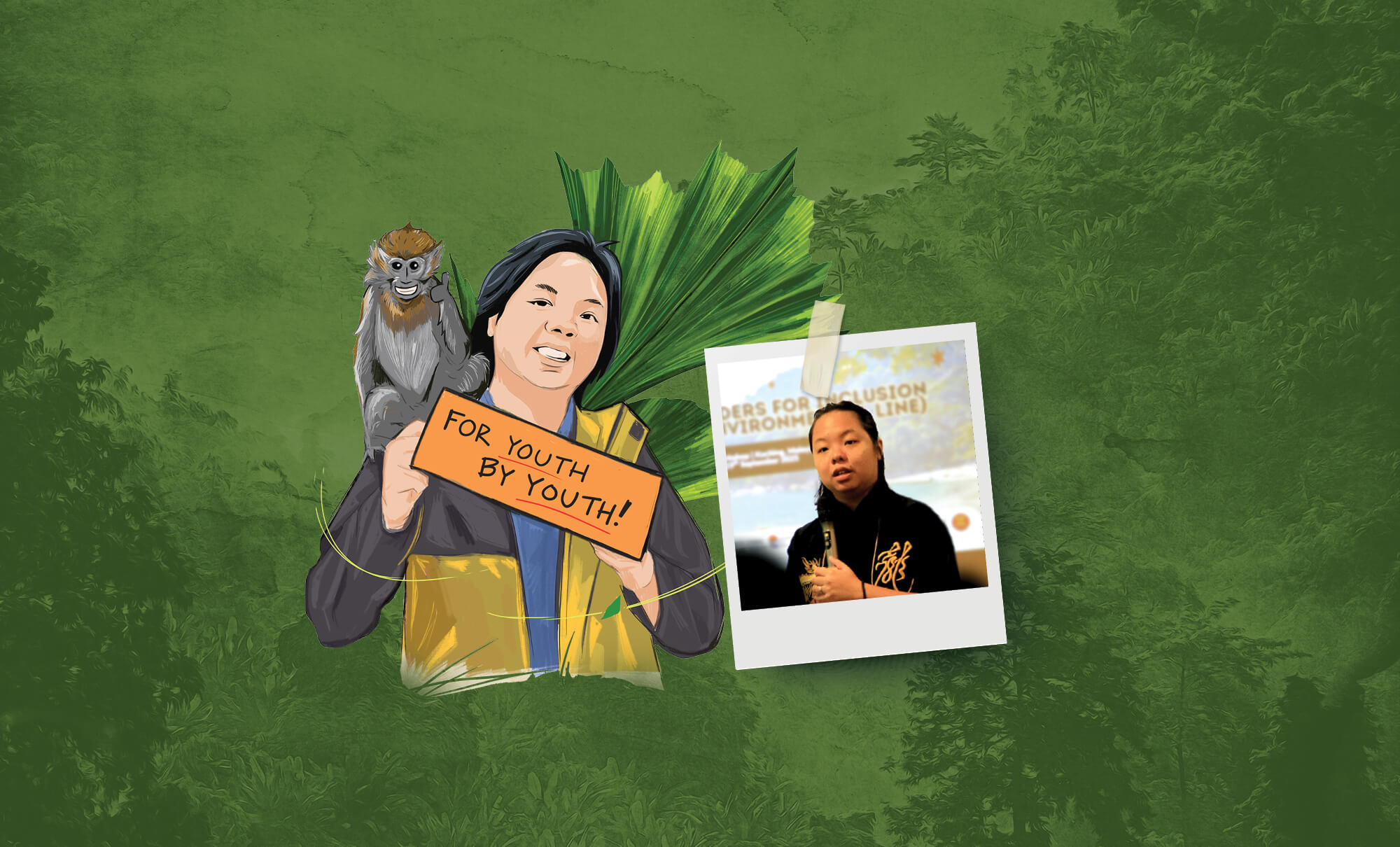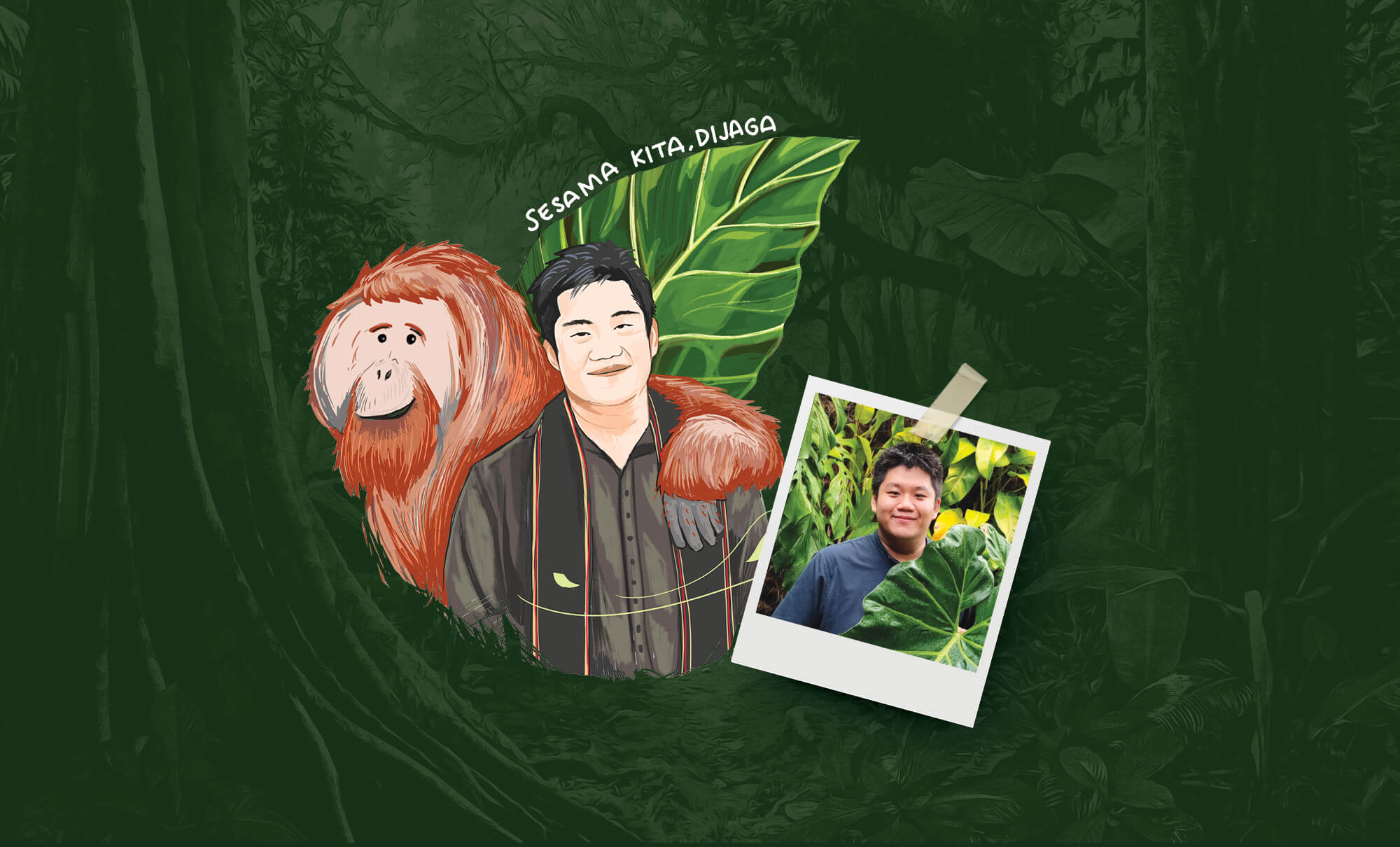
Mark Liao’s journey into biodiversity work began in 2017 when he joined the Borneo Eco-Warriors programme under the Young Southeast Asian Leaders Initiative (YSEALI). He was 22 then when he latched onto this idea and, in the same year, established an environmental NGO that similarly focuses on community-oriented conservation.
He told The ASEAN, “Sarawak Eco Warriors was formed because of many accidents, and those accidents are what strengthened us and gave us our sense of identity today.”
After graduating with a degree in human resources management from Swinburne University of Technology, Australia, he joined Wildlife Conservation Society Malaysia as a communications and events executive. The two-year stint deepened his understanding of environmental issues. His connection with the group continues to support his work today.
Mark describes his life before learning about biodiversity issues as “flat” and uneventful. He has since discovered Sarawak’s rich ecosystems of ancient rainforests and peat swamp forests, which are home to diverse plant and animal species, including endangered wildlife, such as the critically endangered Bornean orangutan. It is also home to Indigenous communities whose lives are closely tied to these landscapes.
Mark laments that many students in Kuching talk more about how to protect polar bears that live halfway around the world.“They will say we need to protect the polar bear, protect the Amazon rainforest. But what about Sarawak? What about Borneo? And then they will say, ‘But there is nothing here!’” he recalls.
That answer, which once echoed his own feelings before he entered the field, pushed him to do more to raise awareness of biodiversity.
The COVID-19 pandemic, logistical and personal issues stalled Sarawak Eco Warrior’s journey. “During this time, Sarawak Eco Warriors was entirely volunteer-based. The problem with volunteer work is that it has an expiration date. Nobody can volunteer forever,” Mark explains.
He struggled to keep the group together and soon realised the need for a reset. Just as some seeds can only germinate after a forest fire, the organisation can grow by letting it “burn” and rebuilding from its ashes, he said.
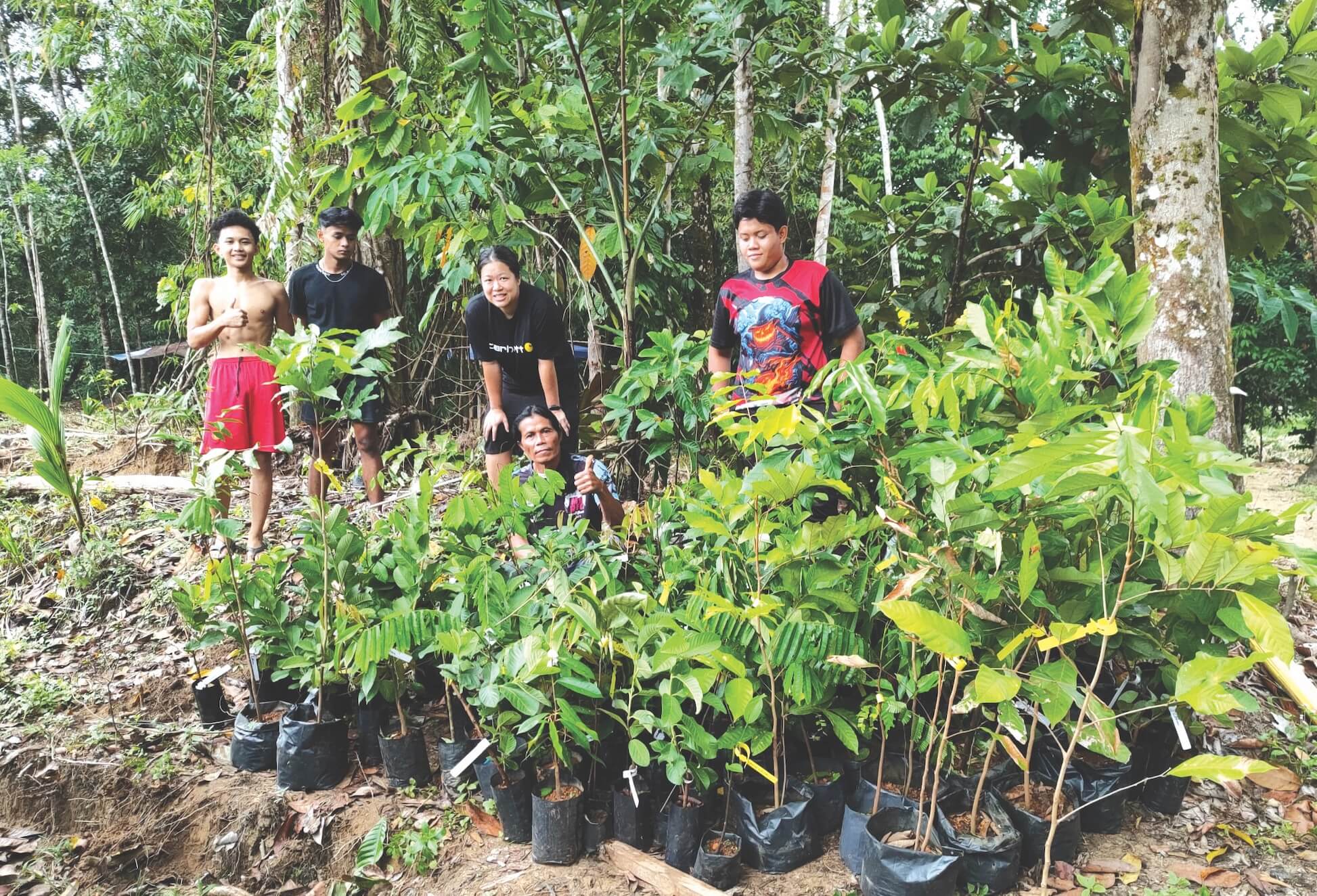
In 2021, he began rebuilding the organisation from the ground up, including laying the foundations for Plants for Plastics. The idea behind Plants for Plastics, Mark explains, is to create more green job opportunities linked with nature conservation. The long-term goal is for the young people involved to become environmental leaders.
“That is the best thing that I have ever done because it has allowed us to grow stronger. Although I cannot retain everyone from the original team, now I get to support younger people who want to do something for the state.”
Grants and running projects enable Serawak Eco Warriors to sustain their work.
“Recently, we also ran a programme with the local government, for example, when they have a programme with UNICEF, Child Friendly Cities, that is where we will come in to support them. We tried really hard to generate income because by doing so, we can sustain more people to really do the work they want to do.”
The community has also grown in scale. Now, it runs at least 4 programmes, with more than 4,000 participants each year.
With this progress comes recognition. In 2025, Mark received three awards: Environmental Education 30 Under 30, the Premier of Sarawak Environmental Award, and the Giving Economy Award.
“But I do not take pride in awards,” he says. “The reason why I am going for these awards is that, in order to work with the government and big corporations, I need that sense of recognition. They will not listen to me unless I have something backing me up.”
Mark says the real challenge now is turning enthusiasm into livelihoods. More young people are interested in conservation, yet there are too few jobs and too many fragile, volunteer-only initiatives. “To build is easy; to sustain is difficult,” he says.
In his office, a lush garden space set within a traditional Chinese farmhouse near Kuching’s city centre, Mark shares this message with young people in the region: “Never believe that you are too small to do something. Together, we are all doing small things to create a bigger impact.”
Mark shares that the group’s next project is to develop teaching tools on Sarawak’s landscapes for schools, “We hope teachers can bring them back to their communities and later adapt them into modules that can be scaled with corporate support.”
The 2019 ASEAN Youth Biodiversity Leader urges policymakers, including ASEAN leaders, to see the youth not just as actors who need to be integrated, “but rather ask how young people can come to support you and your programmes.”