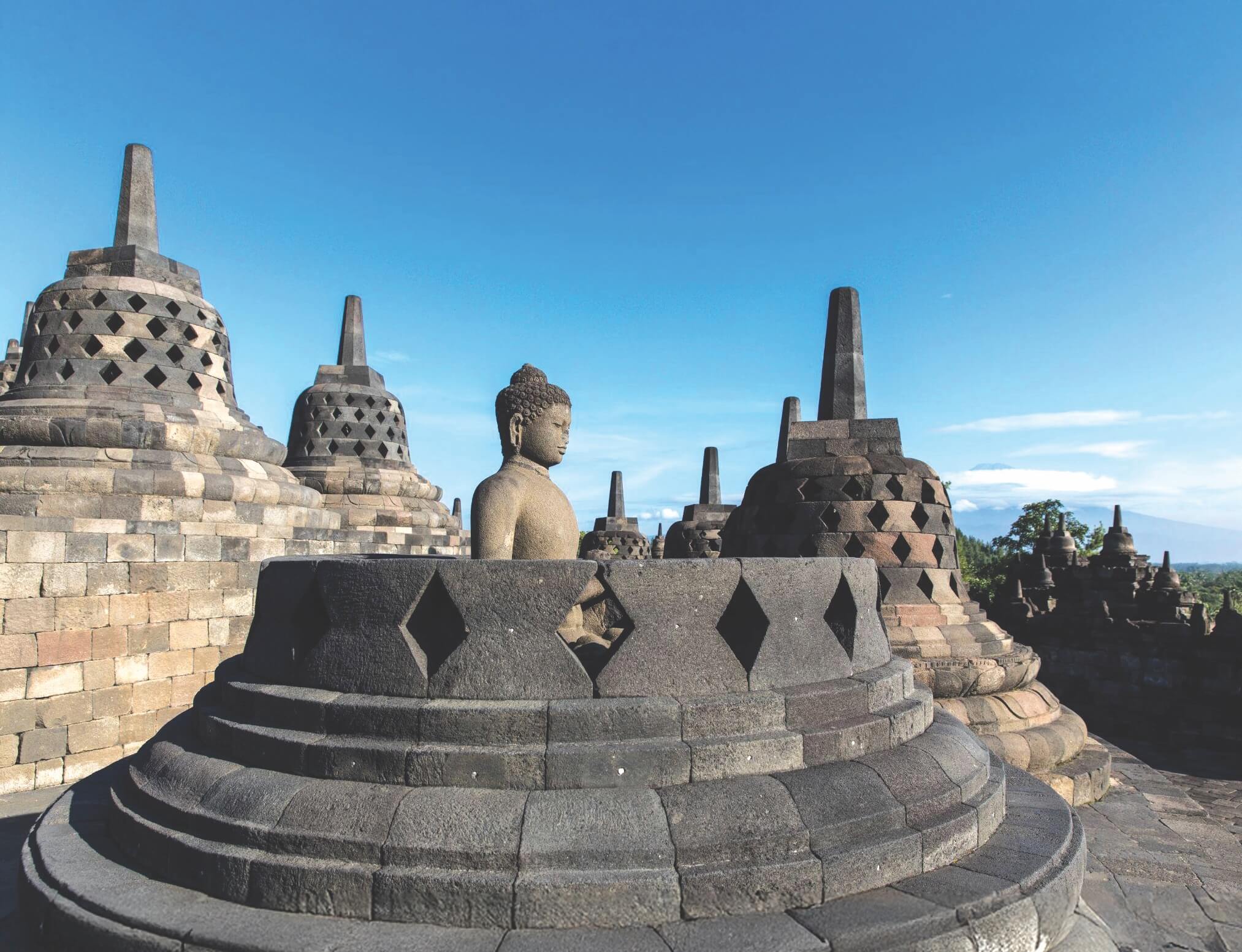

Indonesia has come a long way in reviving its tourism sector after the devastating impact of the COVID-19 pandemic. From a crisis that demanded drastic changes, Indonesia renewed its commitment to building an inclusive, sustainable, and resilient tourism ecosystem.
The COVID-19 pandemic upended the tourism industry worldwide, including in Indonesia. International tourist arrivals fell by more than 73 per cent, from 16.1 million in 2019 to 4.05 million in 2020, leading to a sharp decline in revenue and employment in the sector. This catastrophe marked a critical turning point in Indonesia’s tourism industry: a turn towards resilience. For us, tourism revival is not only about surviving economic recovery but also about building a stronger foundation for long-term sustainability, inclusivity, and resilience. The pandemic has accelerated the transformation of travel and led to new trends in tourism. The Indonesian Tourism Outlook 2024/2025 shows that special interest tourism, such as wellness, nature, and digital tourism, has become more appealing for tourists. Kementerian Pariwisata dan Ekonomi Kreatif (Indonesian Ministry of Tourism and Creative Economy, 2024) also noted that 43 per cent of tourists are willing to pay more for destinations committed to sustainability, while 69 per cent seek tangible contributions to the local economy. This shift has contributed to the gradual increase in the number of international tourists in Indonesia, now approaching pre-pandemic levels. In 2024, 13.9 million visits were recorded, an increase of 19.05 per cent from the previous year, generating 16.71 billion US dollars in foreign exchange. This figure reflects a strong recovery and increased international market confidence in the attractiveness of Indonesian destinations. Domestic tourists also play a crucial role in the recovery. Throughout 2024, there were 1.02 billion domestic trips, a 23.77 per cent increase from the previous year. Average spending per trip reached 2.31 million Indonesian rupiah, approximately 130 US dollars, supporting the hospitality, culinary, and creative sectors in the different regions of Indonesia.
Indonesia’s tourism transformation is directed at four main priorities, namely improving destination quality and international competitiveness; strengthening the capacity and inclusiveness of MSMEs; digitalisation and innovation of tourism services; and implementing sustainability principles throughout the value chain. To achieve these key priorities, the government of Indonesia, through the Ministry of Tourism, has crafted five flagship programmes to navigate tourism development. These include Digital Transformation through Tourism 5.0, Clean Tourism Movement Program, Elevating Tourism to the Next Level, Indonesia IP-based Event, and Tourism Village Development Program. These programmes are not solely aimed at increasing tourist arrivals but also redefining overall travel experiences for our visitors. Aligned with digital transformation, Indonesia is committed to realising the digitalisation of tourism destinations through the Tourism 5.0 programme. Artificial intelligence, big data, the Internet of Things, and augmented reality technologies are now being applied in smart destination management and personalised tourist experiences. This programme also targets the empowerment of MSMEs. By 2024, the government aims to have 30,000 tourism MSMEs active in the digital ecosystem. Through training, business incubation, and certification facilitation, MSMEs are encouraged to upgrade to become more globally competitive. Beyond these initiatives, Indonesia remains committed to ensuring the equitable distribution of tourism’s economic benefits across the nation. This approach is reflected in the development and promotion of 10 priority tourism destinations, which include Lake Toba, Borobudur, Mandalika, Labuan Bajo, Likupang, Tanjung Kelayang, Tanjung Lesung, Wakatobi, Morotai, and Raja Ampat. Promoting these destinations showcases Indonesia’s diversity. It also signals a shift in tourism trends that can alleviate pressure on over-concentrated areas. In parallel, Indonesia is also developing three regenerative destinations: Bali, Jakarta, and the Riau Islands, which are designed to be models of tourism that create positive impacts for the environment and local communities. With this initiative, Indonesia envisions a regenerative approach and long-term strategy to ensure Indonesian tourism’s relevance and competitiveness, and supportive of the global development agenda. Following extensive recovery efforts and the implementation of strategic tourism policies, Indonesia has successfully jumped 10 places to rank 22nd in the Travel and Tourism Development Index 2024. This achievement marked the most significant jump in the ASEAN region in the past five years and reflects global confidence in Indonesia’s readiness to become a leading global destination. The Ministry of Tourism has a flagship programme called Tourism Villages, which is at the heart of Indonesia’s community-based tourism. It encourages the even distribution of economic benefits to rural areas, supports the preservation of local community values and cultural assets, and connects the village with the global stage. In the past few years, efforts have led to the establishment of new tourism villages and the improvement of the quality of existing ones. We also successfully developed JADESTA (Jaringan Desa Wisata), a platform for the village tourism community, displaying all information related to their village. As of today, we have successfully collected 6,117 tourism village profiles throughout the country.


Additionally, the Ministry of Tourism launched the Indonesian Tourism Village Award or Anugerah Desa Wisata (ADWI) in 2021-2024. This annual award has successfully encouraged the involvement of various stakeholders in exploring the potential of tourism villages in their respective regions and boosting the competitiveness of tourism villages. During this period, several tourism villages were established, improved, empowered, and well- promoted. Some notable examples of these villages are Desa Panglipuran in Bali, Desa Nglanggeran in Yogyakarta, Desa Jagoi Babang in West Kalimantan, and many more. To ensure the sustainability of tourism villages in Indonesia, the Ministry of Tourism conducts Sustainable Tourism Village Certifi cation using the National Sustainable Tourism Guidelines combined with the Global Sustainable Tourism Council (GSTC) Criteria 2.0. Since 2020, this certifi cation has been awarded to 40 tourism villages and has become an integral part of enhancing their quality. Under the ASEAN Tourism slogan “a destination for every dream,” ASEAN Member States have demonstrated a strong commitment to position the Southeast Asia region as a destination that caters to the needs of travellers worldwide and offers multi-destination options that highlight the rich cultural diversity of the region.


Furthermore, future marketing strategies for ASEAN need to balance inward factors, such as improving destination quality and upgrading tourism services, and outward factors, such as regional branding and cross-border promotions. These will ensure internal readiness while responding to global trends and demand. Understanding this allows us to appreciate the region’s strengths such as natural assets, excellent hospitality services, and cultural diversity, which are essential for executing marketing strategies for the region. As a member of ASEAN, Indonesia views Southeast Asia as a strategic market and partner. With visa-free policies and increased connectivity, opportunities for intra-ASEAN travel are growing. Indonesia, along with other ASEAN countries, is actively developing joint promotions through multi-destination packages. The dual-destination concept offers cross-border travel at competitive prices for both regional and international travellers. In addition to supporting post-pandemic recovery, this strategy is expected to attract new markets from India, the Middle East, and Europe, seeking to explore Southeast Asia as a single, unifi ed, and world- class destination. Looking ahead, Indonesia’s ongoing tourism transformation can only succeed with multi-stakeholder collaboration. The government, businesses, local communities, academia, media, and tourists must move together to shape a future tourism ecosystem that is inclusive, sustainable, and resilient. With innovation and shared commitment, Indonesia, together with Southeast Asia, is optimistic about becoming a global leading destination that preserves cultural values, supports community welfare, and drives economic growth in line with Indonesia Emas 2045 and the ASEAN Community Vision 2045.
References: Badan Pusat Statistik Indonesia. (2024). Statistik Kunjungan Wisatawan Mancanegara 2024. Bps. go.id; Badan Pusat Statistik Indonesia. https://www.bps.go.id/id/publication/2025/03/20/a85d584df19ea65a5e2b3d0b/statistik-kunjungan-wisatawan-mancanegara-2024.html
Kementerian Pariwisata. (2023). Outlook Pariwisata dan Ekonomi Kreatif Indonesia 2023/2024. Jakarta: Kementerian Pariwisata Republik Indonesia.
Kementerian Pariwisata. (2024). Outlook Pariwisata dan Ekonomi Kreatif Indonesia 2024/2025. Jakarta: Kementerian Pariwisata Republik Indonesia.
United Nations World Tourism Organization. (2021). International Tourism Highlights: 2021 Edition. Madrid: UNWTO. https://www.unwto.org/ international-tourism-highlights
World Travel and Tourism Council. (2023). Travel and Tourism Economic Impact 2023. London: WTTC. https://wttc.org/Research/Economic- Impact