

Southeast Asia is a unique underwater paradise. Lying between two of the world’s largest oceans—the Pacific Ocean in the east and the Indian Ocean in the west- this vast body of water surrounding the Association of Southeast Asian Nations (ASEAN) is considered a global marine powerhouse that provides crucial benefits for the people and the planet.
The Southeast Asian waters consist of the China Sea, the Java Sea, the Sulu Sea, the Philippine Waters, the Celebes Sea, the Banda Sea, the Flores Sea, the Arafura Sea, the Timor Sea, and the Andaman Sea. The whole region covers 8.94 million square kilometres, which is 2.5 per cent of the total surface of all oceans (Wyrtki, 1961). The total region has a total coastline of 173,000 km (www.environment.asean.org/). The South China Sea, bordered by the ASEAN Member States and China, separates ASEAN from the vast Pacific Ocean, while the Andaman Sea links Thailand and Myanmar to the Indian Ocean (www.asean.org).
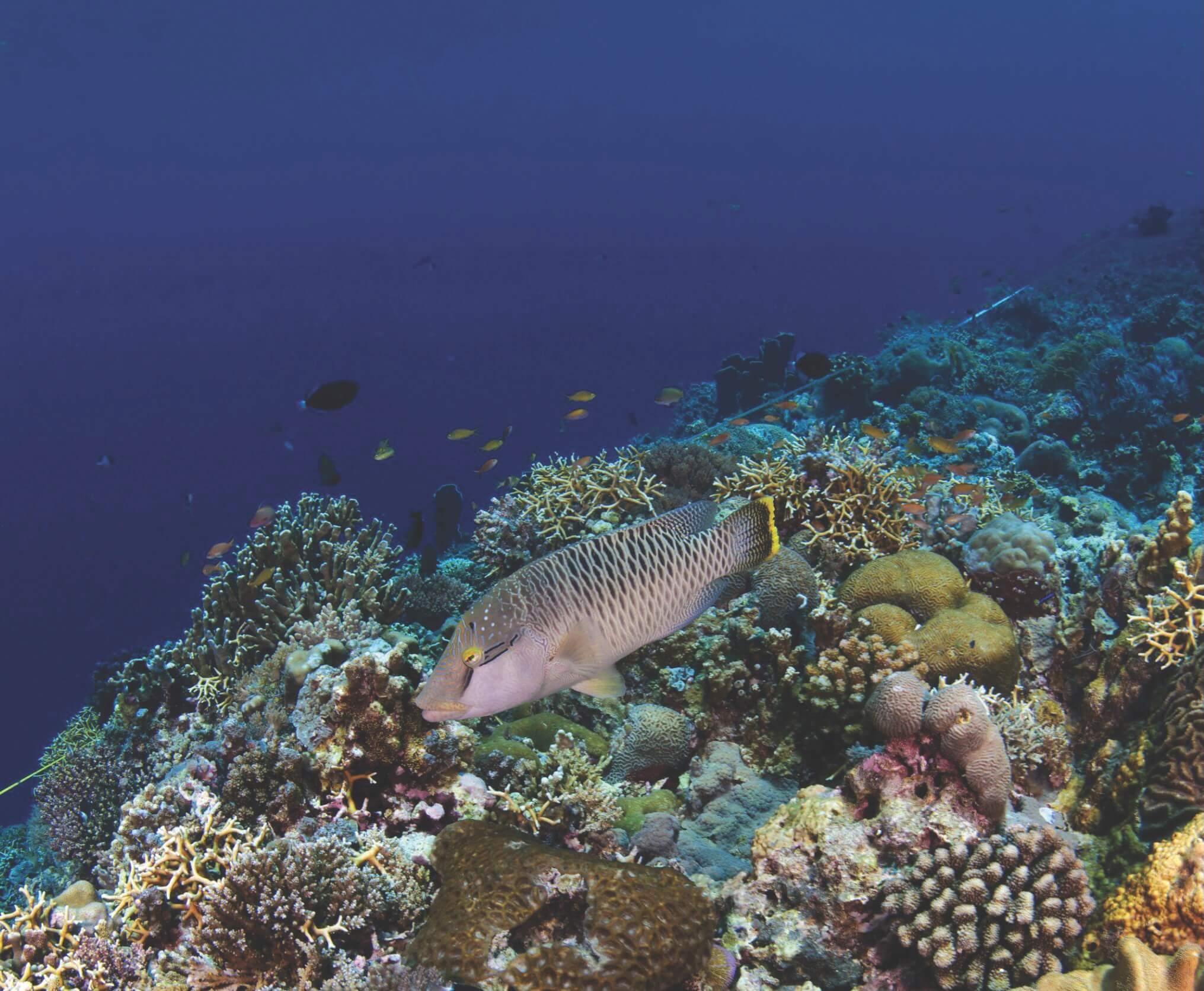
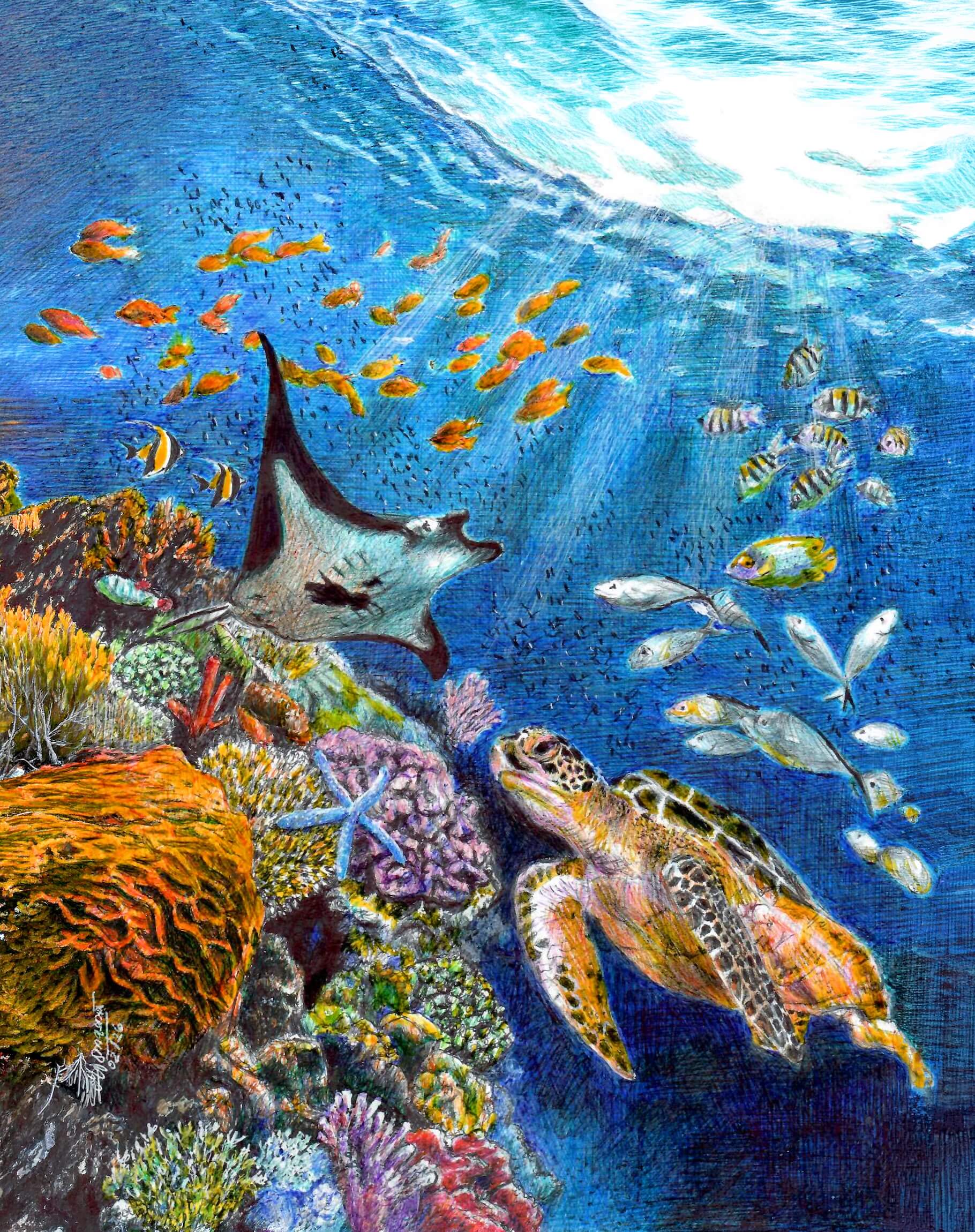
ASEAN is home to 23 of the world’s seagrass species, 35 per cent of the world’s coral reefs, more than 600 species of hard corals, and 1,300 reef-associated fish species (ACB, 2023). The so-called “Amazon of the Seas” or the Coral Triangle—the global epicentre of marine biodiversity is found in the ASEAN waters. It is a 5.7-6 million square kilometre marine region covering Indonesia, Malaysia, Papua New Guinea, the Philippines, the Solomon Islands, and Timor-Leste. It is home to 76 per cent of the world’s 798 coral species and 37 per cent of the world’s 6,000 coral reef fish species. These coastal and marine habitats sustain the livelihoods of about 700 million people in ASEAN through fisheries, ecotourism, and other ocean-based economic activities.
Healthy ecosystems, healthy economy
These vital ecosystems provide important and diverse products and services for ecological, economic, and social benefits, including nature-based solutions that benefit climate mitigation and disaster risk reduction, as they serve as natural buffers that enhance the resilience of communities and ecosystems to climate-related impacts. Mangroves and seagrasses, often called blue carbon sinks, for instance, can store up to 10 times more carbon than forests. In addition, they reduce the height of storm surges and prevent erosion and flash flooding in coastal cities. It is estimated that the total potential sustainable annual economic net benefits per square kilometre of healthy coral reefs in ASEAN range from 23,100 to 270,000 US dollars arising from fisheries, shoreline protection, tourism, recreation, and aesthetic values (ACB, 2023).
The mounting pressures
However, increasing pressures from overexploitation, pollution, habitat fragmentation, and climate change are causing severe declines in coastal and marine biodiversity and threatening the socio-economic stability of coastal populations.
Moreover, coastal and marine waters in the region are increasingly affected by shipping, offshore oil and gas activities, pipelines and cables, sand mining, wastewater disposal, tourism resort development, and potentially seabed mining, with cumulative impacts on marine biodiversity and water quality (www.asean.org). Even the Coral Triangle, with its abundance of coral reefs and fish species, faces threats from harmful practices such as illegal fishing and coral mining for construction, and from increased coral bleaching due to climate change. It is estimated that the economic value of coastal and marine ecosystem services at risk from poor management in ASEAN ranges from 62,400 US dollars per square kilometre per year for coastal protection and fisheries to 23,100-270,000 US dollars per square kilometre per year for fisheries, coastal protection, tourism, and recreation. Further, the worsening climate is projected to have major impacts on the region’s extensive shorelines and coastal waters, as the estimated sea level rise of 1 metre by 2100 would affect 410 million people, with 59 per cent in tropical Asia. Effects of sea level rise will be exacerbated by land subsidence, which can exceed 25 milimetres per year in coastal cities like Jakarta (www.asean.org).
Reducing negative impacts to coastal and marine ecosystems and safeguarding international waters lie at the core of various transboundary frameworks and agreements, such as the Kunming-Montreal Global Biodiversity Framework (KM GBF) of the UN Convention on Biological Diversity. One of the targets of the KM GBF is to protect 30 per cent of the world’s coastal and marine areas by 2030, as indicated in its Target 3. This is also well reflected in the region’s very own ASEAN Biodiversity Plan that takes into consideration the unique cultural context of the ASEAN Member States. This also includes the UN Convention on the Law of the Sea, or the so-called “Constitution for the Oceans,” the Ramsar Convention on Wetlands, which promotes the conservation and wise use of ecosystems; and the UN Framework Convention on Climate Change and the Paris Agreement, which address climate-related threats to coastal ecosystems such as acidification and sea level rise.
While global biodiversity frameworks underscore the need to protect and restore coastal and marine ecosystems, addressing the key pressures on them remains equally critical. Recognising marine plastic pollution as one of the major and growing threats to marine biodiversity and ecosystem health, ASEAN has strengthened regional cooperation through a set of complementary policy frameworks and implementation mechanisms. The ASEAN Regional Action Plan on Combating Marine Debris in the ASEAN Member States (2021–2025), developed as a follow-up to the Bangkok Declaration on Combating Marine Debris in ASEAN, serves as the primary roadmap, guiding coordinated action on land-based and sea-based sources of marine debris, innovation, public awareness, and regional collaboration. Complementing these initiatives, the ASEAN Blue Economy Framework for AEC, which is geared towards resource efficiency, economic resilience, and sustainable growth, and the ASEAN Declaration on Plastic Circularity promote upstream solutions by advancing sustainable production, consumption, and waste management practices, underscoring ASEAN’s commitment to addressing plastic pollution across the full life cycle while safeguarding marine biodiversity.
The ASEAN Outlook on the Indo-Pacific and the ASEAN Blue Economy Framework further promote maritime cooperation, sustainable blue economy development, and biodiversity protection across borders. At the global level, the recent entry into force of the Agreement on Marine Biological Diversity of Areas Beyond National Jurisdiction (BBNJ Agreement), or the High Seas Treaty, enables new avenues for the establishment of marine protected areas (MPAs) on the high seas and for strengthening environmental safeguarding frameworks.
From isolated to integrated efforts
Increasingly, ASEAN cooperation is extending beyond coastal zones to offshore and deep-sea ecosystems, recognising their ecological linkages with nearshore habitats and their relevance to emerging global processes. Regional dialogues and science-based initiatives are helping to lay the groundwork for improved understanding of deep-sea biodiversity, migratory species, and connectivity across national boundaries, while supporting ASEAN Member States in engaging with new global instruments such as the BBNJ Agreement in a coordinated and informed manner.
Across the ASEAN region, there has been a growing recognition that marine biodiversity conservation must move beyond isolated site-based interventions toward connected, ecosystem-scale approaches. Integrated coastal zoning planning and management must be given high priority, which integrates climate change adaptation and mitigation. The region must likewise develop a common strategy for handling decommissioning of offshore oil and gas facilities, as well as improved environmental management of undersea pipelines and cables. Expansion of protected areas, such as ASEAN Heritage Parks, must be considered as one of the major efforts to protect coastal and marine assets and livelihoods.
To date, progress includes the expansion and strengthening of marine protected areas, increasing adoption of ecosystem-based management, and enhanced regional cooperation in addressing shared marine challenges such as overfishing, habitat fragmentation, climate change, and pollution.
The historic High Seas Treaty, more formally known as the Agreement under the United Nations Convention on the Law of the Sea on the Conservation and Sustainable Use of Marine Biological Diversity of Areas beyond National Jurisdiction (BBNJ Agreement), entered into force on 17 January 2026. This is a game-changer for a region like Southeast Asia, which heavily relies on the ocean, in the conservation and safeguarding of marine ecosystems beyond national waters. It will not only help protect the vast array of fish species and marine life but also ensure the fair sharing of marine genetic resources, promote technology transfer, and support capacity building, thereby boosting local expertise through international cooperation. The BBNJ Agreement will also provide the legal framework for the ASEAN Member States to assess projects such as deep-sea mining and their potential impacts on local ecosystems.
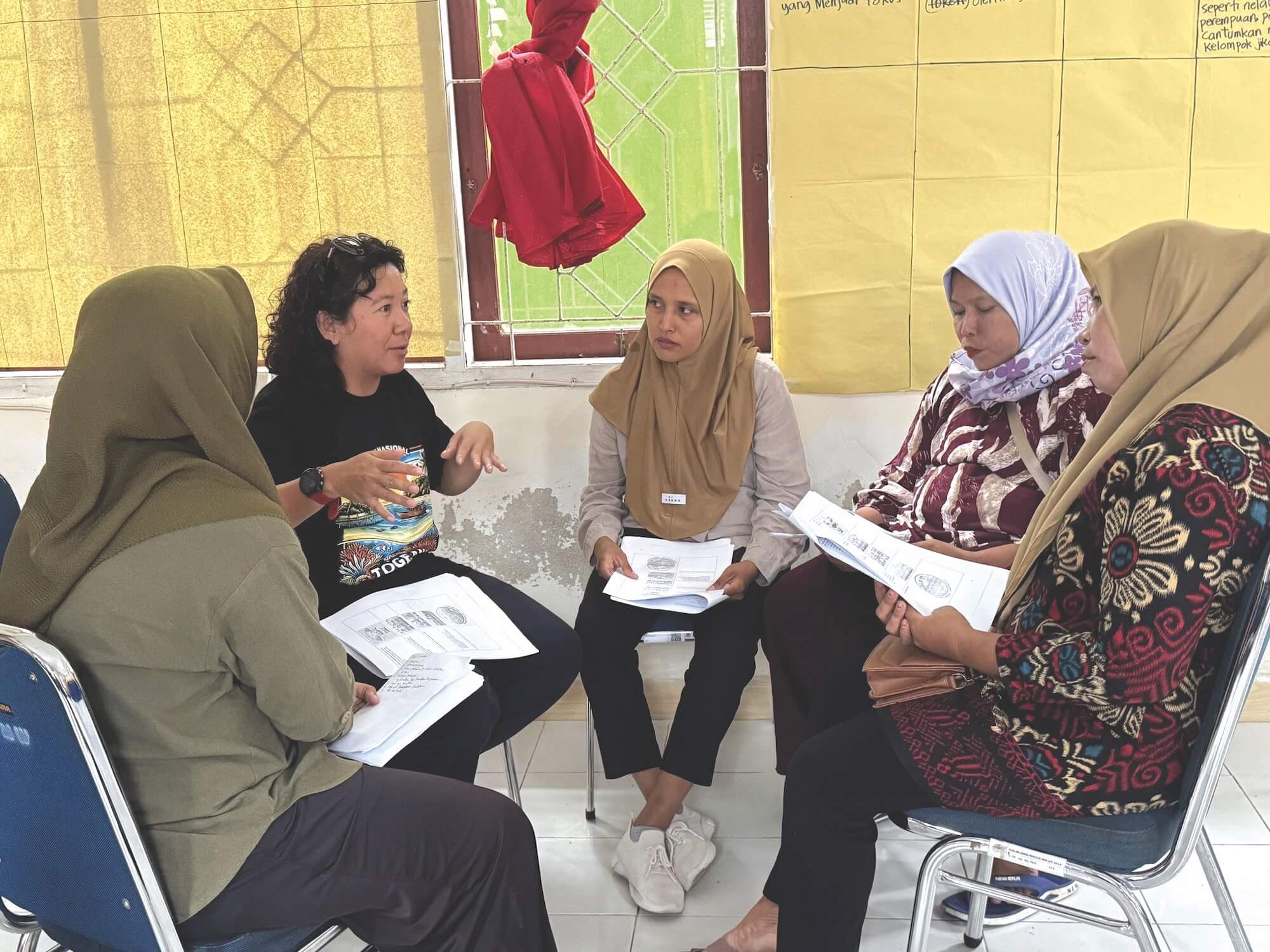
Notably, conservation efforts are increasingly informed by science-based planning tools, including ecological connectivity analyses, fisheries stock assessments, and vulnerability studies. These approaches are enabling the ASEAN Member States to better align conservation objectives with fisheries sustainability, climate adaptation, and coastal development priorities. At the same time, there is greater emphasis on inclusive governance, engaging indigenous peoples, local communities, women, and youth as key stewards of marine resources rather than passive beneficiaries. This shift reflects a broader transition toward nature-based solutions (NbS) that protect and restore ecosystems while delivering tangible socio-economic benefits, particularly in climate-vulnerable coastal and island communities.
Nature-based solutions for marine and coastal protection
Simply called “NbS” in the conservation sector, nature-based solutions are emerging as a cornerstone of ASEAN’s response to climate change and biodiversity loss in marine and coastal environments, offering a multitude of ecosystem benefits. Healthy coral reefs, plankton and deep water plants and species, mangroves, seagrass meadows, and coastal wetlands function as natural infrastructure, reducing wave energy, mitigating storm surges, stabilising shorelines, and sequestering carbon. These ecosystems also underpin food security, and are very diverse resource poles, making them essential to resilient coastal economies.
In the ASEAN context—where millions depend directly on coastal and marine resources—NbS offer a cost-effective and socially inclusive pathway to climate adaptation and any future risks. When integrated into coastal and marine spatial planning, NbS can reduce long-term disaster risks most cost-effectively, while sustaining livelihoods and preserving cultural and traditional practices linked to the sea. Importantly, successful NbS implementation depends on strong local governance, secure tenure and use rights, and the integration of traditional ecological knowledge with modern science. Another major potential and diverse NbS have not been adequately studied across various offshore, high-seas, and deep-sea ecosystems, as well as under BBNJ, in the ASEAN region.
ASEAN looking ahead
In all of these, ASEAN’s priorities will be to strengthen efforts in its flagship programme, most notably the ASEAN Heritage Parks, specifically in expanding the region’s marine protected areas, including transboundary MPAs. It is also a priority to promote and mainstream nature-based solutions across all sectors and initiatives for marine and coastal ecosystem conservation. It will be treated as essential infrastructure that will serve as an integrated solution to the triple planetary crisis and, at the same time, will engage local communities and Indigenous Peoples as co-planners in any development endeavours. Lastly, ASEAN should strengthen research and capacity-building among relevant stakeholders to enhance the sharing and use of data on coastal and marine biodiversity, accompanied by efforts to integrate nature-based solutions, deepen knowledge of deep-sea biodiversity, support the establishment of MPAs on the high seas, and enforce environmental safeguarding frameworks and policies. By leveraging international cooperation with the ASEAN Member States and their partners, these actions can collectively advance a shared future in harmony with nature.
Weaving a new tide of marine protection
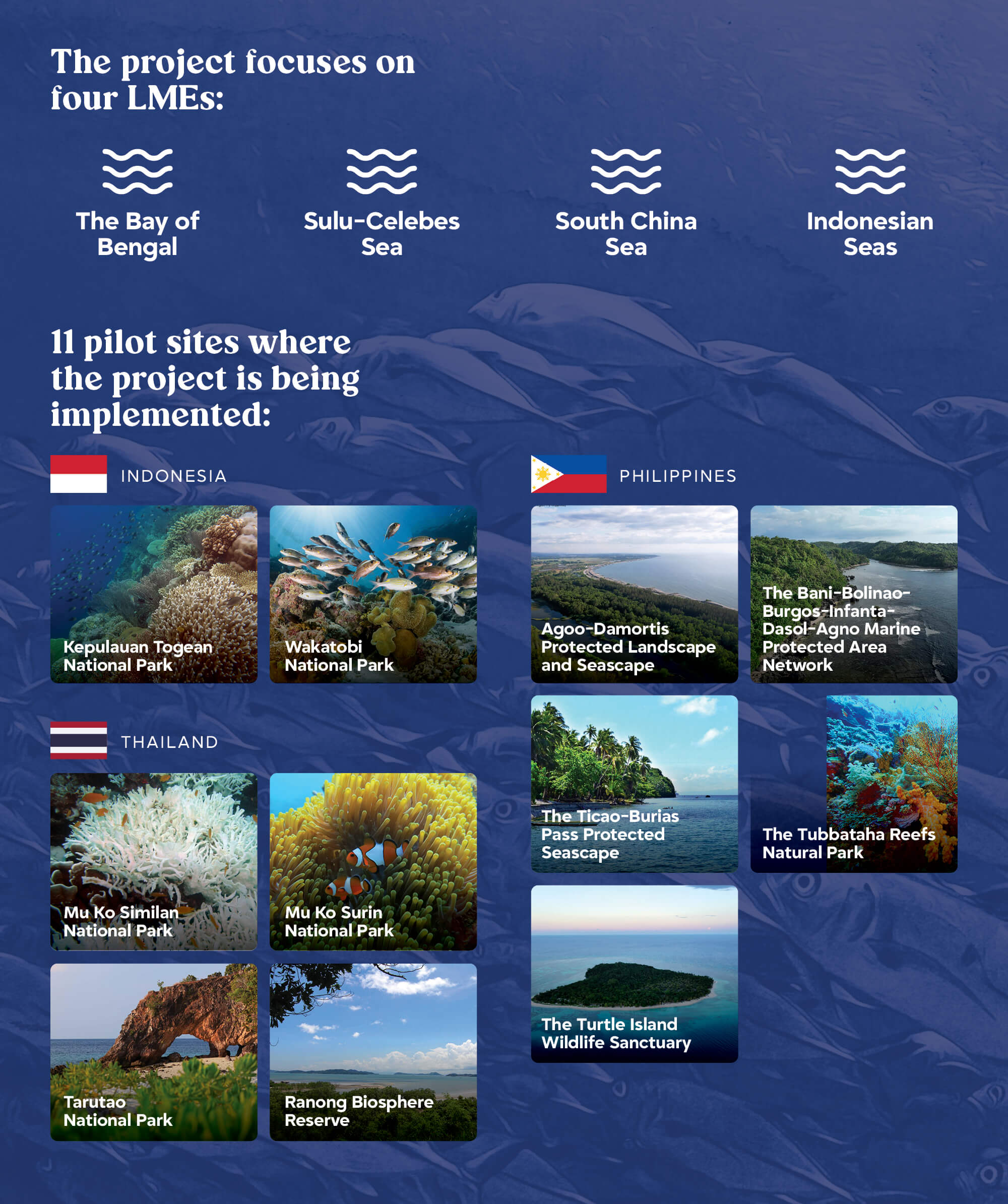
In 2024, the ASEAN through the ACB launched a five-year project called, Effectively Managing Networks of Marine Protected Areas in Large Marine Ecosystems in the ASEAN region (ASEAN ENMAPS) to improve MPA network management in key Large Marine Ecosystems (LMEs) across Indonesia, the Philippines, and Thailand. It is being implemented by the UN Development Programme through the funding of the Global Environment Facility, with the ACB as the executing agency.
This initiative blends cutting‑edge science, including hydrodynamic modelling, fisheries ecology, and vulnerability assessments, to identify the “highways” of marine life that cross national borders. By mapping these biological corridors, managers can protect not just isolated habitats but the whole tapestry of ecosystem services that sustain coastal communities. The project likewise prioritises knowledge-sharing, communication, education, and public awareness to ensure that the project’s gains are sustained and shared among its stakeholders.
ASEAN ENMAPS also takes pride in its holistic approach to governance. Strategic Environmental and Social Assessments are built into every step, ensuring that the rights and livelihoods of local fishers are safeguarded while upholding ecological thresholds. This shows that the project is not just drawing lines on a map—it is combining science, policy, and community into a resilient framework for the ocean’s future.
Opportunities for scaling-up
Apart from aligning with the marine targets under the ASEAN Biodiversity Plan, ASEAN ENMAPS could also contribute to other existing ASEAN frameworks and strategies, such as the ASEAN Blue Economy Framework, by striking a balance between marine ecosystem health and economic growth in the region.
The project’s completed scientific foundations and ongoing governance assessments present clear opportunities to scale up regional cooperation in marine conservation. Connectivity analyses and conceptual MPA network designs offer a replicable framework that can be extended to other ASEAN seascapes and aligned with regional commitments under the Kunming–Montreal Global Biodiversity Framework and the BBNJ Agreement. Capacity development activities, including Integrated Coastal Management training, Marine Spatial Planning and Ecosystems Approach to Fisheries Management, provide tested models that can be institutionalised through ASEAN platforms and national agencies.
The project’s sustained knowledge products and regional dialogues establish mechanisms for sustained information sharing, peer learning, and coordinated planning. Building on these actions, ASEAN ENMAPS provides a practical pathway for expanding cooperative, nature-based solutions across the wider “One ASEAN seas.”