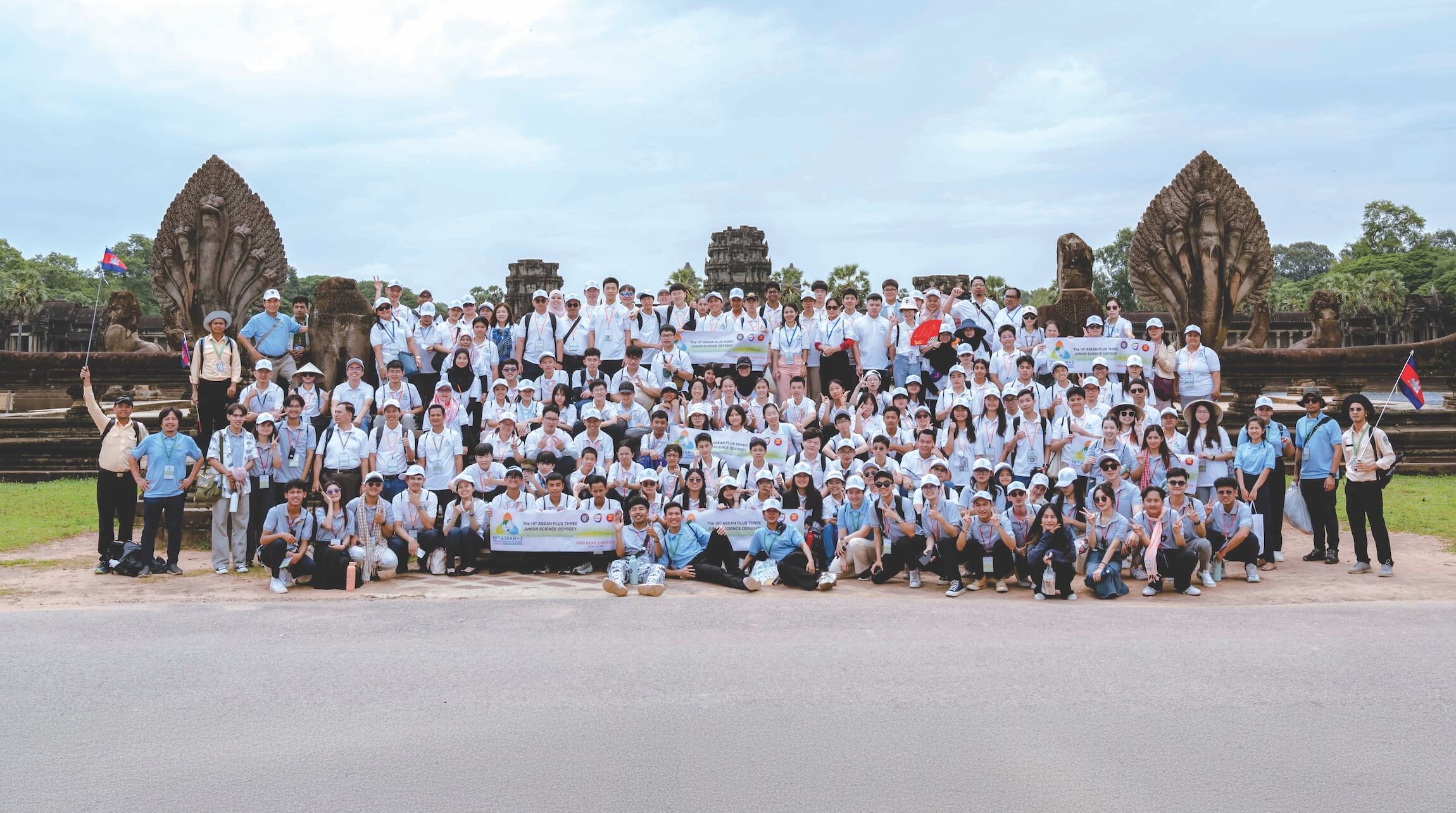
In the heart of Cambodia, where the ancient stone spires of Angkor Wat reach towards the heavens, a different kind of monumental effort recently took place. The vibrant city of Siem Reap served as the backdrop for the 10th ASEAN Plus Three Junior Science Odyssey (APT JSO-10), held from 22 to 26 July 2024. This prestigious annual event brought together 194 participants, primarily gifted middle and high school students aged 13 to 15, from across the ASEAN region and the "Plus Three" nations of China, Japan, and South Korea.
Hosted and organised by Cambodia’s Ministry of Industry, Science, Technology & Innovation (MISTI) in collaboration with the ASEAN+3 Centre for the Gifted in Science (ACGS), the odyssey was far more than a classroom extension. Under the urgent theme “Racing Up Against Climate Change,” these young minds embarked on a five-day journey designed to stimulate intellectual curiosity and foster the international friendships necessary to solve the planet’s most pressing environmental crises.
Kanchana Wanichkorn, Director of Sectoral Development Directorate at the ASEAN Secretariat, said that this year’s event is a significant milestone for ASEAN Member States and the ASEAN+3 countries.
She added that it provides a stage for youth to collaborate in science and technology, encouraging the sharing of knowledge and experiences to prepare them for future roles as competent engineers and scientists.
“Embracing curiosity, collaboration, and a commitment to advancing science and technology, we join forces with the ACGS (ASEAN+3 Centre for the Gifted in Science) to empower students, educators and communities to become change-makers for our world’s pressing needs,” she said.
Soo-Young Lee, Programme Director of the ACGS, said that since its inception in 2010, ACGS has been dedicated to offering diverse programmes for gifted science students and teachers in the ASEAN region.
“This year, we aim to provide an unforgettable experience. The enthusiasm shown by each country in the student camp and teacher workshops is truly heartening,” he said. “We extend our heartfelt gratitude to the ASEAN countries for sending their national delegates to this event.”
Exploring Cambodia’s wonders: A cultural foundation for science
The choice of Siem Reap was intentional. As Dr. Nhim Khemara, Permanent Secretary of State for MISTI, noted in his opening address, the city is “home to one of the oldest and grandest civilisations in the world,” offering a wealth of heritage that parallels the scientific ingenuity the program seeks to inspire.
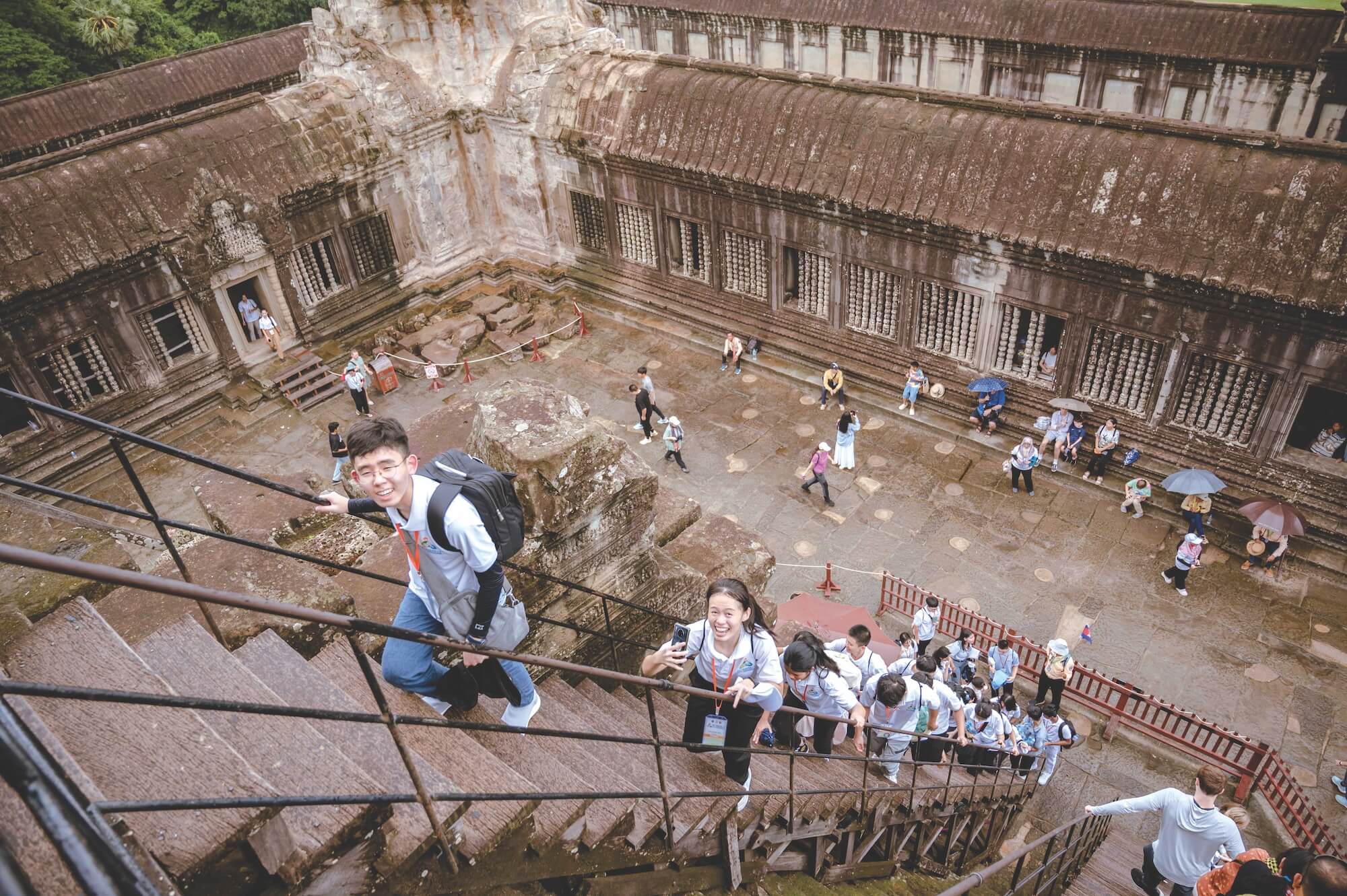
For many participants, the immersion into Cambodian culture was transformative. Akari Htun Linn, a student from Myanmar, was struck by the hospitality and the majesty of the surroundings. “My first impression of Cambodia is that the streets are really clean, and the Cambodian volunteers were really friendly,” she shared. The visit to the historic site of Angkor Wat was a lifelong dream realised. “I have always wanted to visit Angkor Wat since I was young because it is a one-of-a-kind historic building… I took a lot of pictures, and I really love Angkor Wat.”
This cultural appreciation served as a bridge, connecting students before they dove into rigorous technical challenges. The programme’s philosophy used a “Romduol Flower” emblem (Cambodia’s national flower) to symbolise this unity, with its three petals representing the “Plus Three” nations and ten green dots signifying the ASEAN Member States.
Inspiring the next generation of innovators
The core mission of the APT JSO is to challenge the intellectual capabilities of gifted youth and motivate them toward careers in Science, Technology, Engineering, and Mathematics (STEM). This year, the focus was squarely on the Climate Risk Index, an issue Dr. Nhim Khemara described as an “existing reality that impacts us all”.
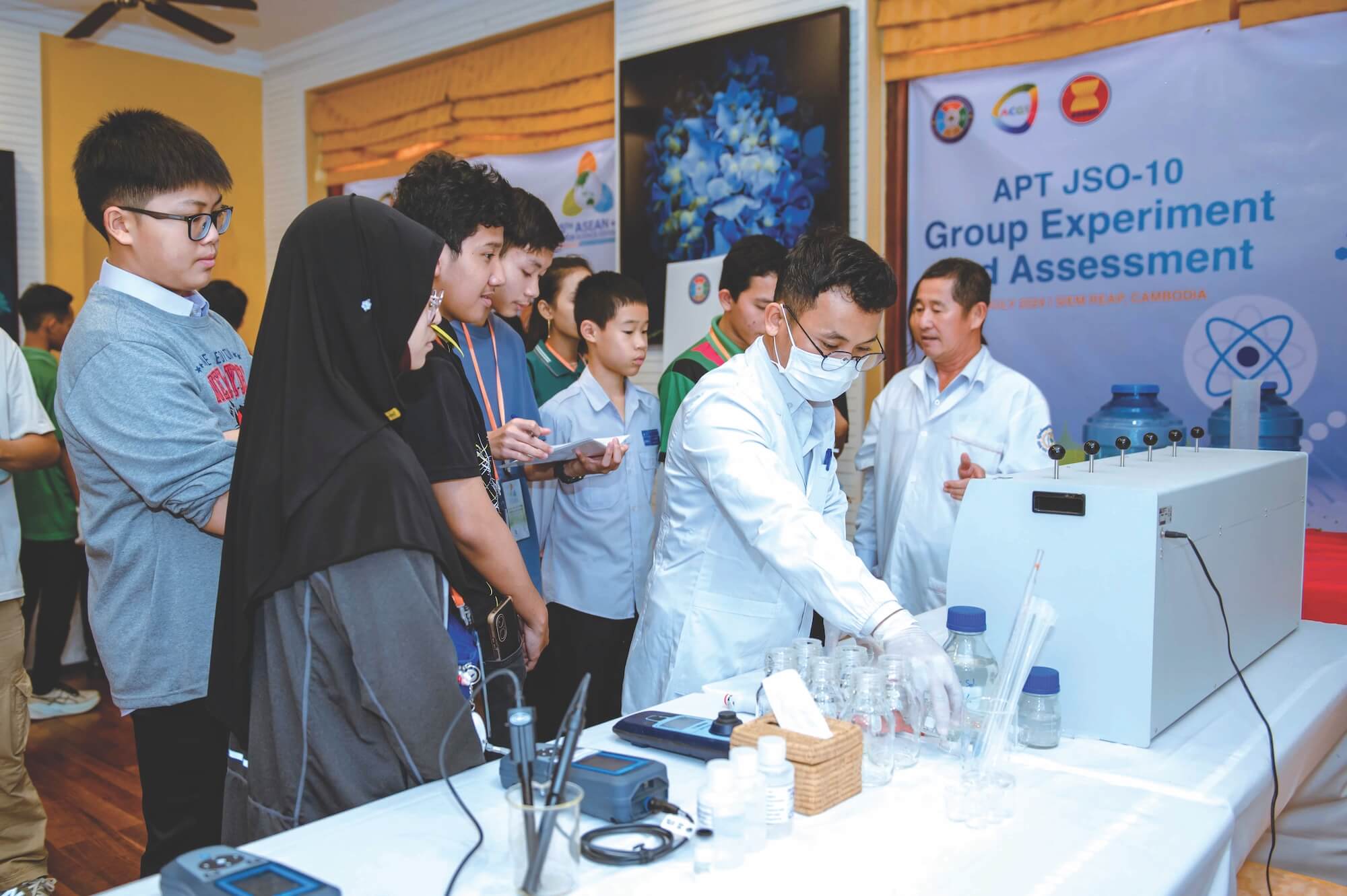
Throughout the week, students participated in a multidisciplinary curriculum that featured intensive lecture courses on climate science, the greenhouse effect, and water resource management. They gained hands-on experience through lab experiments, such as the JAR TEST, which allowed them to simulate water treatment processes and determine optimal chemical dosages. Additionally, institutional visits to the SRWSR Chreav Facility provided valuable real-world context for water purification and distribution, further enhancing their understanding of environmental challenges and solutions.
For Ham Mutita, a 14-year-old student from Cambodia, the odyssey was an opportunity to find her voice. “What inspired me to join was that I wanted to have more education on science,” she explained. “Sometimes I have bad communication skills, so I wanted to come here to improve… and learn how to share science with others.”
Similarly, Bon Matthew E. Singayao from the Philippines found his career path narrowing into focus. “I have learned more about climate change, water management plans, and how to treat water,” he said. “This experience has… inspired me to focus on microbiology and possibly become a doctor in the future.”
Collaborative challenges: Beyond borders and barriers
The hallmark of the APT JSO is its mixed-country team format. Participants were intentionally placed in groups with peers from different nations to work on pitching projects. This forced students to navigate language barriers, differing educational backgrounds, and the sheer complexity of their assigned topics.
The Pitch Presentation Competition featured 18 groups tasked with identifying a problem related to climate change and proposing a creative solution using handmade posters. ChuChu Zheng, a 14-year-old from China, found herself tackling the environmental impact of the fashion industry—a topic she initially knew little about. “I needed to search a lot on the internet, translate, and spend more time preparing,” she admitted. “But I just reduced my free time and asked my teammates and teachers for help. Everyone needs to work hard.”
Her dedication paid off. Her group, Group H, ultimately secured the Gold Medal in the Pitch Competition for their project on “Fashion’s Dirty Laundry” and eco-friendly alternatives.
Singayao also recalled the initial “stump” his team faced when addressing fast fashion. “How are we going to address the issues… because it’s just so different from what we prepared? But we overcame it with pure determination and a lot of research.” He emphasised that this diversity was their greatest strength: “You get one innovative solution with multiple parts combined into one.”
A global vision for a sustainable future
As the odyssey drew to a close, the focus shifted from competition to a collective “Call to Action.” In a symbolic gesture of their commitment, participants engaged in a Tree Planting Initiative within the Angkor Complex, with each nation planting trees to contribute to carbon sequestration and the local ecological balance.
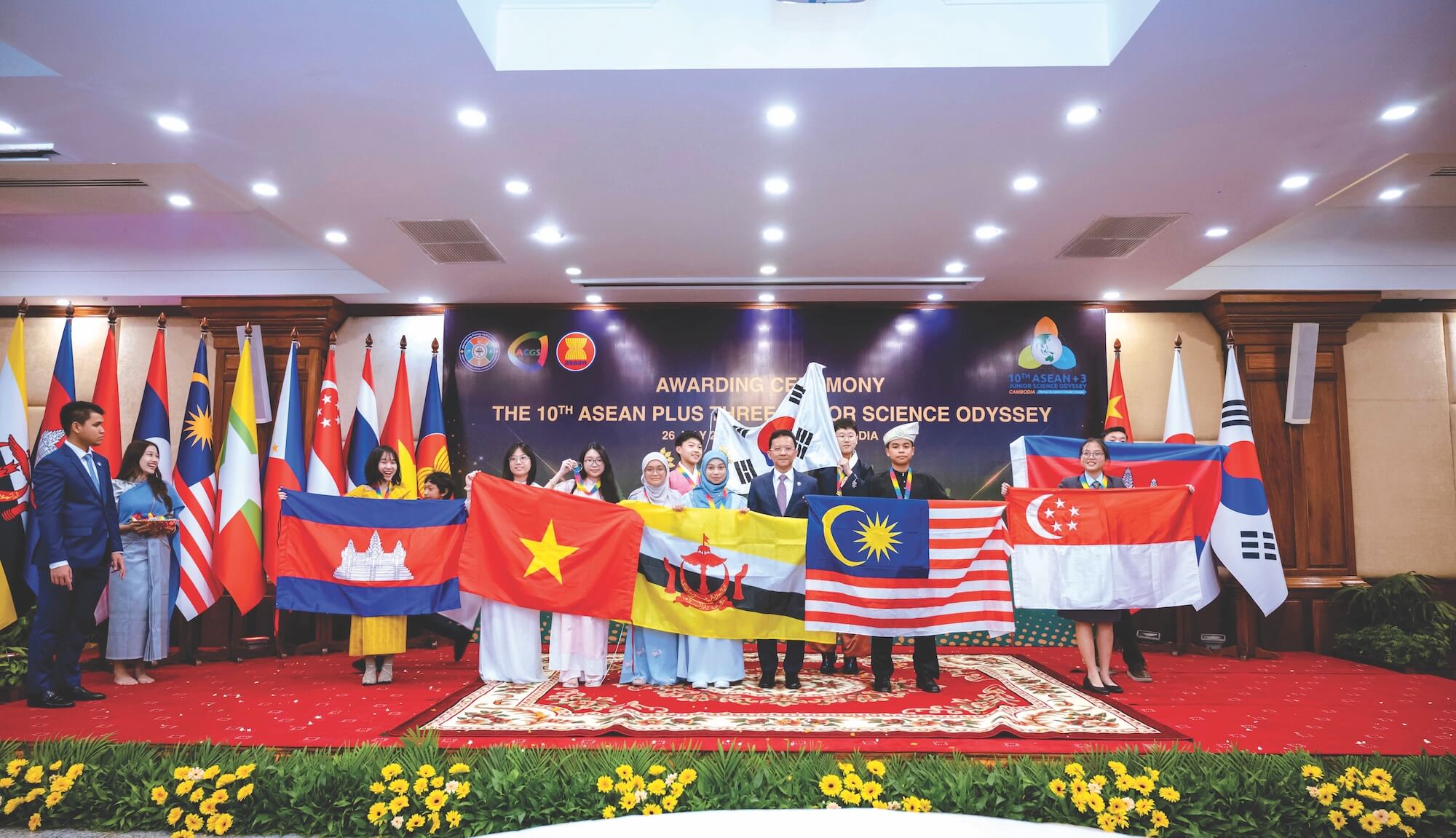
The Awarding Ceremony honoured participants’ accomplishments with distinguished recognition from MinisterHem Vanndy of MISTI. Among the top accolades, Indonesia Group 1 received the Gold Medal in the Video Competition, while students from Singapore, the Philippines, Myanmar, and Brunei earned Gold in the Quiz Competition. The prestigious Overall Top Performer Gold Trophy was awarded to Antari Femida Nariswari from Indonesia.
However, the leaders of the event were quick to note that the medals were secondary to the awareness raised. Dr. Hul Seingheng, Under Secretary of State for MISTI and Chair of the ASEAN COSTI 2024, expressed his confidence in the prospects of these “junior scientists. “I expect these kids to excel in their knowledge… Their passion will guide their future education and career paths,” he said.
The students left with a shared sense of responsibility. Seoyoung Park from South Korea reflected on the power of starting small: “Simple actions like conserving electricity and reducing pollution can contribute to larger environmental goals.”
Akari Htun Linn summed up the spirit of the odyssey with a message for her peers: “Try their best to be the future scientists of our world. We should collaborate together for a bright future.”
Conclusion
The 10th ASEAN Plus Three Junior Science Odyssey proved that while climate change is a global “race,” it is not one that any nation can win alone. By embracing unity in science, the gifted youth of the ASEAN+3 region have laid the foundation for a network of innovators who see borders not as barriers, but as opportunities for collaborative ingenuity. Against the silhouette of Angkor’s majestic structures and ancient history, these young scientists have begun writing a more sustainable chapter for the future of the planet.