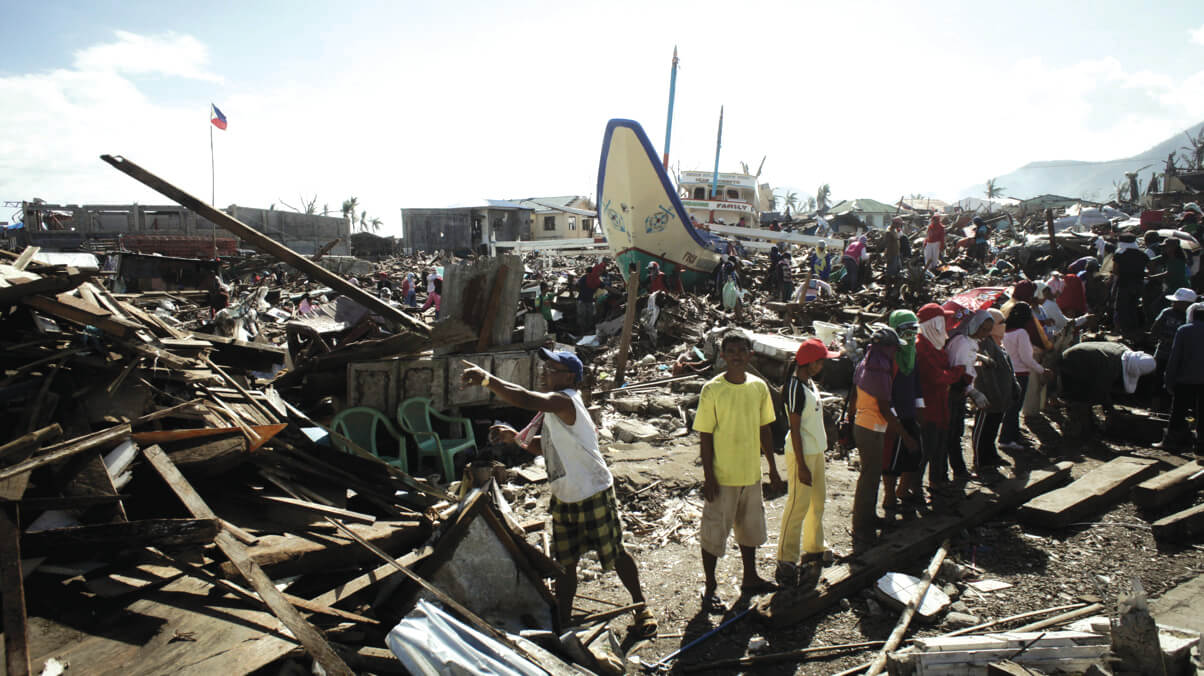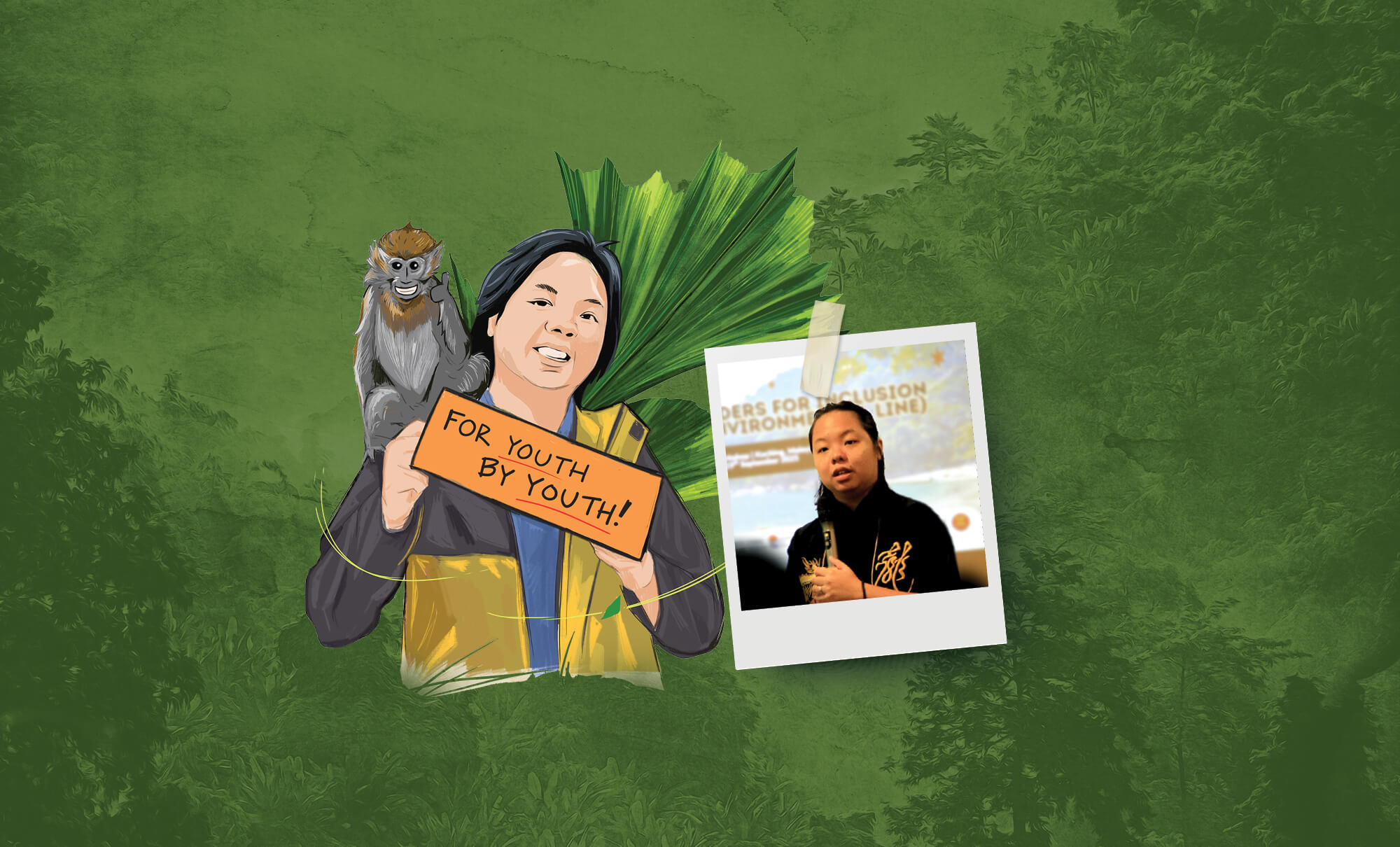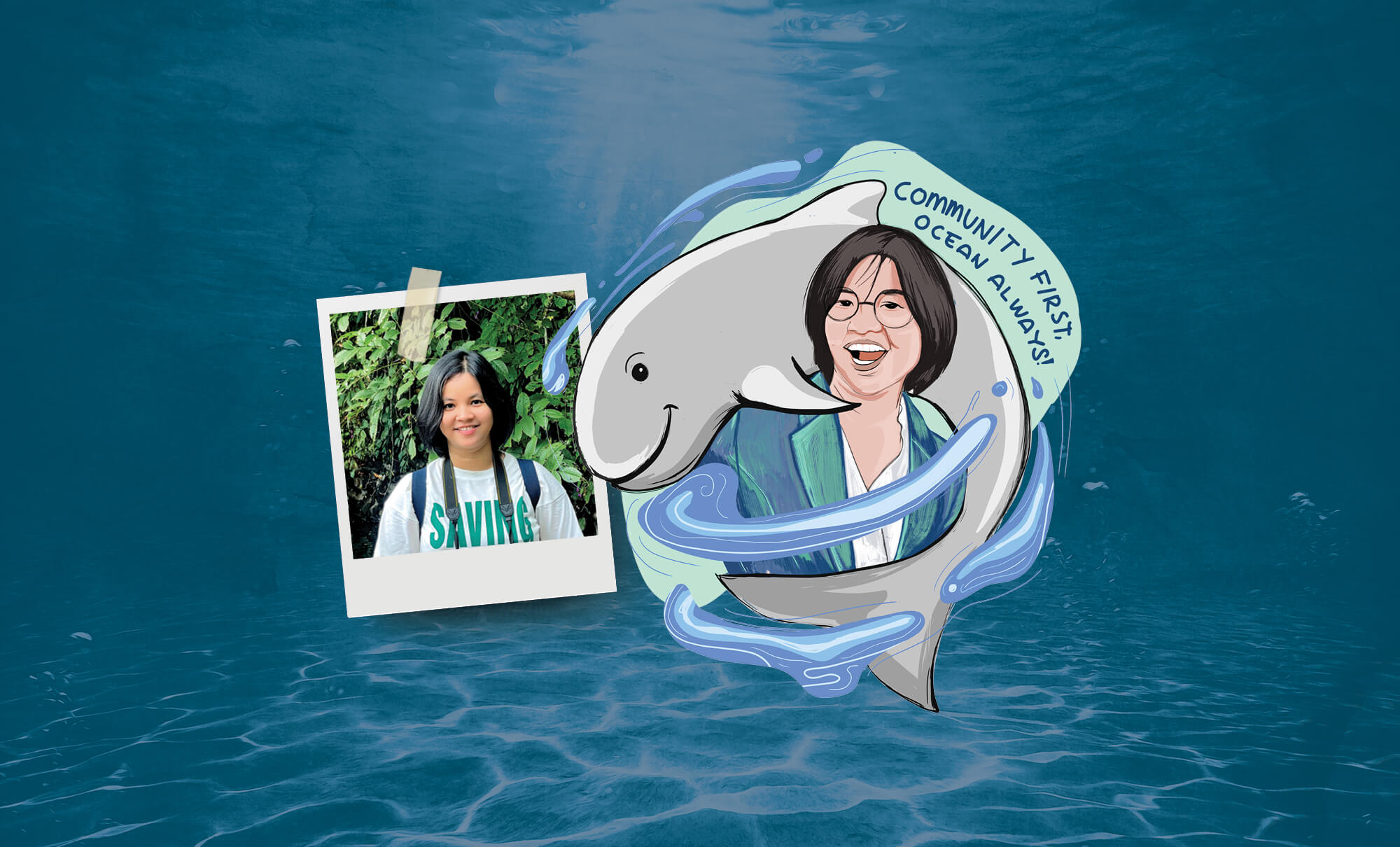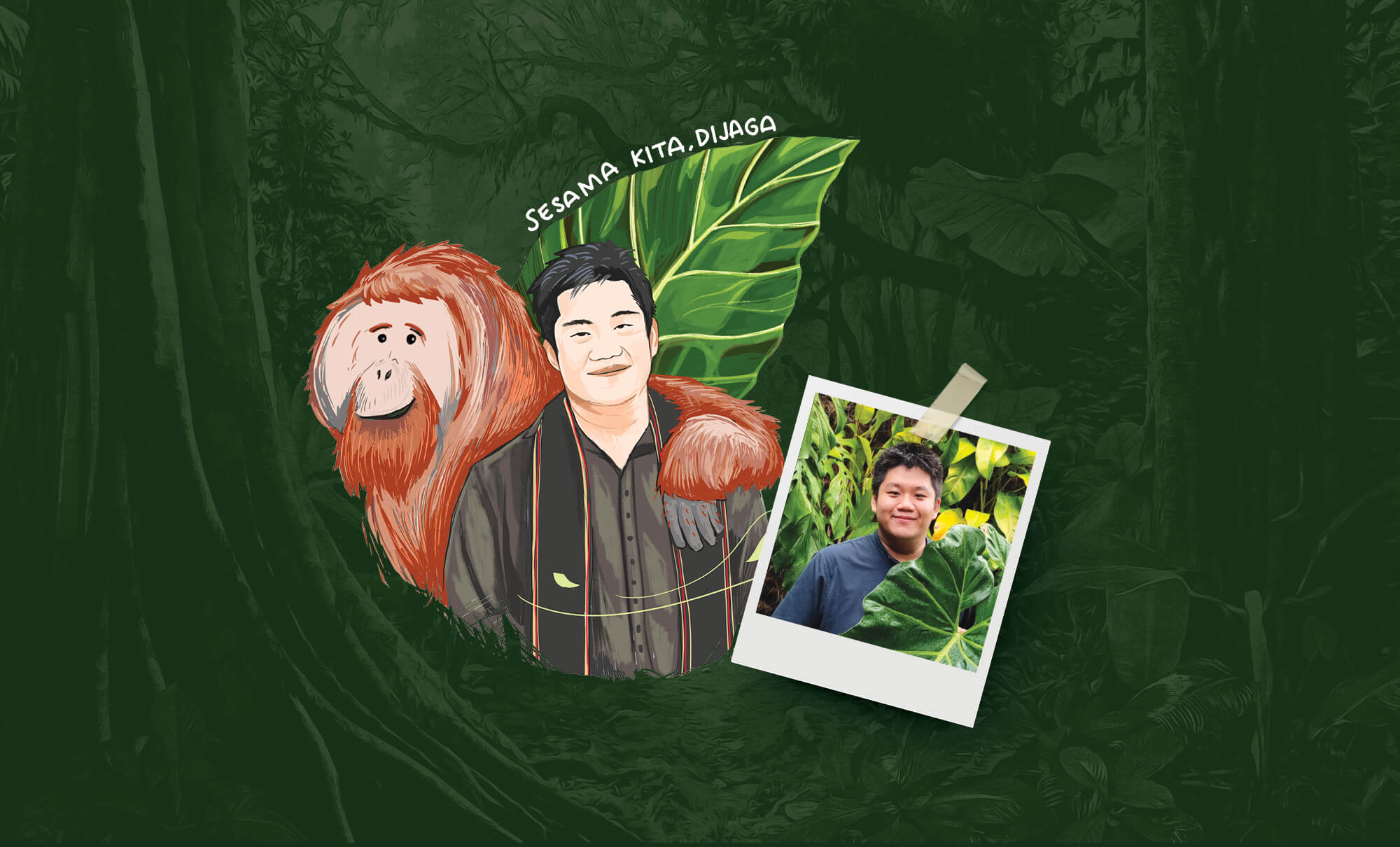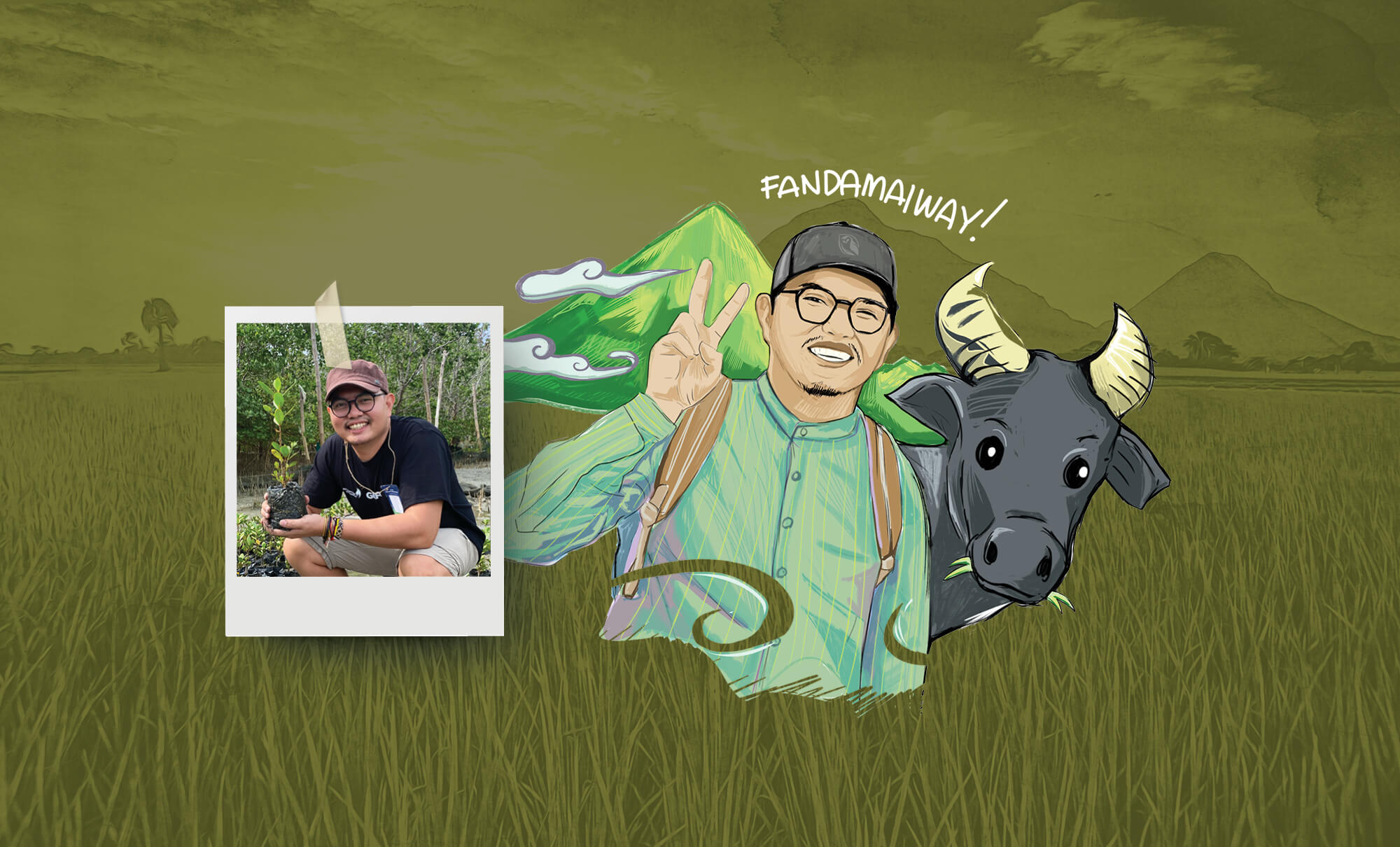
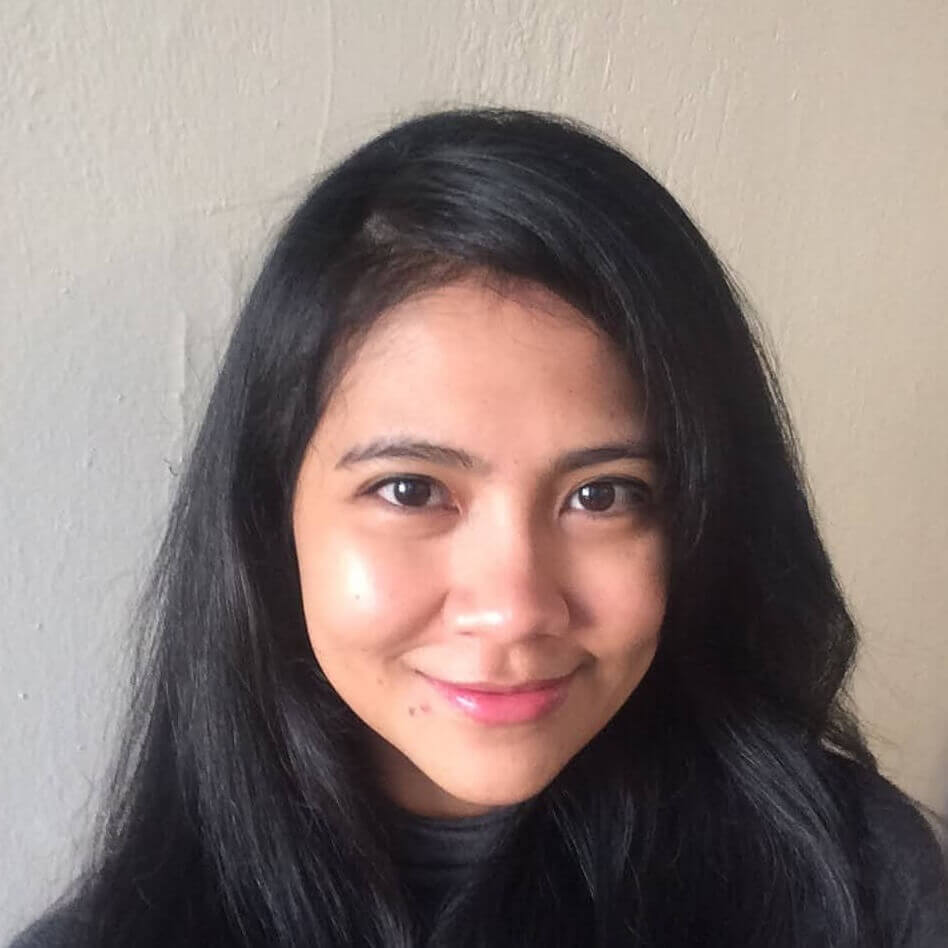
Brikko Martillo Dumas, known as Bricx, is a 34-year-old Filipino artist, educator, and climate advocate. He was born in Leyte, in the Philippines’ Eastern Visayas region, and moved to Manila as a teenager. When Typhoon Haiyan (locally known as Yolanda) devastated Leyte in 2013, Bricx returned home to bring his grandmother to safety and volunteer. He ended up staying for two months and handled logistics on the ground. He also helped set up community feeding and arts therapy programmes for children. In early 2014, he returned with solar panels to power several areas still without electricity.
For Bricx, the scenes and smells of disaster and death arestill vivid: fallen trees, people waiting for help, fear of looting, and the stench of bodies. It was a defining moment that made the impact of climate change real for him.
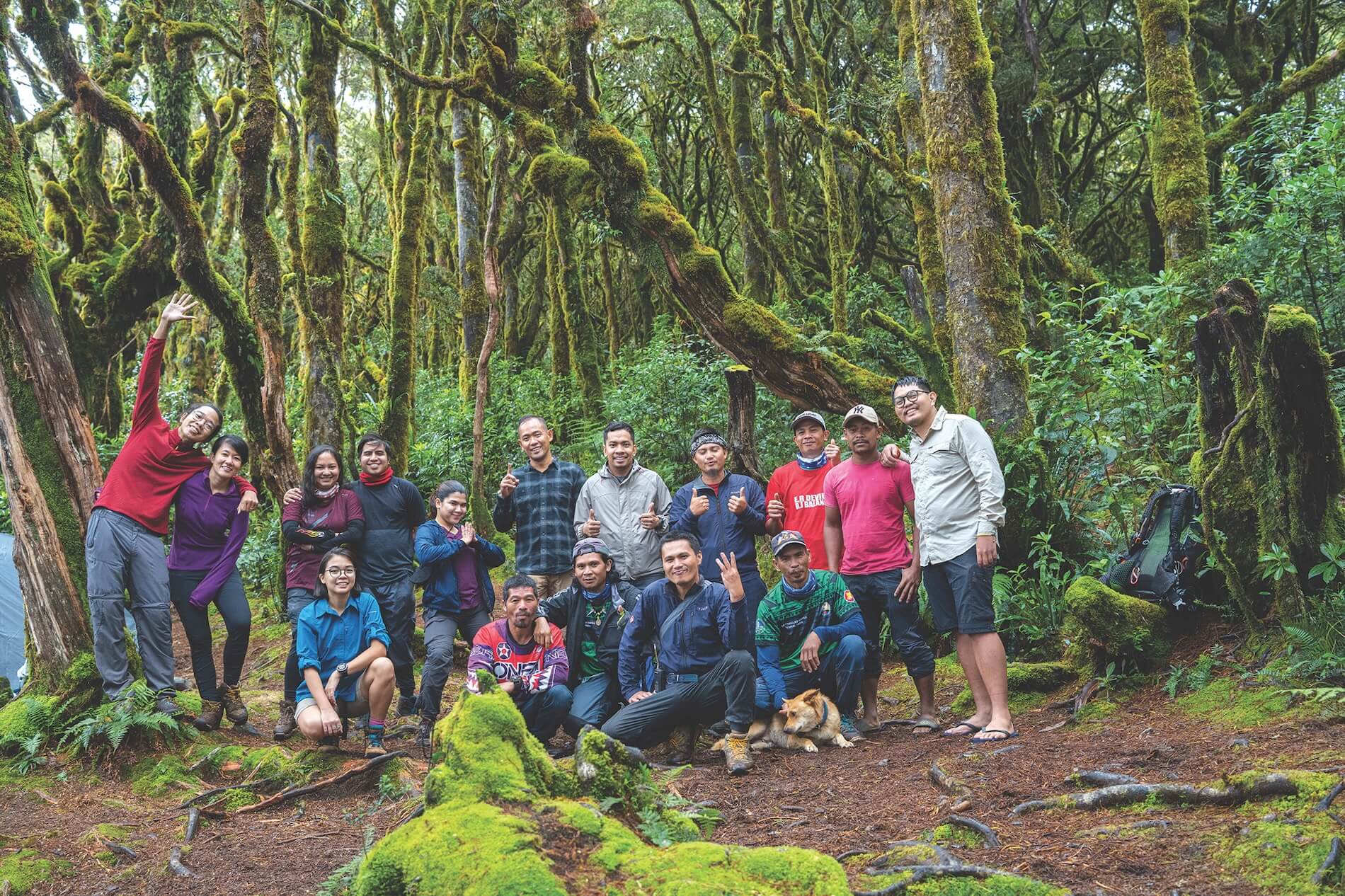
Bricx studied fine arts in college. After graduating, he built a freelance career in multimedia, including video, photography, and illustration. His volunteer work after Haiyan, followed by a 2016 documentary project with the Palaw’an Indigenous community, drew him closer to climate change activism, cultural heritage preservation, and Indigenous Peoples rights.
“A week after that project, I went back to Manila, and I tried to apply for a teaching job. I kept thinking, ” Why are these stories not shared in schools?”
He taught senior high school for two years. Teaching helped him bring those stories into the classroom, though it left him less time for his own practice.
In 2021, when he felt unsure about whether he could keep going as an artist, a client reached out with a commission. He took it as a push back to the studio and a reminder to take his work seriously again.
“That same year, I won the DigitalArt4Climate contest, which was part of the COP26 programme,” he says. “It was empowering for the creative community. It showed me how powerful art could be. It can carry stories. It can carry people. It can carry our stories from the region.”
The DigitalArt4Climate competition featured more than 200 NFT artists from 58 countries. Bricx was the only Southeast Asian artist in the competition. His NFT, titled Nexus, won first place.
“Hand, plastic, wood. It symbolises forest fires and global warming. The hand is mine,” he says. “I drink energy drinks from plastic, so I am also part of the problem. That is why the title is ‘Nexus’. It is a self-portrait. I am contributing to pollution.”
In early 2022, he became involved in regional storytelling campaigns, including the ASEAN Centre for Biodiversity’s Young ASEAN Storyteller programme. “They really supported mainstreaming biodiversity. I am very thankful they gave a chance to people like us. I am not from an environmental background, so support from different stakeholders matters. ACB helped me find a way to carry the advocacy,” he says.
When The ASEAN spoke with Bricx, he was racing to meet a deadline to finish an artwork for a climate change exhibit. His digital painting features the Tamaraw, a dwarf wild buffalo endemic to Mindoro in the Philippines and considered a critically endangered species. Its population drastically dwindled due to hunting, poaching, disease, and habitat loss. The Philippine government and the private sector have launched a Tamaraw conservation programme. In 2025, Bricx was inducted as a Tamaraw Conservation Ambassador.
In his artwork, a Tamaraw is engulfed in flames, depicting anger at policy failure and the lack of governance for climate action. “That is the symbolism of the tamaraw spirit. The tamaraw, even though it is cute, is highly territorial. It becomes even more defensive when it has a calf.”
“Lately, I have been drawn to animals,” he says. “In the field, I learned about kinship, about seeing nature as one. When I see an animal, it feels like a message.” Bricx shares his new goal is to become a forest ranger.
Still, he admits that the path is not always stable. Despite his packed schedule, opportunities to work full-time in the field remain limited. At times, he is unsure whether he will be able to put food on the table. Even so, he keeps going.
“When you see people in the field and in communities doing the same thing, that empowers you. Especially with the youth,” he says. “Even though we do not have a science background, we try to do what we can.”
He treats every conversation with decision-makers as a rare opportunity. “Every time I have a chance to talk to leaders and policymakers, I bring up empowering communities, including Indigenous communities and youth,” he says. “They will not see (what I post in) my Instagram; hence, that is my chance to speak to them.”
As we end our conversation, he offers a message to young people doing similar work: keep going. “One of the important things I have learned is to continue what you are doing. Even if you do not believe in yourself, some people may see you as an inspiration.”