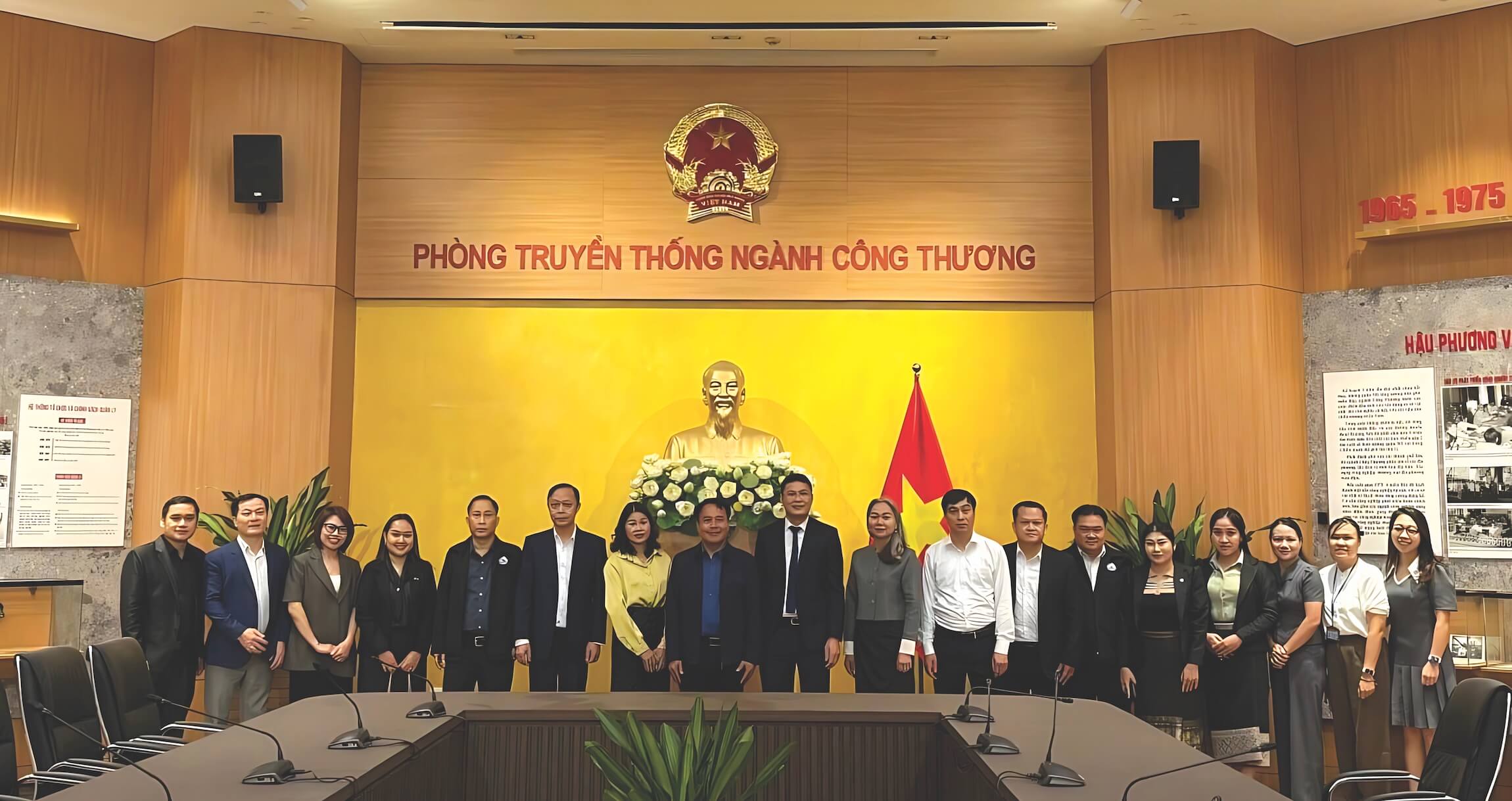


Officials from the Ministry of Industry and Commerce of the Lao People's Democratic Republic (Lao PDR) walked into the headquarters of the Viet Nam Competition Commission (VCC) on 28 August 2025 with a clear mission: to strengthen consumer protection systems across borders at a time when online marketplaces, cross-border trade, and consumer expectations transform faster than laws can keep pace.
The two-day exchange, part of the Association of Southeast Asian Nations (ASEAN)-United Kingdom (UK) Economic Integration Programme (EIP), brought together government officials, civil society actors, and market inspectors. The discussions centred on the question: How can Lao PDR and Viet Nam ensure that consumers—from farmers buying fertiliser to young people shopping online—stay protected in a borderless marketplace? This event, building on recent bilateral ties, highlights how regional cooperation addresses shared vulnerabilities in a rapidly digitising economy.
Why consumer protection matters now: A regional perspective
Consumers across Southeast Asia face new challenges. Online fraud, unsafe products, and misleading advertising have risen alongside booming e-commerce industry. In Lao PDR, as in Viet Nam, the growth of digital trade is also a double-edged sword, creating opportunities but opening vulnerabilities. For example, the e-commerce market in ASEAN is projected to reach 106.72 billion US dollars in revenue by 2025, according to Statista. Yet, this expansion has fuelled a surge in scams, with the Asia-Pacific region losing an estimated 688 billion US dollars to fraud in 2024 alone, as Fortune reports. In Southeast Asia, cyber scam operations have evolved into a transnational crisis since the COVID-19 pandemic, often involving counterfeit goods crossing borders, per the Global Initiative Against Transnational Organised Crime.
ASEAN sought to tackle these challenges through the ASEAN Strategic Action Plan for Consumer Protection 2016–2025 (ASAPCP), which calls on Member States to strengthen laws, enforcement, and consumer education. The Lao PDR–Viet Nam exchange in Hanoi brought this vision to life, translating high-level commitments into concrete cooperation. The two countries’ stronger ties in consumer protection underscore the urgency, with governments collaborating amid rising digital threats.
Learning from Viet Nam’s experience: Legal instruments and civil society practices
Lao PDR delegates were oriented on Viet Nam’s amended Law on Protection of Consumer Rights (No. 19/2023/QH15), promulgated in June 2023 and effective from July 2024, which introduces stronger safeguards for e-commerce. These safeguards include compelling digital platforms to be transparent and handle complaints swiftly. It also enhances protection for vulnerable groups, such as those with disabilities, pregnant women, older persons, and children.
The delegates also learned how NGOs complement government enforcement from the Vietnam Consumer Protection Association (VICOPRO), Viet Nam’s largest consumer association. They discussed sustainable funding models, advocacy campaigns, and how to empower consumers to speak up. VICOPRO, with 54 provincial branches, runs initiatives, such as apps for reporting issues, to boost consumer awareness nationwide.
For many Lao PDR officials, these lessons were immediately relevant. “We are refining our own Consumer Protection Law from 2010, and seeing Viet Nam’s practical systems gives us concrete models to adapt,” explained Santisouk Phounesavath, Director General of MOIC’s Internal Trade Department, in a post-event discussion.


Consumer protection in real-time
One highly impactful moment came at Long Bien Market, Hanoi’s iconic wholesale hub. Amid the bustle of vendors unloading fresh produce and traders haggling over prices, Lao PDR delegates joined Vietnamese inspectors for real-time checks.
Inspectors demonstrated how to monitor food safety, verify labels, and issue warnings for non-compliance. The Lao PDR team witnessed mobile technology in action, logging results for national databases—a stark contrast to their paper-based systems. “Seeing how Viet Nam integrates technology into inspections helps us imagine similar tools in Lao markets,” one participant reflected, highlighting the peer-learning value.
Shared challenges, shared solutions: Multi-stakeholder insights
The exchange sparked deeper conversations from various angles on consumer protection in digital trade.
- E-commerce growth: Both countries acknowledged risks like counterfeit goods. Viet Nam shared platform engagement strategies, drawing from its laws’ requirements for quality of service and transparency.
- Consumer education: VICOPRO emphasised campaigns on financial literacy and online safety, noting scams cost Singapore businesses 1.2 million US dollars in late 2024 on phishing incidents alone, per GBG.
- Enforcement coordination: Viet Nam’s multi-level system offers a model for Lao PDR that aligns with ASAPCP goals.
The role of regional and international partnerships: A broader lens
This exchange stemmed from the ASEAN-UK EIP’s Regulatory Reform Pillar, which has supported frameworks across Southeast Asia since 2024. “Our partnership with ASEAN Member States is built on knowledge-sharing and peer learning,” said Zoe Dayan, Senior Regulatory Reform Attaché at the UK Mission to ASEAN. “This is part of ensuring protected consumers and fair markets.”
ASEAN Secretariat representatives noted bilateral efforts to harmonise standards, preventing any state from lagging behind.
Looking ahead: Future perspectives
The Lao PDR delegation returned with tools and partnerships. The Ministry of Industry and Commerce officials will incorporate the insights they gained into legal refinements. Future steps include developing joint training programmes and digital platforms.
As one Vietnamese participant concluded, “Consumer rights don’t stop at the border. Neither should our cooperation.”
The ASEAN-UK Economic Integration Programme supports regulatory reform, trade facilitation, financial inclusion and inclusive growth across ASEAN. Through technical assistance, capacity building, and peer-to-peer partnerships, the programme is helping to strengthen consumer protection frameworks and market surveillance systems across the region.
The author is a Regulatory Reform Attaché at the UK Mission to Viet Nam. He specialises in public digital infrastructure, regulatory frameworks, and consumer protection across Southeast Asia.
The views and opinions in this article are solely those of the author and do not represent the policy or official position of ASEAN.