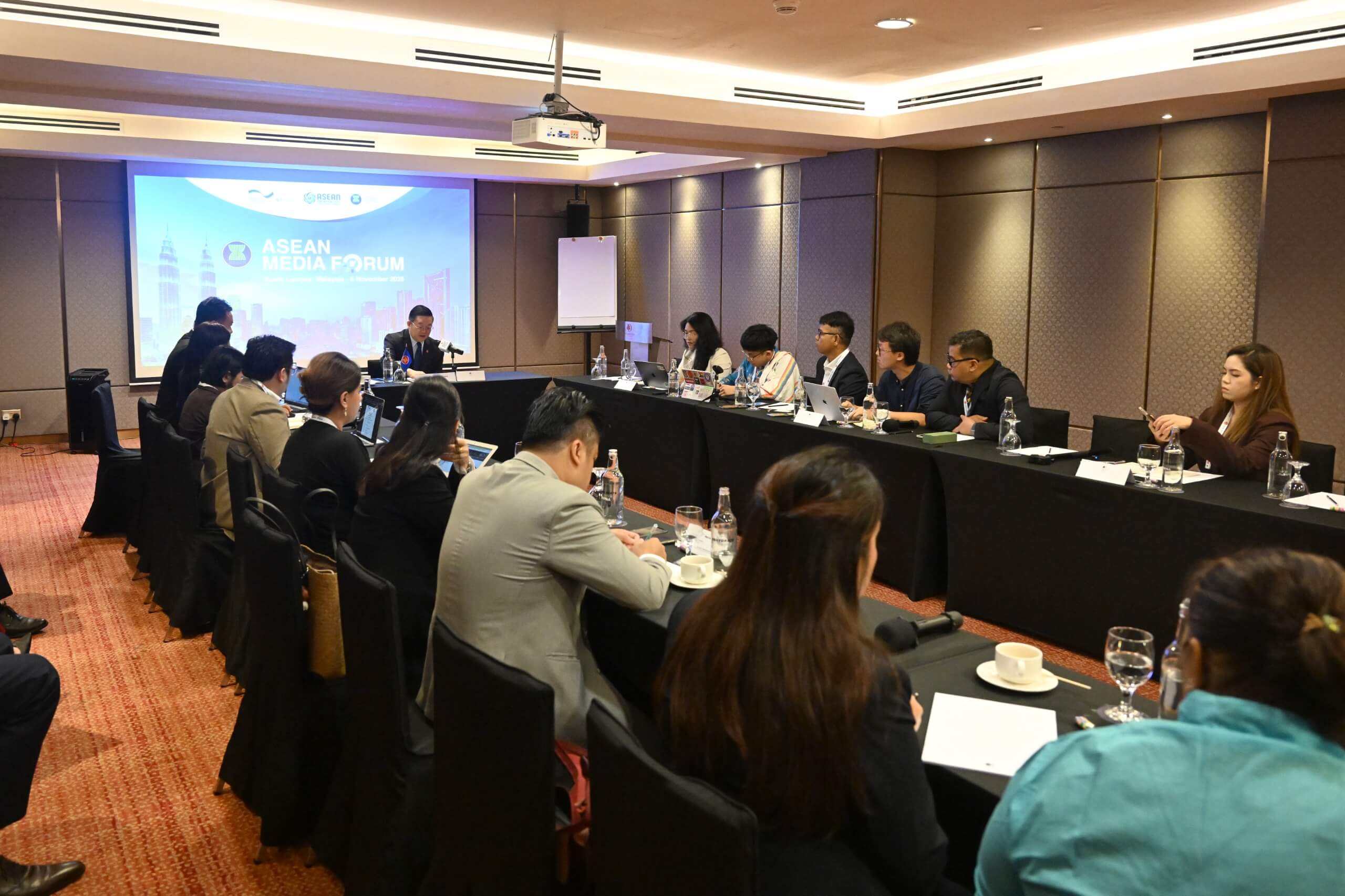

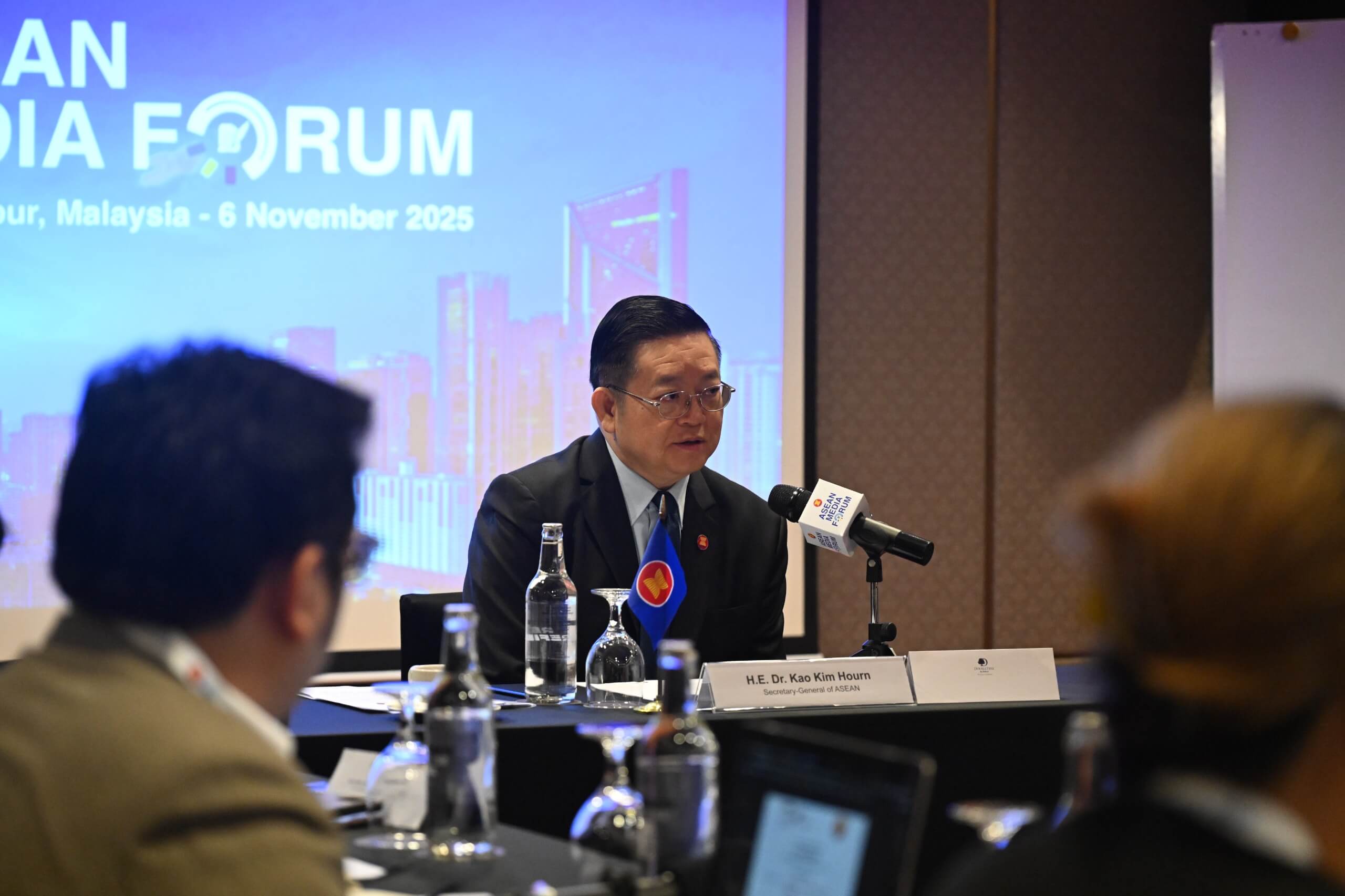
The Secretary-General of ASEAN, Dr. Kao Kim Hourn, participated in an interface session with regional media ahead of the opening of the 9th ASEAN Media Forum in Kuala Lumpur, Malaysia, on 6 November 2025. During this interactive session, SG Dr. Kao shared insights on ASEAN’s major milestones and key deliverables achieved under Malaysia’s Chairmanship in 2025, while highlighting the region’s collective efforts to advance ASEAN’s priorities and address emerging challenges. The discussion provided a candid, constructive exchange between the Secretary- General of ASEAN and the regional media representatives, refl ecting ASEAN’s commitment to transparency, collaboration, and people-centred communication.
SG Dr. Kao commenced the session by commendably acknowledging the exemplary leadership of the outgoing Malaysian Chairmanship of ASEAN in steering a year characterised by global complexity, geopolitical tensions, and economic unpredictability. His responses comprehensively addressed inquiries from over 30 media representatives, covering topics such as internal disputes, security threats, economic integration, and future sustainability.
Myanmar and regional peace
The crisis in Myanmar continues to represent ASEAN’s most sensitive challenge. SG Dr. Kao emphasised the importance of maintaining engagement with the country while simultaneously upholding the principles of national sovereignty and territorial integrity. He reaffirmed that the Five-Point Consensus (5PC) remains the foundational framework for action, complemented by humanitarian assistance and political initiatives, including visits by the Malaysian Foreign Minister as ASEAN Chair and the Special Envoy. Importantly, he clarifi ed that ASEAN’s work followed the 5PC, citing the work during Malaysia’s Chairmanship, whereby Myanmar’s representation was limited in certain high-level meetings. Additionally, he disclosed discussions regarding the potential establishment of a long-term envoy to Myanmar, possibly for a three- year period, indicating a possible long- term engagement. SG Dr. Kao hailed the Kuala Lumpur Peace Accord between Cambodia and Thailand as a “landmark and historic moment” that aimed to resolve long- standing border disputes and paved the way for a return to diplomacy. “I must take this opportunity to thank Malaysia, particularly the Prime Minister of Malaysia, and, of course, as ASEAN Chair 2025, for his proactive engagement and leadership to get a ceasefire in place. Undoubtedly, it was challenging,” SG Dr. Kao told the media. Leading up to the signing, the ASEAN Secretariat actively monitored and reported ground-level developments to the ASEAN Foreign Ministers. Dr. Kao emphasised that the Secretariat remains fully prepared to support the ASEAN Chair but stressed that moving from a formal agreement to full implementation hinges on strong regional leadership. Under the ASEAN Charter, Dr. Kao noted that the Philippines—as the incoming Chair—will hold the critical responsibility for overseeing the Accord’s success. He further highlighted the need for collective commitment. “This is going to require leadership on both sides of the border of the two countries, of course. We continue to require leadership of ASEAN. We want to make sure that ASEAN remains peaceful, stable, and secure.” SG Dr. Kao stressed that “this is the wish of the ASEAN people, and it is important that we have to subscribe to the ASEAN Charter and the Treaty of Amity and Cooperation in Southeast Asia, that ASEAN should resolve their differences through peaceful means, peaceful dialogue, and, of course, not to use force under any circumstances. I think this is very important for ASEAN.”
Accelerating economic integration and security
ASEAN’s economic resilience was a prominent theme. SG Dr. Kao highlighted the organisation’s capacity to attract 226 billion US dollars in foreign direct investment in 2024, emphasising the necessity for collective efforts to maintain this infl ow. Economic policy is guided by a commitment to neutrality as it consolidates and works to become a single market, including accelerating the ASEAN Trade in Goods Agreement (ATIGA) Upgrade and fi nalising the ASEAN-China FTA (ACFTA) 3.0 Upgrade Protocol. Despite individual Member States pursuing their own economic policies in partnership with the United States, the collective effort to uphold the 48-year ASEAN-US relationship remains a priority, leveraging frameworks such as TIFA (Trade and Investment Framework Agreements). Addressing the escalating threat of cybercrime, SG Dr. Kao emphasised the collaborative framework established under the ASEAN Digital Ministers’ Meeting (ADGMIN) to address scam hubs, which he identifi ed as a global issue linked to drug and human traffi cking. A signifi cant advancement is the creation of a new body of ASEAN Prosecutors and Attorneys-General Meeting (APAGM) to enhance the exchange of information and intelligence among Member States.
Milestones, membership, and the future agenda
SG Dr. Kao lauded the accession of Timor-Leste as the eleventh and fi nal member of ASEAN in accordance with the Charter, another historic development towards regional integration that can create substantial investment opportunities for ASEAN’s 11 Member States. “We are on the path to becoming a single market production base, which is very important in terms of market size. We are the third-largest trading bloc in the world today.” Looking ahead, SG Dr. Kao outlined the critical issues that will be carried forward from Malaysia’s “Inclusivity and Sustainability” Chairmanship to the Philippines. The long-discussed ASEAN Power Grid (APG) has been elevated to a top priority, refl ecting the urgent need for renewable energy and Member States’ commitments to COP 30. Although the tasks are considerable—with resource mobilisation and safety as primary challenges—the process is expected to accelerate. Regarding maritime security, SG Dr. Kao reaffi rmed the commitment to endeavour to fi nalise the Code of Conduct (COC) in the South China Sea by July 2026. He clarifi ed that the COC originates from the 2002 Declaration on the Conduct (DOC) of Parties in the South China Sea, which is essential for regional peace and stability. Finally, addressing the state of journalism, SG Dr. Kao acknowledged the pressing concern over disinformation, citing a Viet Nam initiative to launch an ASEAN Task Force on Fake News as part of a collective effort under the Conference of the ASEAN Ministers Responsible for Information (AMRI). The overall message from the SG was one of fi rm resolve: ASEAN is actively addressing its internal and external challenges, anchored by the foundational principles of diplomacy, collective security, and a commitment to maintaining a stable, prosperous, and people-centred community.
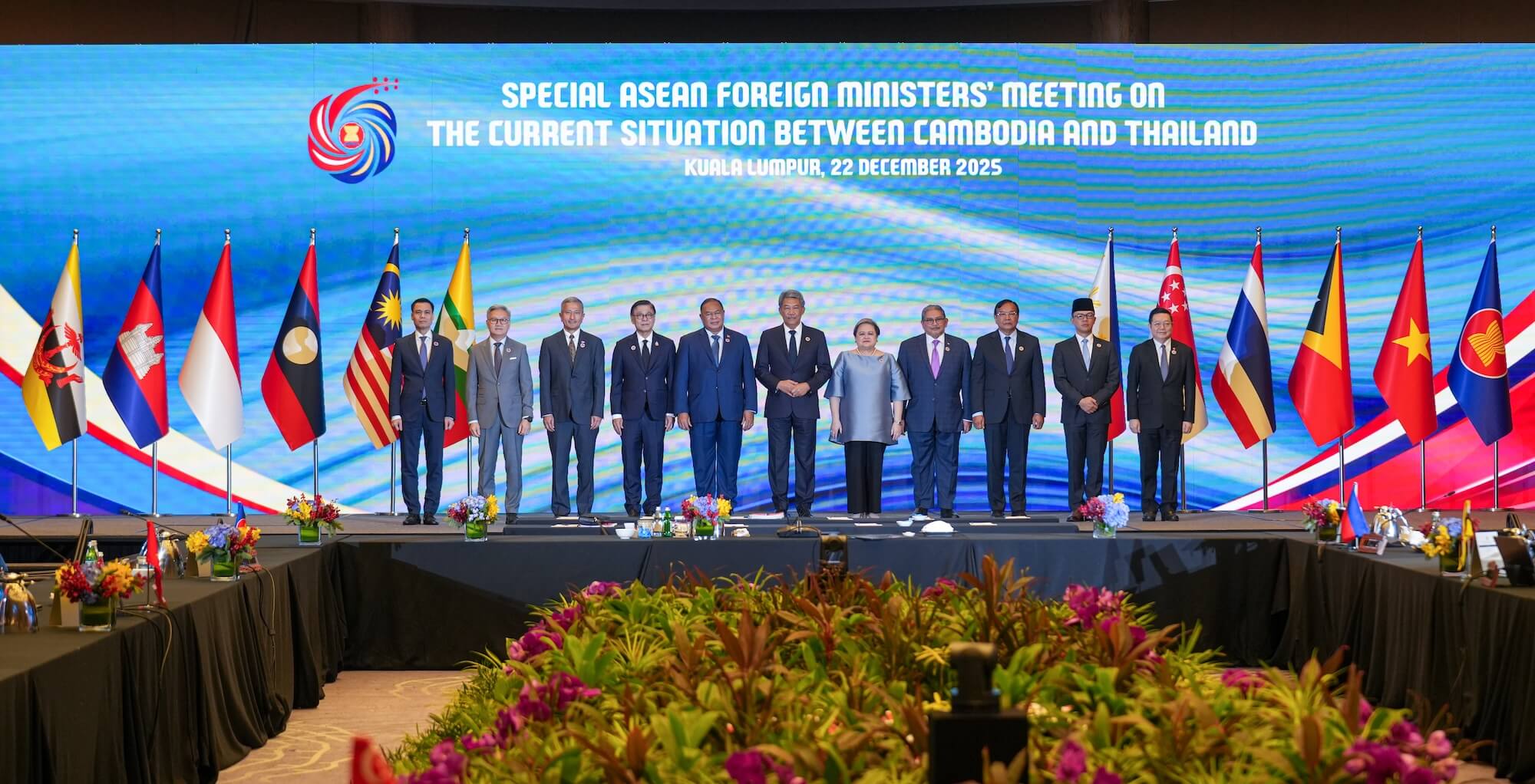
The Ministers of Foreign Affairs of ASEAN convened a Special Meeting in Kuala Lumpur on 22 December 2025 to address the current situation between Cambodia and Thailand, pursuant to the decision of the Prime Ministers of Malaysia, Cambodia and Thailand on 11 December 2025.
The full statement can be accessed at: https://asean.org/wp- content/uploads/2025/12/CHAIRS-STATEMENT-ON-THE-SPECIAL- ASEAN-FOREIGN-MINISTERS-MEETING-22-DECEMBER-2025.pdf