The ASEAN Secretariat initiated the ASEAN Artists Residency Programme (AARP) in 2018 to nurture and support the region’s young and upcoming artists. The programme has since featured several artists from across Southeast Asia.
In 2025, the ASEAN Art Residency Programme (AARP) returned with a special edition that coincided with the Osaka Kansai World Expo. Lao PDR artist Souphalak Phongsavath, known as Luck, was selected as the resident and spent a month in Osaka. She received a dedicated space in the ASEAN Pavilion to produce a new artwork. She also led botanical printmaking workshops in Osaka, Japan and Jakarta, Indonesia.
Luck shares her experience of the residency and her journey in art with The ASEAN.
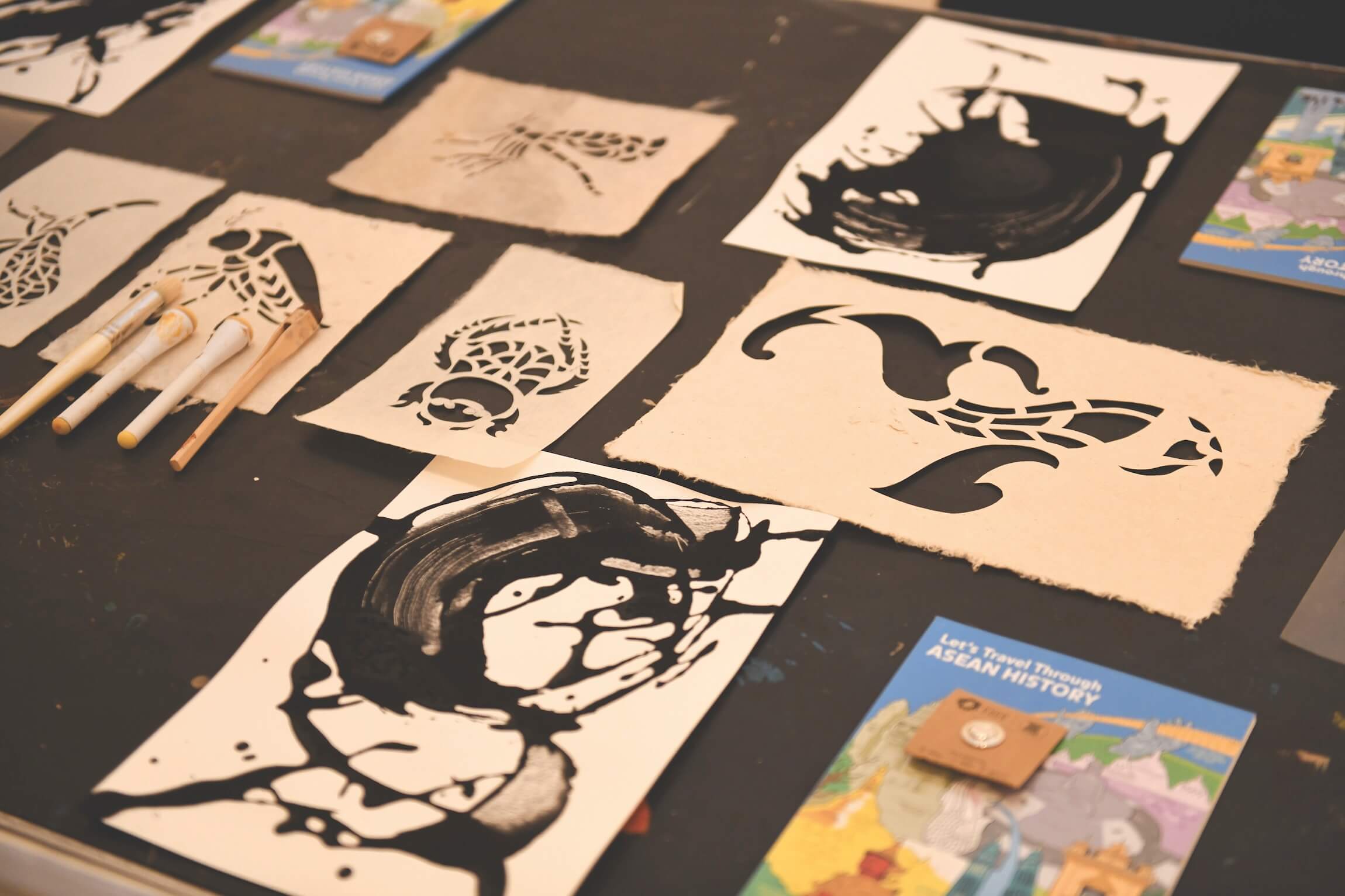
As a child, Luck always wondered how the fresh cow dung that dotted the path on her way to school in the morning could vanish by afternoon. She soon learned that it was not magic that cleared her way. It was the work of tiny dung beetles. When Luck was studying at school, these beetles worked tirelessly, rolling dung balls hundreds of times heavier than their bodies.
“Beetles are quiet creatures. They seem to whisper from under the ground. If we do not listen well, we will not hear them. They work in silence, they work in their own way, but their work is good for the environment, it is good for the soil,” says Luck.
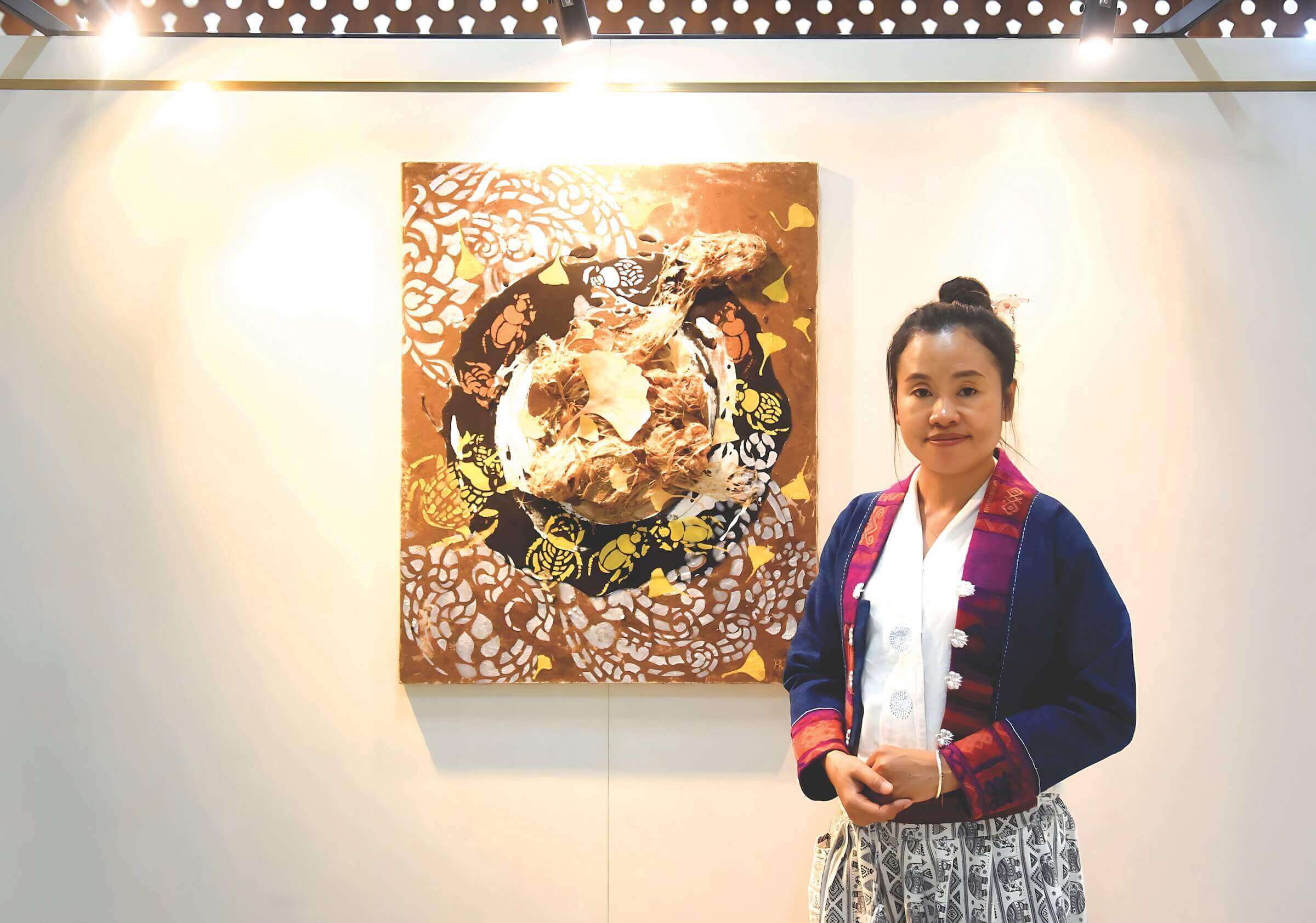
While her hometown, Xayaboury in northern Lao PDR, is renowned for its elephant conservation centre, it was these tiny dung beetles that caught Luck’s fascination. They became the inspiration behind her work in the ASEAN Art Residency Programme 2025. She calls the concept “Whisper from the Earth,” and “The Little Beetle’s Journey” is part of this.
In Vientiane, Luck works as an artist and curator at an art gallery that welcomes locals and long-term foreign residents who want to share and explore art. She learned about the residency programme from fellow Southeast Asian artists. “I thought it would be difficult because it was open to the whole country, but I applied anyway.”
Soon after she received the good news of her acceptance into the programme, she turned her workshop into a small studio. Luck invited friends to visit, share experiences, and offer suggestions. For this project, she chose to use natural, plant-based materials.
“My friend made handmade paper from banana trees and gave me some of it. She said, ‘you can create anything you want from it.’ I thought to myself, how can I make something from this paper? I tried to bring it into my concept, the beetle and the charcoal. After many experiments, I found a method that worked,” she explains.
From imagination to reality
Growing up in Xayaboury, Luck was surrounded by mountains, forests, and rice fields. One of her favourite activities was foraging for mushrooms and bamboo shoots with her siblings and cooking them at home. Her father was an accountant, and her siblings later followed in his footsteps. Luck, however, always wondered if there was a life beyond a desk job.
“One day, I followed my mother to the temple to make offerings. That was the first time I saw the temple murals. I wondered how the artists painted them. It looked amazing,” Luck recalls.
Luck was seven at that time. When they returned home, she excitedly asked her father what the person who did the mural was called. Her dad said they are called ຈິດຕະກອນ, chit ta kone, which means “painter” or “visual artist.”
“This word is beautiful to me. My dad explained that it means people who work to express the thinking into reality. In my hometown, no one really uses the word, especially as their occupation. They have police, farmers, staff, but this kind of job nobody did it.”
Her curiosity carried her into visual art during secondary school. She went to an art vocational school in Savannakhet before continuing her art education at the National Institute of Fine Arts in Vientiane.
Her academic journey seemed smooth until her final years of college, when she found out that she was allergic to substances used in printing materials. During printing class, she felt sick all the time, and her face even turned yellow.
“I could not taste the food, I could not eat, and I needed to be hospitalised,” she says.
After learning about her allergy, Luck chose to work with more natural materials.
“I went back to basics, like drawing, then developed into other things like multicoloured and dry pastel. I used everything that did not have a strong smell,” she adds.
This became part of her routine, especially during the COVID-19 lockdown when art supply stores were closed.
“During COVID, we cooked every day. In the kitchen, I saw my sister using charcoal. It is black, and I thought I might be able to use it. I did not let my sister know that I was using these materials from the kitchen. I used stones and a mortar to crush things into powder.”
Luck later proved that her sister’s sacrifice of her kitchen supplies was not in vain. After the pandemic, she held her first solo drawing exhibition. Her second exhibition, a charcoal exhibition, soon followed.
Her decision to use natural materials has become her signature in mixed-media works, including the piece she created during her AARP 2025 residency. Looking back on this opportunity, Luck hopes to see more activities and collaborations among ASEAN artists.
“In ASEAN, we have many artists who are very good. ASEAN can be a platform for us to share opportunities and news about art. We have a rich culture, and our art is charming. When you visit a place and move a little, you can already see a different culture, even in Lao. But we still do not really know how to preserve our art,” Luck assesses.
Luck also says she remains optimistic about the future of young ASEAN artists, even as artificial intelligence becomes more prominent in the creative industries.
“AI is coming into our lives, but we can use it in a good way. Artists are not always good at writing, so maybe AI can help with that. For creation, I think we need to experience our culture in a deeper way, not only what we can find online or on social media. If you feel something in front of you that you can touch, you can feel that comes from your soul, from your spirit. AI can tell you information, but you need to go to that place to bring out your soul.”
As our conversation closes, Luck remembers how she often lost her way in Osaka during her residency. Although it was challenging, she carries those moments as sweet memories.
“For an artist, it is good when things are not too comfortable. We need to remember the challenges and commit them to our memory. Later, you can say this happened to me, and you can feel the emotion.”
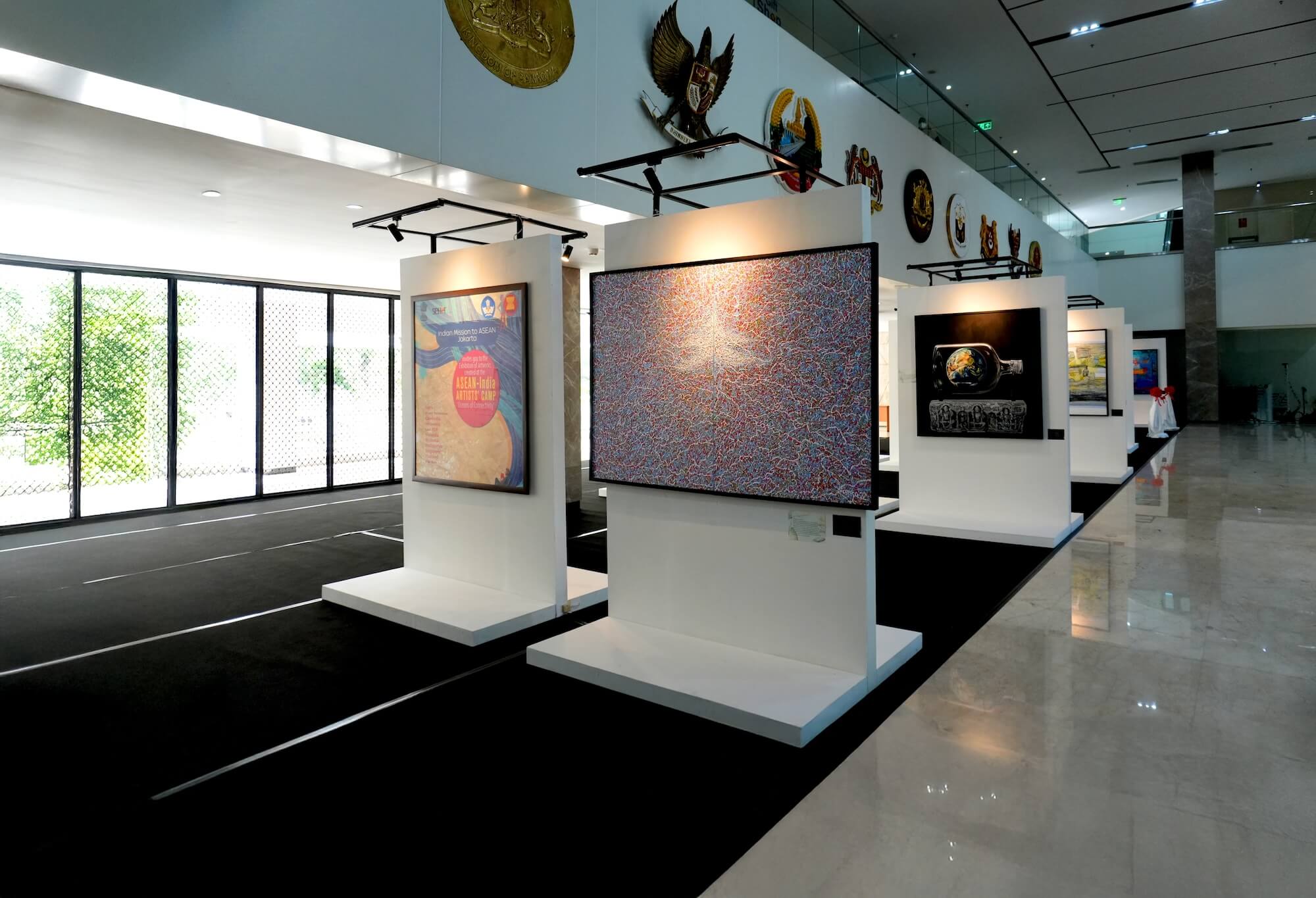
Luck’s artwork, “The Little Beetle’s Journey”, is now part of the ASEAN Gallery in Jakarta, alongside works by earlier AARP residents.