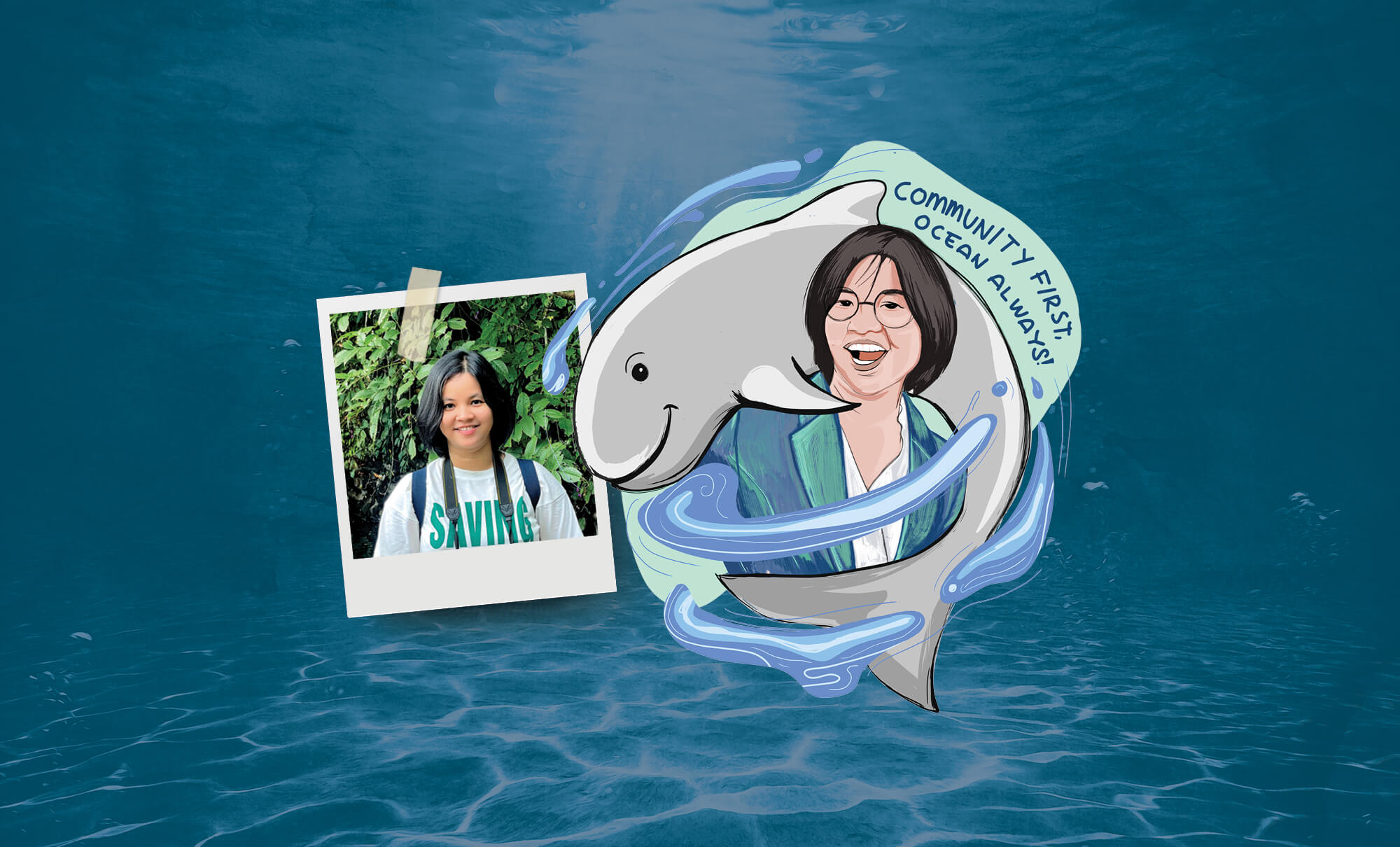

Twenty-five-year-old Thae Eaindra Hsu was born and raised in Mawlamyine, Mon State, Myanmar. Mawlamyine is known for its golden pagodas and its proximity to the Gulf of Mottama Ramsar site, a coastal wetland area recognised for its biodiversity and the communities that depend on it.
Growing up near the coast drew her into conservation work. Since 2021, she has worked with local conservation groups. She also joined a community-based marine conservation externship supported by the National Geographic Society and The Nature Conservancy, which further shaped her approach to community engagement and conservation practice.
While Thae studied English literature, she “learned everything by experience.” Alongside conservation, she is also a hobbyist photographer. She is able to combine her concern about climate change with creativity and storytelling.
Thae cannot hide her enthusiasm when talking about dolphins. Holding a dolphin toy, she explains that it represents an Irrawaddy dolphin, one of the species found in the Gulf of Mottama alongside the Indo-Pacific humpback dolphin and the Indo-Pacific finless porpoise.
She tells The ASEAN that dolphins are her favourite marine animals because they have a “beautiful smile.” She still remembers the thrill of seeing them up close in 2022.
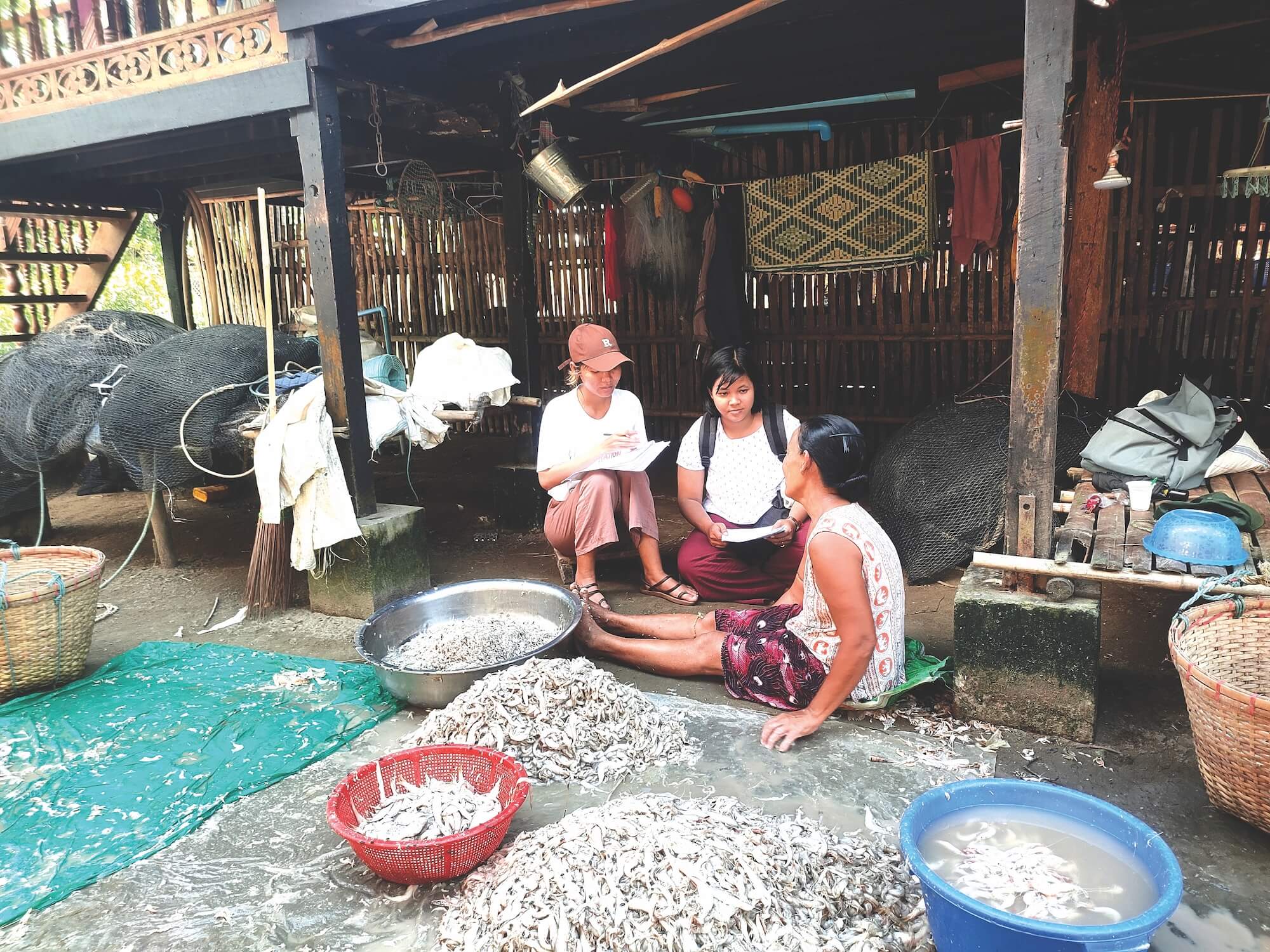
“We went out around 6 a.m. and came back around 4 p.m. Out on the water, we did population assessments,” Thae recalls. “It was extremely hot. We were covered from head to toe. We were exhausted, but when we saw the dolphins, all the tiredness went away,” she recalls.
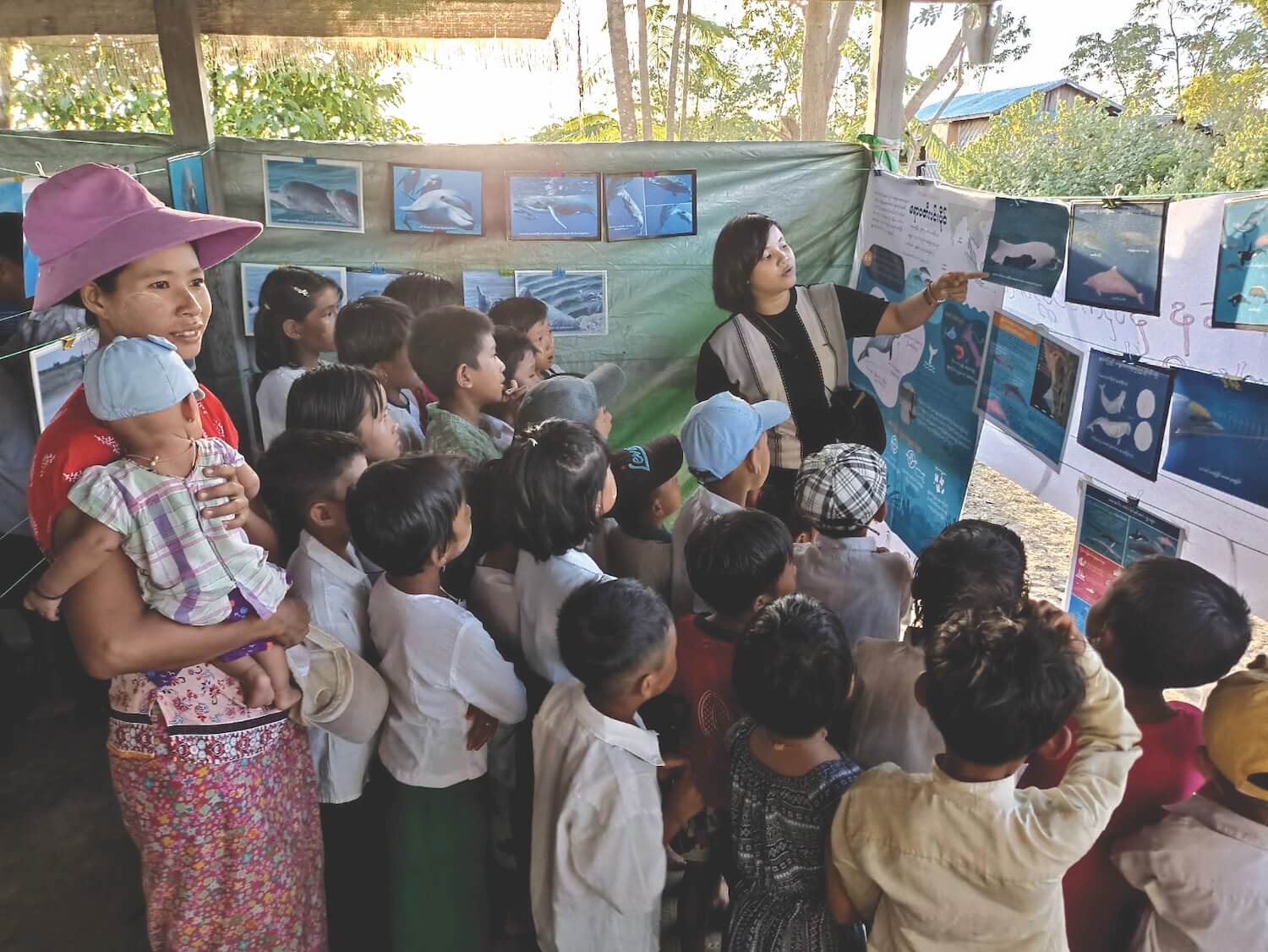
In 2024, Thae worked under the supervision of the International Union for Conservation of Nature (IUCN) in Myanmar as a Conservation and Research Associate, mentoring a marine mammal team and supporting their outreach in coastal communities. The challenge, she says, is making science understandable and relevant.
“When we told them the scientific facts, they were not interested. They did not understand because the scientific terms are very complicated and complex,” she says.
So, the team changed tactics. “Our team tried to make visual aids, using silicone to make dolphin toys. We used the dolphin toys on the ground and showed them as a stranded dolphin on the beach. Another toy wrapped in the fishnet. They can easily understand it because it is really happening in their life,” Thae says, holding up the same toy she showed to The ASEAN.
She says the approach also matters for children. “When we talked about science first, they were not interested. But when we gave them the colouring pencils and crayons, they started asking questions: What is this? What is that?”
The team also asks children to write letters to dolphins. One note says: “Run away from the fishing net!”Thae believes that shows how quickly children build care for marine life when learning feels personal and accessible. “Environmental education is very important, but it does not always mean that we have to study and learn in the classroom. We can teach everywhere,” she says.
She adds that innovation does not have to mean advanced technology. It can mean using creativity to translate scientific terms into something communities recognise in their everyday lives, then building practical action from that shared understanding.
“For example, when there is a dolphin stranded, the only people there will be the community, so they must respond immediately,” she says. “If it is alive, we need to release them back to the ocean systematically without harming them. We need to give them the training. It needs to come from the community, creating a bridge, building common knowledge, and scientific action.”
Thae sees that when science becomes a relatable story, more people show up. Her work also brings new opportunities. She was selected as an ASEAN Centre for Biodiversity Young Biodiversity Leader in 2023. While she cannot travel, she joins the programme online and continues to receive invitations to other regional activities, including speaking engagements. She also receives support for opportunities linked to donors such as the European Union and National Geographic.
Along the way, Thae also recognises a wider shift in youth interest. Despite the constraints created by the political situation in Myanmar, social media and internet access make it easier for young people to learn about biodiversity issues. Many are also eager to find volunteer or internship opportunities that build experience. She points to another factor, too: crises push environmental concerns into everyday life.
“In March (2025), there was an earthquake. 7.7 magnitude, a really big disaster,” she says. “That is why people are more willing to care about their nature and environment. They are trying to do their best in each role, not only in biodiversity conservation but also in waste management and risk reduction. In each field, there are a lot of young people engaging and trying to fill the space.”
For young people who want to be involved in conservation without a science background, Thae offers her own path as proof. “Conservation has taught me that passion, people, and creativity are just as important as science,” she says. “Even though you do not have a science background, you can pursue your passion and do what you like to do.”