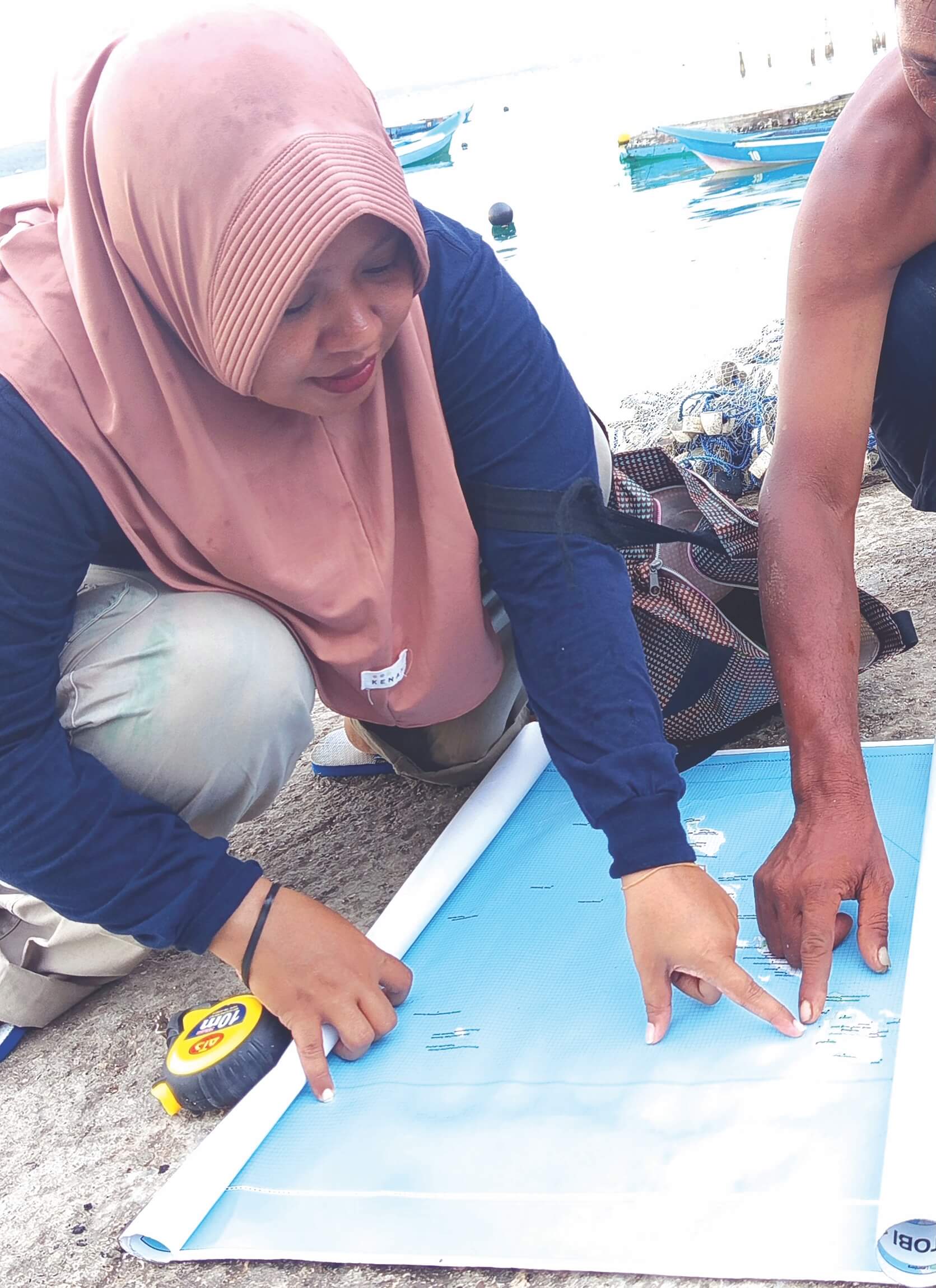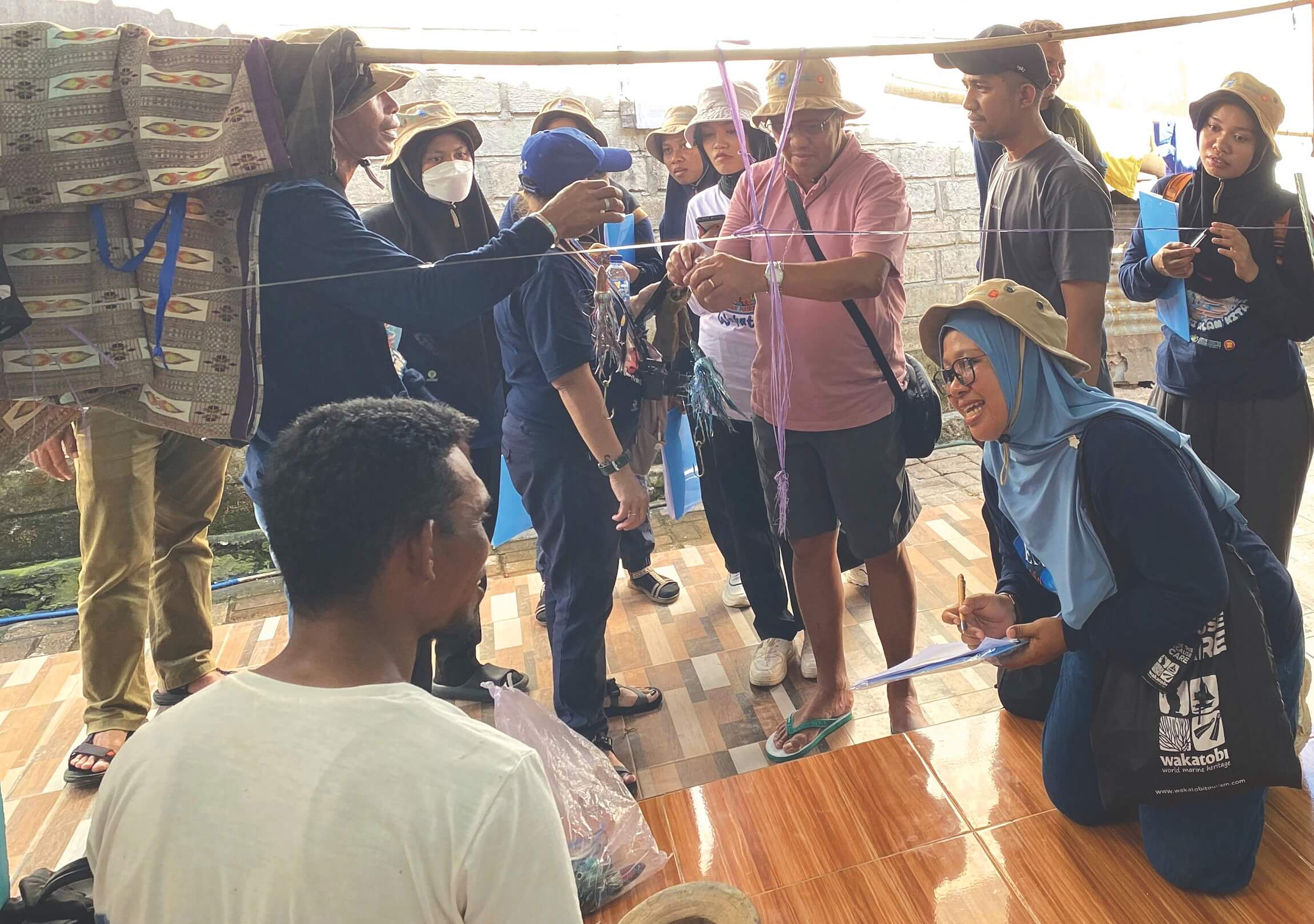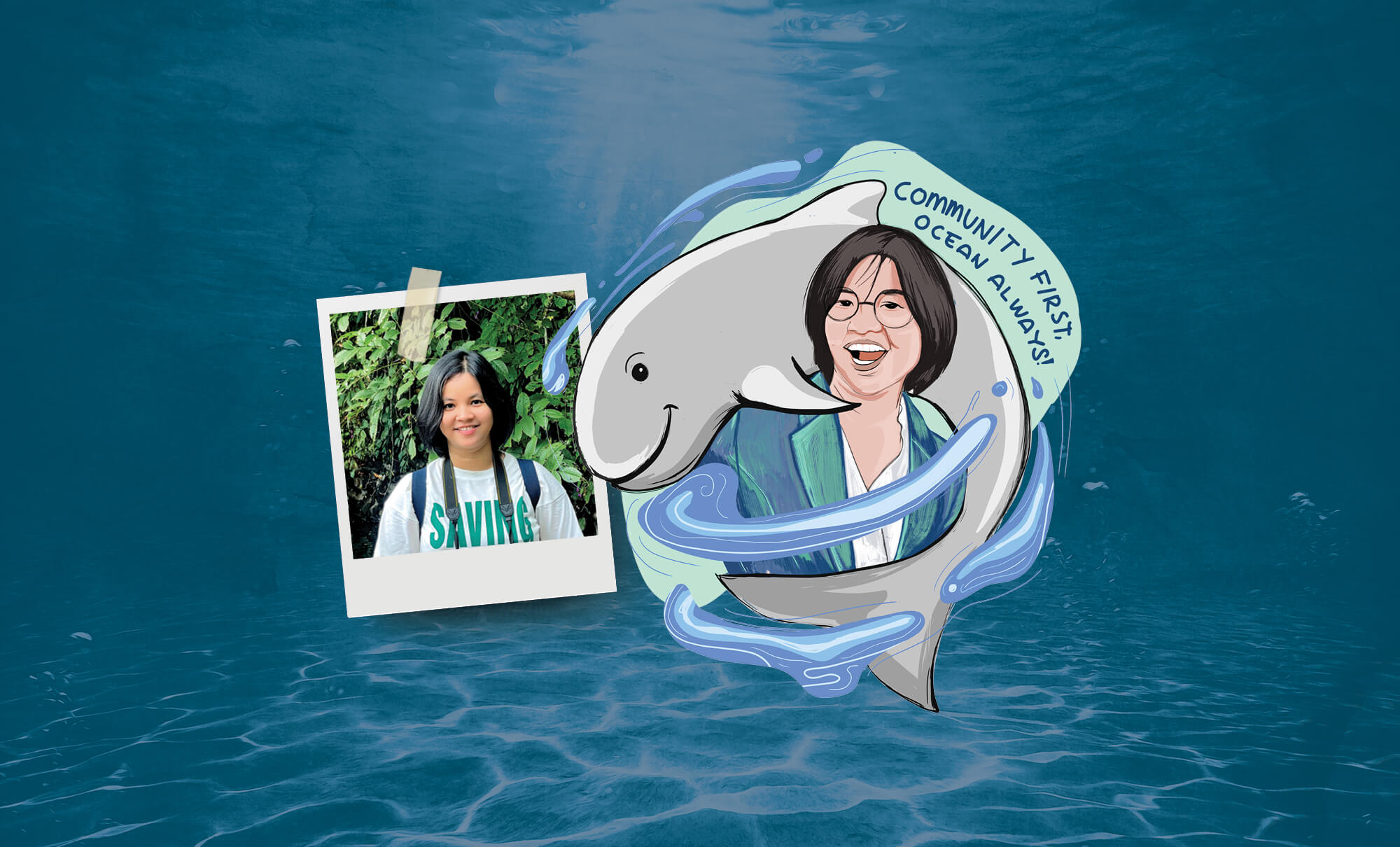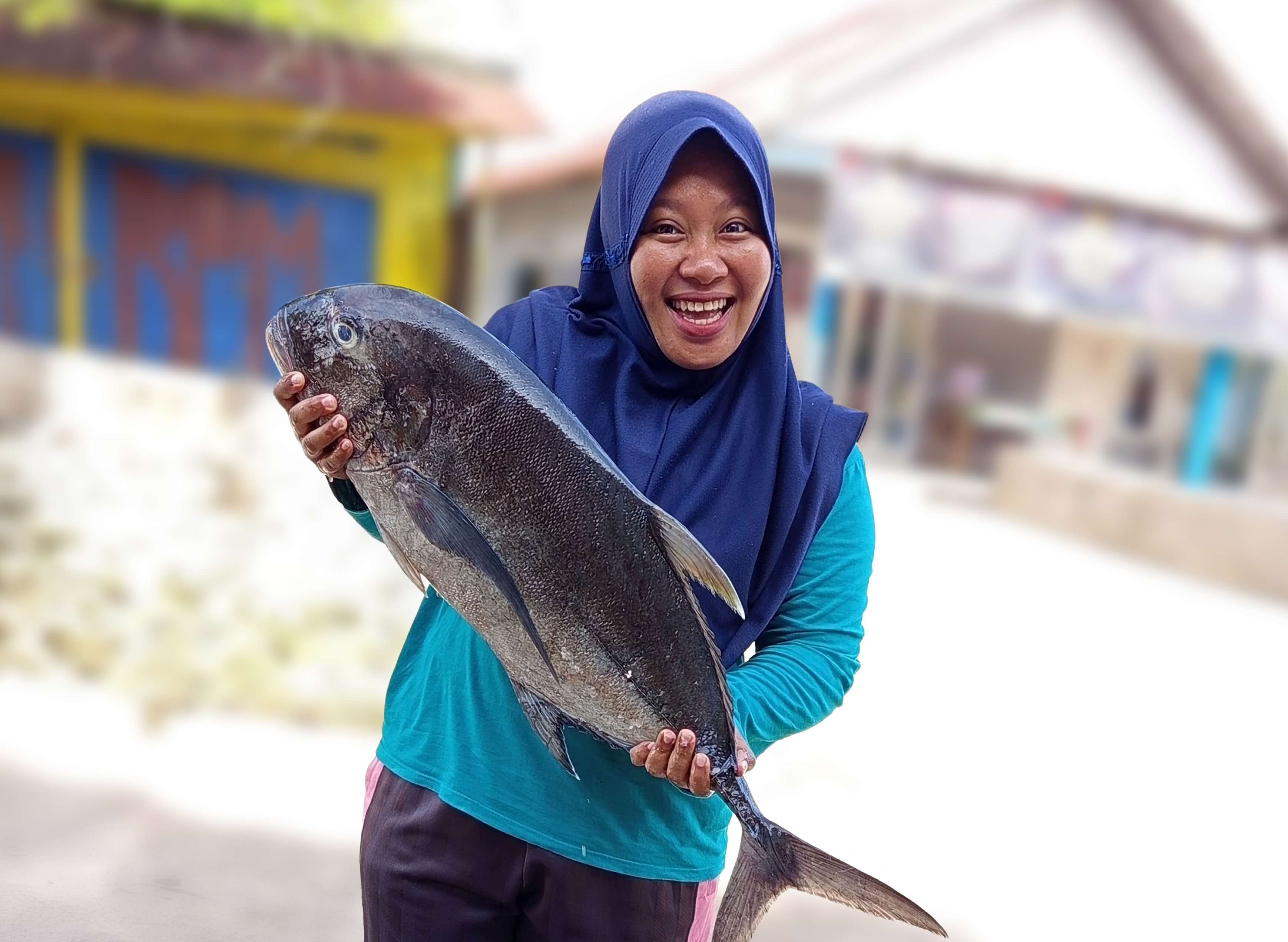
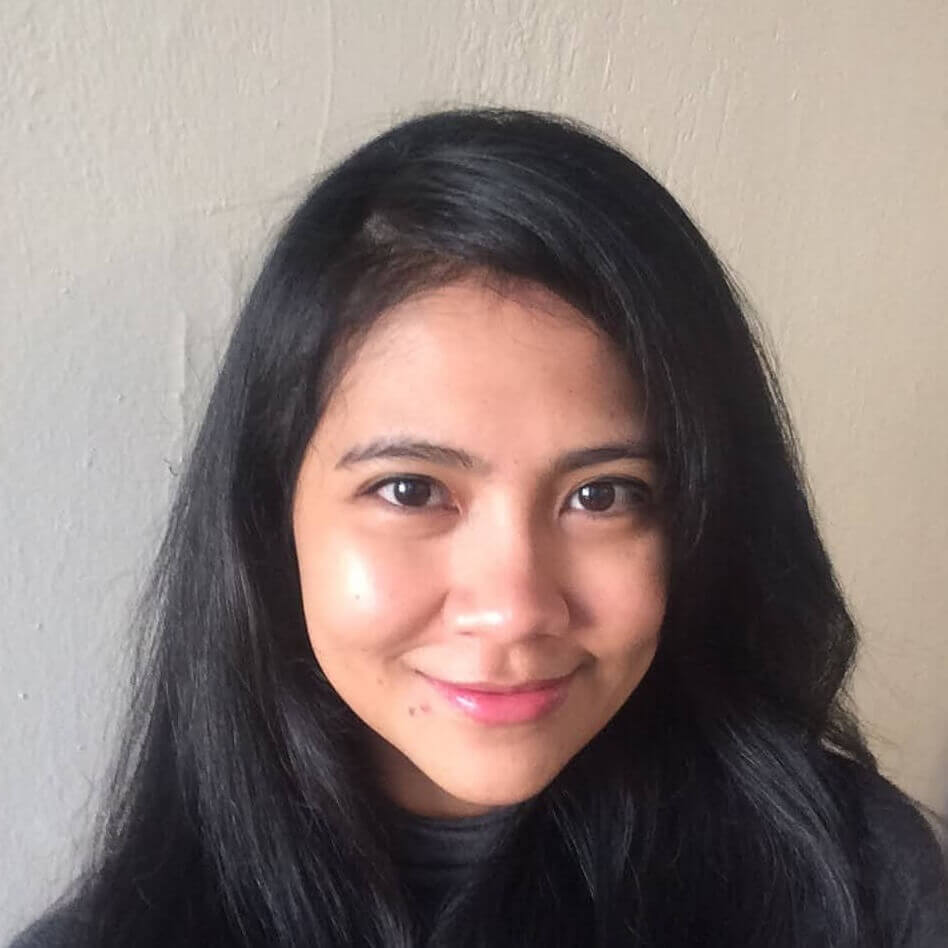
Thirty-four-year-old Megawati, a community worker based in Wangi-wangi Island in Wakatobi Regency, Southeast Sulawesi, joined the ASEAN Centre for Biodiversity’s Effectively Managing Networks of Marine Protected Areas in Large Marine Ecosystems in the ASEAN Region (ENMAPS) Programme in 2025 at the start of its five-year implementation. Megawati is a perfect fit, having been born and raised on the island renowned for its seascapes and coral ecosystems that span more than 90,000 hectares and sustain dense marine life. A mother of one, a school mentor, national park trainer, and vendor, Megawati now applies her breadth of experience to serve as an ENMAPS Programme enumerator, which involves interviewing fishermen from the Bajo tribe.
Megawati grew up in a family that ran a small grocery shop and a telephone kiosk (warung telepon, or wartel). After high school, she and about a dozen other students from Wakatobi, short for Wangi-wangi, Kaledupa, Tomia, and Binongko, received a government scholarship to study fisheries in Jakarta at Sekolah Tinggi Perikanan, now Politeknik Ahli Usaha Perikanan (Jakarta Technical University of Fisheries). The experience strengthened her understanding of coastal livelihoods.
After graduating in 2013, her parents asked her to return home. Over the next thirteen years, Megawati’s career was built by the islands and their changing economy. She supported local and international organisations working with coastal communities, established a catering business with women from the island, worked as a private tour guide, and even produced oleh-oleh [snack and souvenirs] for tourists.
“My background is in natural resource management, not in seafood processing. But at school, they also took us to places where coastal communities exhibited their products, so I understood the potential,” Megawati recalls.
“At that time, I would tell other women, ‘let’s make keychains’ or ‘let’s make food products.’ But back then, I had just graduated, and I had not achieved anything, so people looked down on me. They thought it was a waste of time,” she adds.
The ENMAPS Programme would equip the community with skills and tools to sustainably harness marine resources as a livelihood source while protecting coastal/marine ecosystems. It would also support efforts to revitalise Wangi-wangi’s flagging tourism industry.
Tourism on the islands, Megawati recalls, used to be more lucrative. She remembered a tourism surge in the early 2010s, when Wakatobi Regency was newly established.
“Tourists used to be far more numerous. International youth forums happened here. Everything was here. Wakatobi was better known abroad than in Indonesia, and promotions overseas were stronger. Back then, there was almost no off-season, and tourists kept coming. But now, especially after COVID, flights are gone, and getting here is expensive. Sea transport now offers more options, but air travel is still costly. Visitor numbers are very low. Only a few foreign tourists stop here with their own boats on the way east,” she says.
After joining the ENMAPS Programme, Megawati began working with the fishermen. It was her first chance to work with the Bajo fishermen who live only about three kilometres from her home. Across Indonesia, Bajo communities have long built their lives around the sea, with populations in Southeast Sulawesi, Central Sulawesi, East Kalimantan, and parts of Nusa Tenggara.
“Thunder, lightning, strong wind, and strong waves. Many fishermen catch fish near the coast with nets. Some had not gone out to sea for a week, some even longer. Even people who live on the islands felt afraid,” she says.
“I interviewed Bajo fishermen for ENMAPS. The last time I went, it felt scary. Even near the coast, without rain, the wind was still so strong. Sand blew into my eyes. Sometimes, we had to cut the interview short and came back the next day,” adding that she visited the community two or three times a week.
As an ENMAPS enumerator, Megawati shares the job with five others across the islands of Wakatobi. Of the six people working, five are women.
“I feel genuinely happy because this programme truly puts women forward. It gives women a chance to step onto the stage, take part in every role, and make decisions.”
At first, Megawati doubted herself. She was unsure she could earn the trust of the fishing community, since most of them are men. However, she understands that many fishermen speak little Indonesian, they used Bajo language, and identify fish by local names, which can complicate interviews and data collection. That gap convinced her that her local knowledge and fisheries background mattered. She could act as a bridge between the community and the programme.
Despite her initial hesitation, Megawati has successfully established a good connection with the Bajo fishing community.
“I have become a friend they hang out with, both the fathers and the mothers. I enjoy seeing their daily lives up close. You see the wives selling the fish their husbands catch at the market. But it still comes back to the same issue: they lack financial management skills,” she says.
Megawati expressed optimism about the programme and its direct impact on people’s lives. She has watched organisations come and go. Many arrive with training sessions and short projects, then leave without a trace.
“People are tired of the same training again and again. To this day, they cannot climb the social ladder to the top. No one ends up producing anything. If one or two people do, they are usually the ones who have endured for years. Most programmes do not finish the job,” she assesses.
“Many programmes run well while the organisations are present. But once the programme ends, everything starts again from zero,” she adds.
She compares development work to cultivation. People nurture a plant with care, fertiliser, and attention, yet the people who cared for it from the beginning are often the first to abandon it once it finally bears fruit. Megawati hopes ENMAPS will break this pattern.
“I hope that whatever projects ENMAPS runs will be planned carefully, with clear outcomes that people can carry forward. I hope that even after ENMAPS ends, the roots remain here so people can keep growing. That could take the form of a community group, a local NGO, or stronger involvement from the local government,” she concludes.