The nature of tourism has traditionally focused on international tourists who travel beyond their usual environment for leisure, business, or cultural experiences. This cross-border movement is a key driver of the global tourism economy, as international visitors contribute signifi cantly to host countries through spending on transportation, accommodation, food, attractions, and other services.
Before the COVID-19 pandemic, many national tourism strategies—including Myanmar’s—prioritised attracting and catering to international tourists to maximise economic benefits and promote cultural exchange. In 2019, Myanmar welcomed 4.36 million international visitors, generating substantial foreign income. However, the COVID-19 pandemic profoundly disrupted the global tourism sector, and Myanmar was no exception. During the peak of the pandemic, international travel restrictions led to a decline in foreign tourists and a sharp increase in domestic tourism.
Since the cautious reopening of domestic travel in October 2021, local travellers have had the opportunity to explore Myanmar’s rich cultural and natural attractions—destinations that were previously dominated by international visitors. With fewer foreign tourists, local visitors found themselves welcomed as guests across various sites, enjoying a more relaxed atmosphere supported by service providers. This shift also impacted tourism-related costs. Prices for accommodation, transportation, attractions, and other services decreased due to lower demand from international tourists. Additionally, domestic travellers experienced greater value for money, which in turn, altered traditional travel patterns. Where local visitors once commonly stayed overnight at monasteries or with friends and relatives, more began choosing motels and hotels, thus contributing directly to the hospitality sector’s revenue.
In 2024, the number of domestic visitors reached approximately 11 million, nearly doubling the total domestic arrivals recorded in 2019. As a consequence, this trend has helped balance higher prices in popular tourist areas while maintaining service quality—factors that further improve Myanmar’s readiness to welcome international tourists once again. Compared to neighbouring countries, Myanmar is increasingly seen as a favourable destination offering reasonable prices alongside quality services. Therefore, the key changes in Myanmar’s tourism sector include increased domestic spending on quality accommodation, dining, and souvenirs, alongside a cooling of prices for tourism services. These developments reflect a positive shift in domestic travel behaviour and provide a strong foundation for re-attracting international visitors to Myanmar in the near future.
The Ministry of Hotels and Tourism of Myanmar has established six fundamental policies to steer the country’s tourism sector towards sustainable growth. These policies emphasise the importance of boosting the national economy, conserving the environment and cultural heritage, fostering socio-economic progress, adhering to international agreements, supporting peacebuilding efforts, and promoting sustainable and inclusive tourism development.
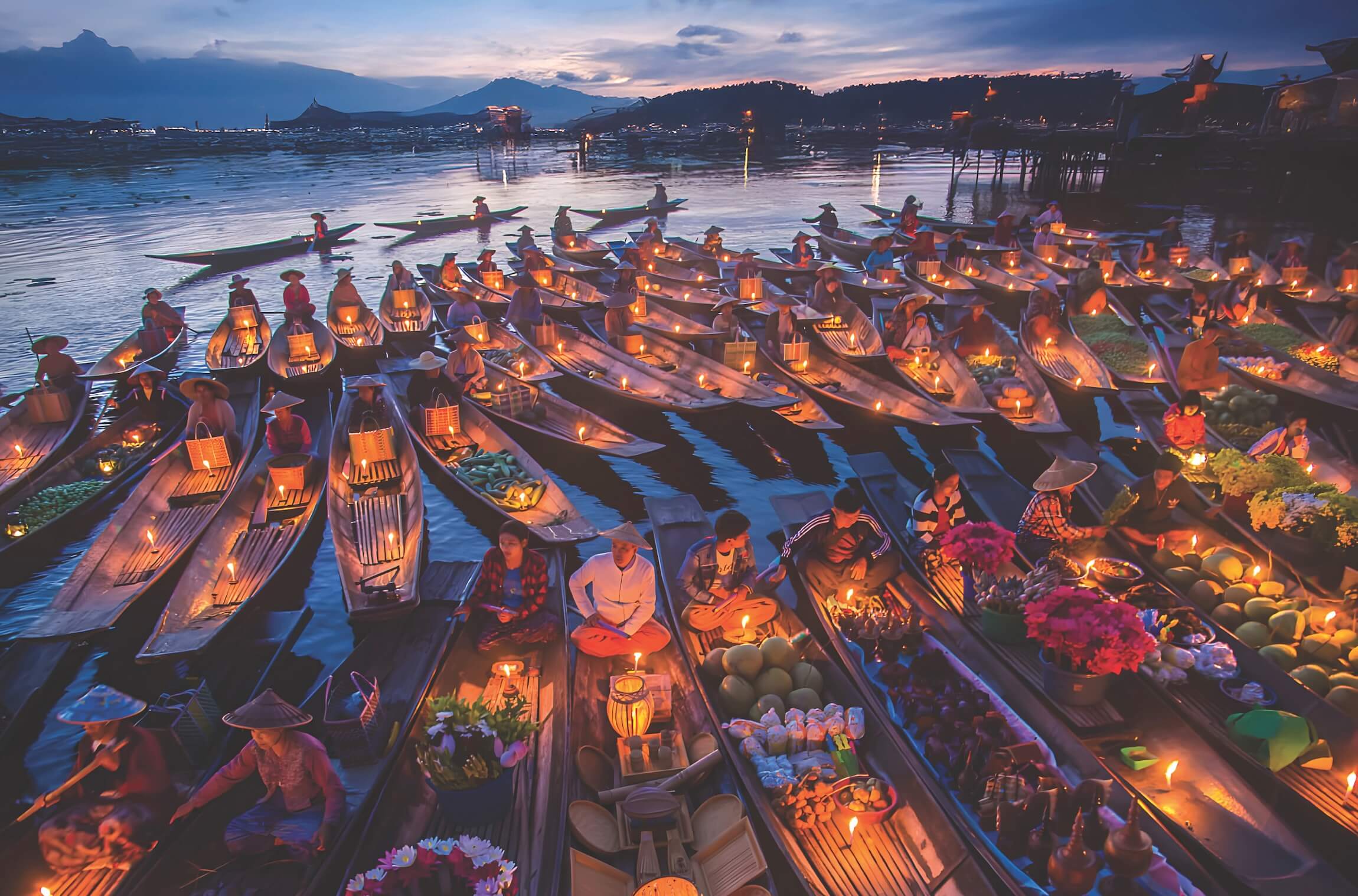
In line with these guiding principles, Myanmar has initiated a range of marketing and promotional campaigns designed to highlight its distinctive cultural heritage, natural landscapes, and renowned hospitality. These efforts, conducted both online and offline, aim to attract tourists from within the country as well as from abroad by portraying Myanmar as a safe, welcoming, and diverse travel destination. A unique feature of Myanmar’s marketing strategy is that it showcases flagship destinations, such as Bagan, Mandalay, Inle Lake, and Yangon’s colonial architecture, while at the same time bringing attention to lesser-known destinations. This dual strategy enriches visitor experience.
To increase global visibility, Myanmar leverages digital and social media platforms and collaborates closely with regional partners, including ASEAN and the Greater Mekong Subregion (GMS). Such partnerships are vital for enhancing Myanmar’s competitive edge in the international tourism market. Moreover, regional cooperation and intra-regional travel promotion are key components of this strategy. Myanmar actively participates in prominent tourism events such as the ASEAN Tourism Forum TRAVEX, Mekong Tourism Forum, Moscow International Travel Mart (MITT), ITE Hong Kong, ITE Ho Chi Minh City, China International Travel Mart (CITM), Seoul International Travel Show, and Thai Travel Mart Plus (TTM+). Furthermore, familiarisation trips have been organised specifically for stakeholders from the Russian Federation, China, and Thailand to promote Myanmar’s attractions through tour operators, media representatives, and travel writers.
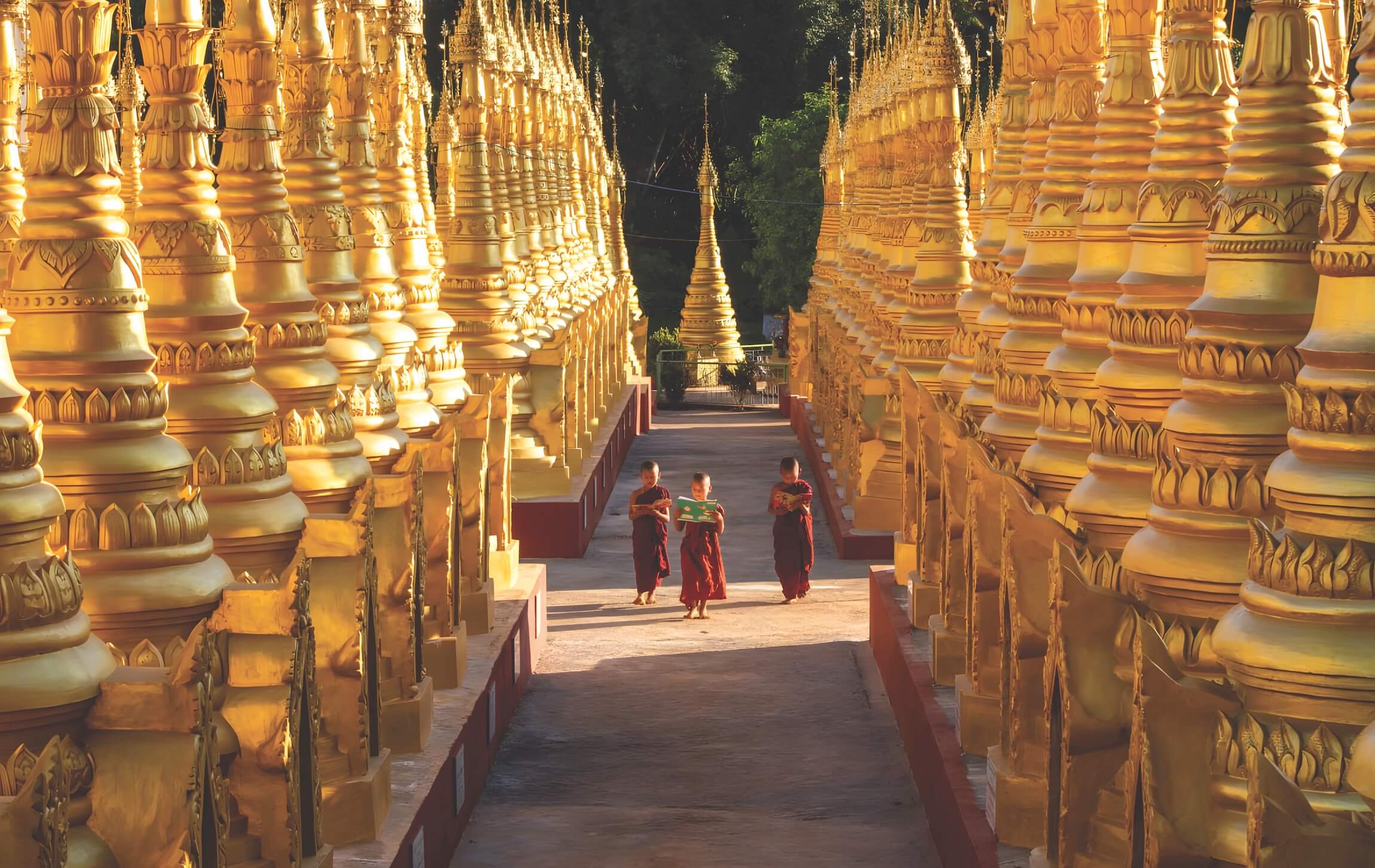
Myanmar is renowned for its diverse culture, stunning natural landscapes, authenticity, and heartfelt hospitality. The country’s unique identity emerges from a harmonious blend of its rich cultural heritage and abundant natural resources. Myanmar’s vibrant cultural fabric is deeply rooted in its history, evident in the thousands of monasteries, pagodas, and heritage sites scattered throughout the nation. Culture and heritage tourism forms the cornerstone of Myanmar’s tourism industry, accounting for roughly half of all tourist arrivals. These sacred sites hold immense potential for tourism development, though their preservation requires careful and respectful management to maintain their sanctity and authenticity.
In recent years, the nature of culture and heritage tourism in Myanmar has evolved significantly. Whereas tourism once centred mainly on temple visits in iconic destinations, such as Bagan, Yangon, and Mandalay, it has shifted towards more immersive, community-based experiences. This transformation marks a move from passive sightseeing to active participation. Visitors today engage directly with heritage by learning traditional crafts, taking part in local festivals, and sharing meals with host families. A prominent example of this shift is the growth of community-based tourism in lesser-known or secondary destinations. Increasing numbers of tourists now explore not only Myanmar’s cultural and historical sites but also its contemporary culture and lifestyle. These initiatives enable travellers to experience local customs, cuisine, music, arts, and crafts firsthand. This immersive approach enriches visitor experience and simultaneously generates economic opportunities for local communities. Efforts to balance tourism growth with conservation are ongoing. Measures such as limiting the number of visitors to sensitive locations and promoting the living culture of local people through responsible tourism practices aim to protect both the tangible and intangible heritage of Myanmar.
In 2024, Myanmar welcomed 1.28 million tourists from a variety of countries, with a significant portion coming from other ASEAN nations, such as Malaysia, Thailand, Singapore, and Viet Nam. Among them, Thailand has consistently been Myanmar’s top source market. Collectively, intra-ASEAN visitors represent a notable share of Myanmar’s total tourist arrivals, making the regional market a crucial pillar for the country’s inbound tourism industry. Despite this, the intra-ASEAN market still holds considerable untapped potential for further development in Myanmar’s tourism sector. ASEAN’s unified efforts to promote the region as a single tourism destination significantly enhance Myanmar’s attractiveness through association with the broader Southeast Asian brand. By actively participating in ASEAN’s joint promotion and marketing initiatives, Myanmar can benefit from shared resources and expertise, thereby elevating its tourism profile on the international stage.
Intra-ASEAN visitor flows continue to play a vital role in the overall tourism dynamics of the region. Beyond regional travellers, ASEAN also targets key international markets—including the United States, the United Kingdom, Australia, and India—through its ASEAN Tourism Marketing Strategies 2021- 2025, aiming to position Southeast Asia as a unified and compelling destination. To support these goals, ASEAN has appointed dedicated Tourism Marketing Agencies responsible for implementing regional marketing campaigns. Notable regional initiatives, such as the Southeast Asia Challenges and ASEAN’s Love Language, are designed to capture the interest of international tourists by highlighting the region’s diverse cultural and natural attractions. ASEAN Member States, including Myanmar, stand to gain from this momentum by positioning themselves as essential stops within multi-country travel itineraries that appeal to global visitors seeking varied experiences across Southeast Asia. However, the success of this vision depends on continued collaboration, such as coordinated marketing efforts, streamlined visa policies, and improved transport connectivity.
In summary, the potential for increased intra-ASEAN travel is substantial, and marketing ASEAN as a cohesive destination presents a powerful opportunity to attract more international tourists. By leveraging regional cooperation and targeted strategies, Myanmar can also strengthen its tourism industry and contribute meaningfully to ASEAN’s collective growth as a top global tourism hub.