Archives: Articles

Building Green Skills for ASEAN’s Sustainable Future

ASEAN has set a bold vision for transitioning to a low-carbon, climate-resilient, and resource-efficient economy—one that is socially inclusive and sustainable. This commitment is reflected in key regional policies that encompass a range of issues, including energy and climate change, sustainable finance, pollution control, and marine debris management.


ASEAN-UK Women in STEM Scholars: Driving Change in Southeast Asia’s Science and Tech

When we think of groundbreaking scientific achievements, names like Darwin and Alexander Graham Bell often come to mind. Rarely do we hear the names of the many women whose contributions have also been transformative. While women have always been involved in STEM (Science, Technology, Engineering, and Mathematics), their contributions have often been overlooked or downplayed. ASEAN-UK Women in STEM Scholars: Driving Change in Southeast Asia’s Science and Tech

Youth Volunteerism in Action: Advancing a People-Centred ASEAN through Empowering Youths Across ASEAN

On his first night in La Union, the Philippines, Indonesian youth volunteer Andi Reza Zulkarnain arrived with a clear plan. Together with his team, he was scheduled to begin community sessions on marine conservation and environmental education as part of a local initiative to protect coastal ecosystems. Within hours, however, those plans were overtaken by Youth Volunteerism in Action: Advancing a People-Centred ASEAN through Empowering Youths Across ASEAN

2025 Voluntary National Review, The Philippines: Driving Transformation for the 2030 Agenda through SDG Localisation, Collaborative Partnerships, and Innovative Statistical Developments

In 2015, as UN member states adopted the 2030 Agenda for Sustainable Development, the Philippines made an additional commitment to conduct a Voluntary National Review (VNR) on Sustainable Development Goals (SDGs) every three years. With the Department of Economy, Planning, and Development (DEPDev) serving as Chair and Secretariat to the Philippine Subcommittee on the SDGs 2025 Voluntary National Review, The Philippines: Driving Transformation for the 2030 Agenda through SDG Localisation, Collaborative Partnerships, and Innovative Statistical Developments

ESCAP’s Support to ASEAN in Advancing VNRs and the 2030 Agenda

As ASEAN Member States advance their efforts toward the 2030 Agenda for Sustainable Development, the Voluntary National Review (VNR) process has become an essential instrument—not only for tracking national progress on the Sustainable Development Goals (SDGs), but also for fostering inclusive dialogue and shaping shared development visions and priorities.

Investing in Care: A Pathway to Gender Equality in ASEAN

The COVID-19 pandemic reminded everyone how important care work is to daily life. When schools closed, and hospitals filled up, it was often women and girls who stepped up at home. Their contributions made a big difference, yet these responsibilities often go unseen and unrewarded.

The Role of Institutional Investors in Catalysing ASEAN’s Circular Transition

Circular economy has moved from niche sustainability circles to centre stage in global climate negotiations. At UNEA-7 in Nairobi in November 2025, member states deliberated on binding agreements to tackle plastic pollution and resource depletion. The year 2025 also marked the first time that circular economy was discussed at COP30, underscoring the role of circular The Role of Institutional Investors in Catalysing ASEAN’s Circular Transition

Complementarities Initiative 2.0: Advancing ASEAN’s Sustainable Future

When the world’s leaders adopted the United Nations 2030 Agenda for Sustainable Development in 2015, they set an ambitious goal of achieving prosperity that leaves no one behind. In that same year, ASEAN adopted the ASEAN Community Vision 2025, charting a regional pathway towards a peaceful, stable, and resilient community.

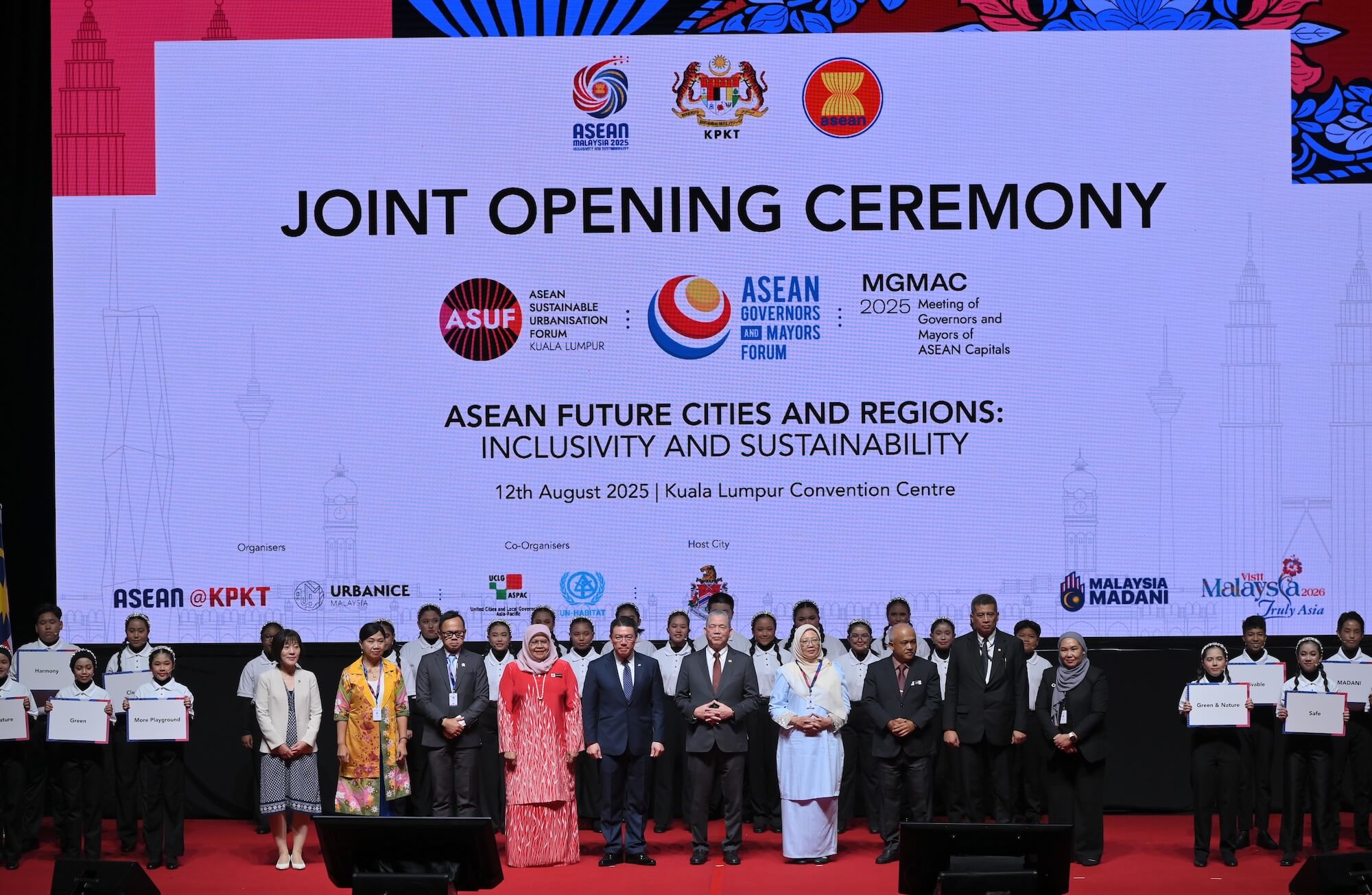
Shaping ASEAN’s Urban Future: Turning a Global Megatrend into a Regional Advantage

Urbanisation is one of the biggest forces shaping Southeast Asia’s future. Across ASEAN, cities are growing in number, size, and complexity, driving economic opportunity, innovation, and cultural exchange. At the same time, they are also concentrating risk, inequality, and exposure to climate impacts. The question facing the region is not whether urbanisation will continue, but Shaping ASEAN’s Urban Future: Turning a Global Megatrend into a Regional Advantage